
Last updated November 2, 2026
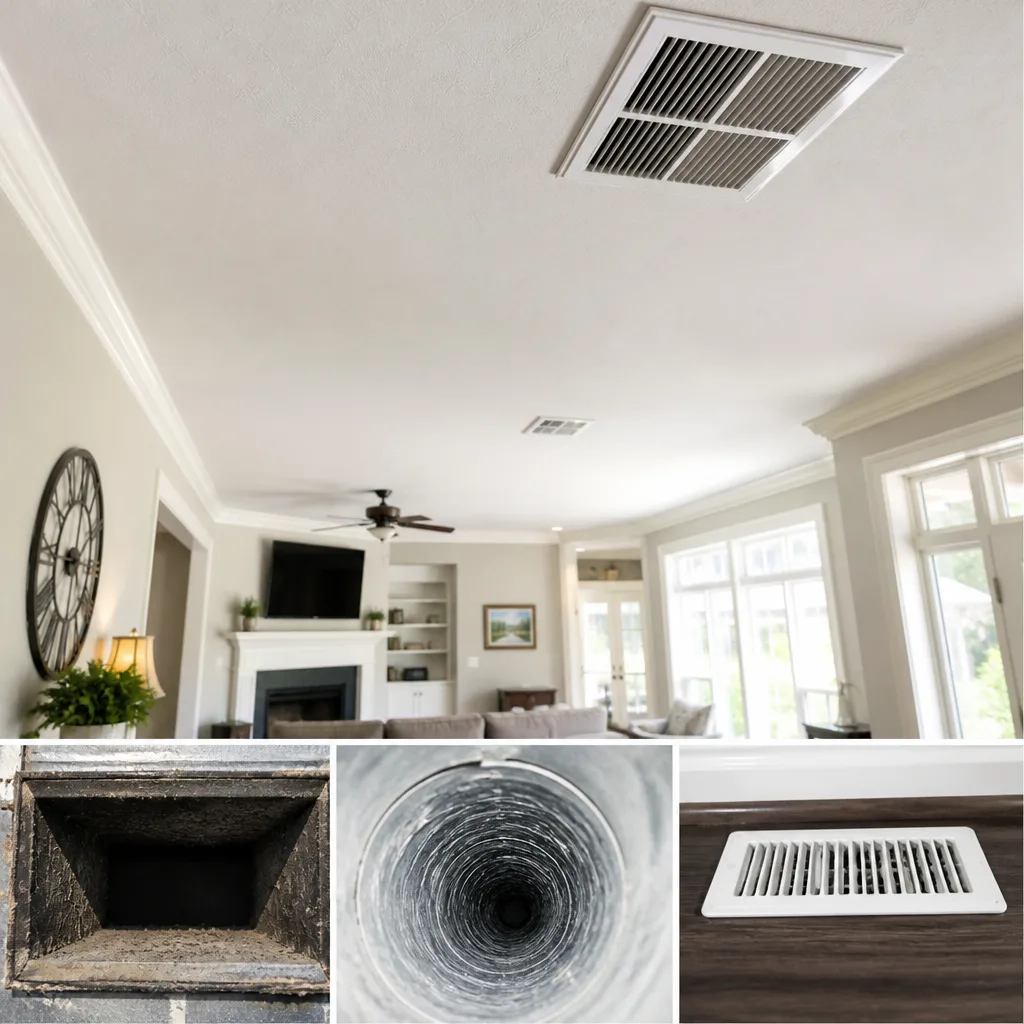 Whole-home duct cleaning
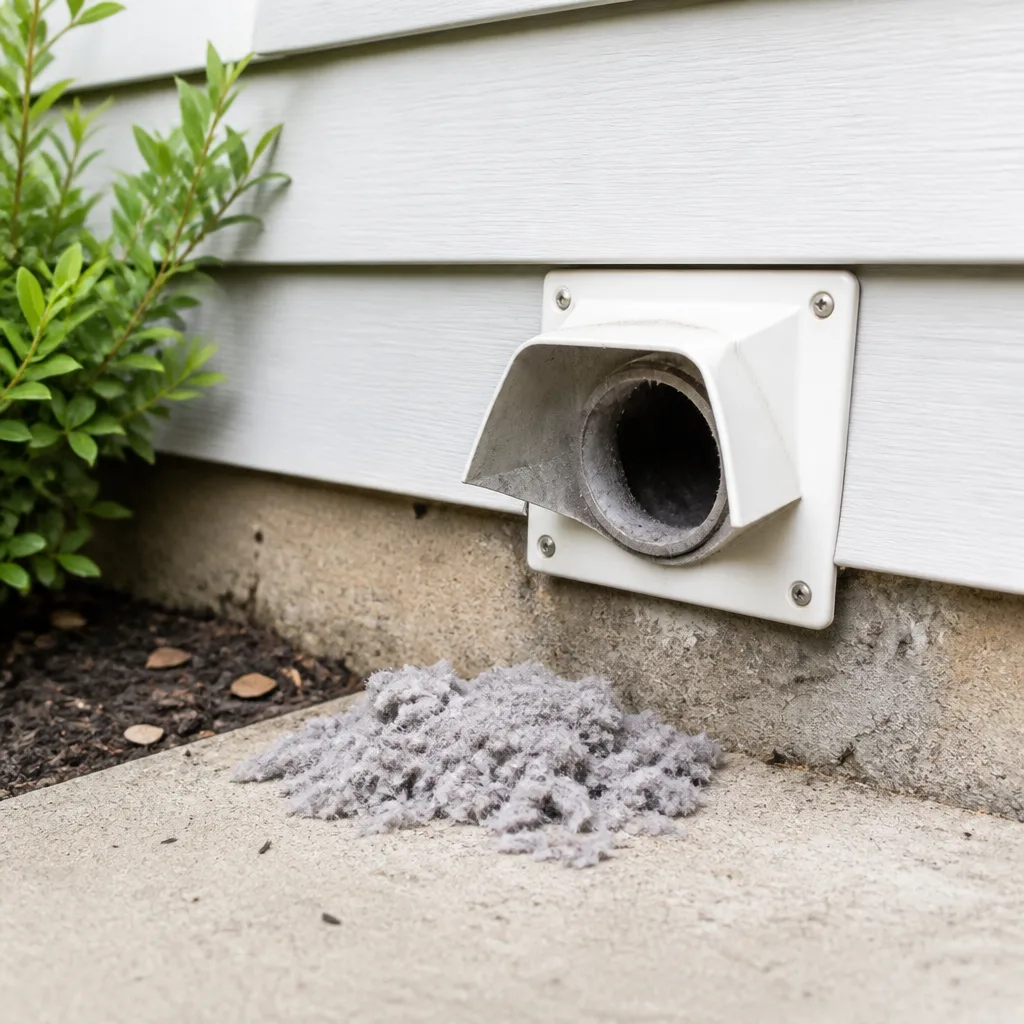 Dryer vent cleaning
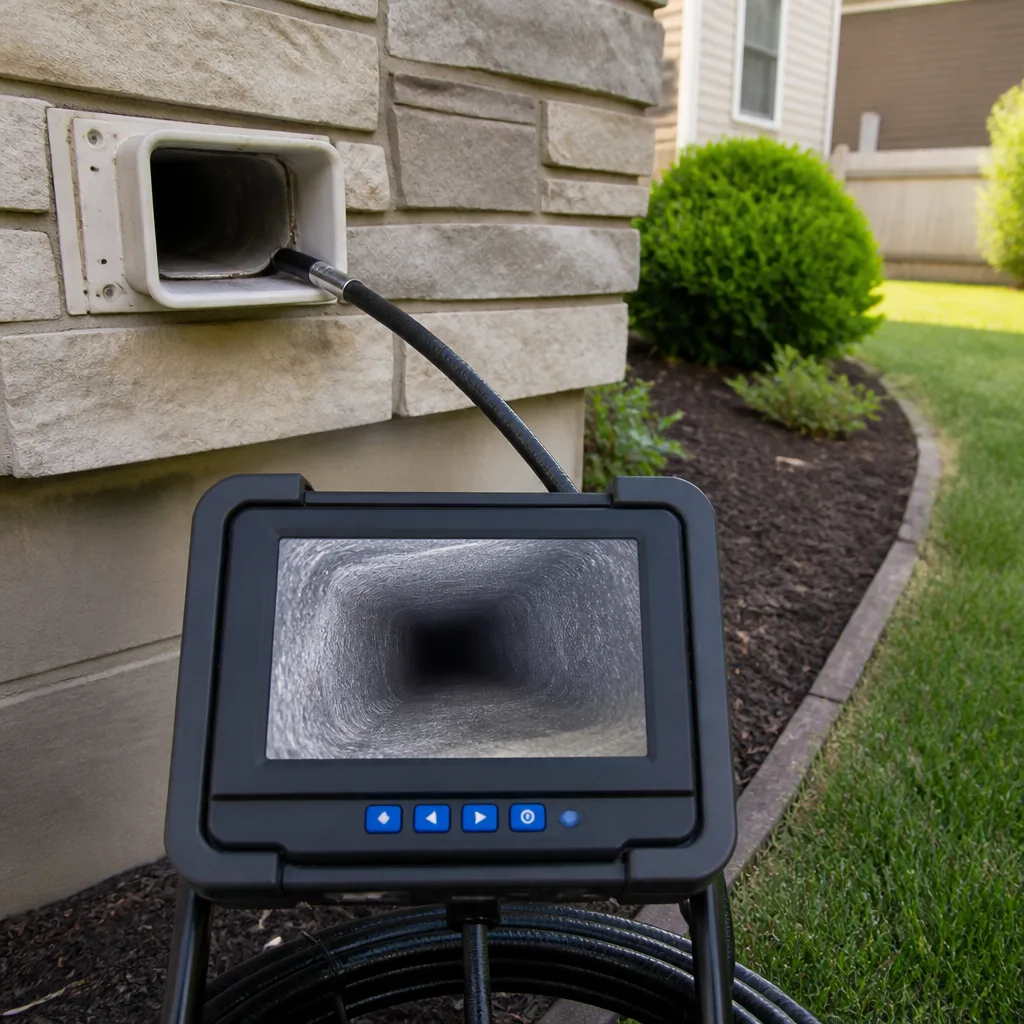 Camera inspection
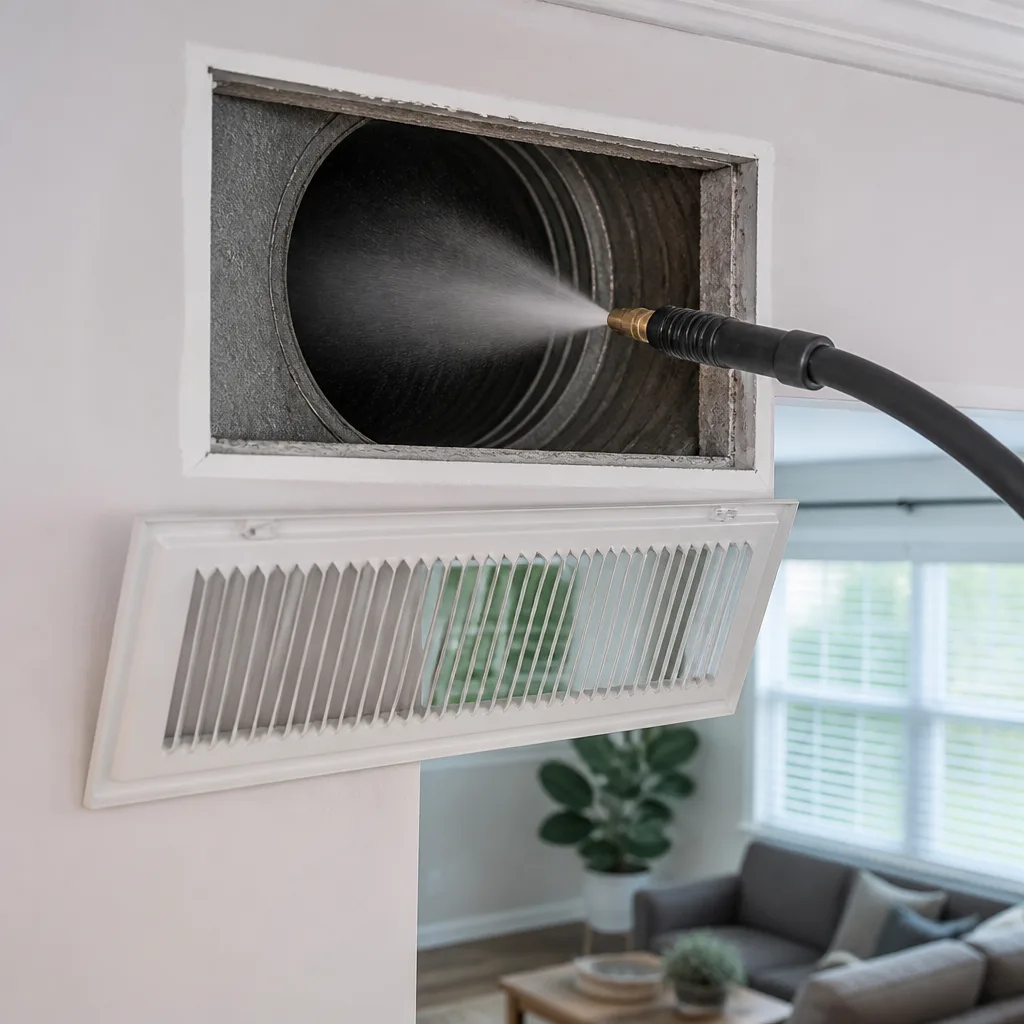 Sanitizing & deodorizing
Whole-system duct and dryer vent check with before-and-after photos - you see exactly what came out of your vents
That "$99 whole-house special" is a bait ad - the real number appears once they are in your hallway, or the "clean" is a shop-vac at the register. We photograph the inside of your ducts before and after instead.
Air Duct Cleaning Troubleshooting: Common Problems and How to Fix Them
If your home got dustier after a duct cleaning, the technician probably didn’t make things worse. They most likely uncovered a breach in your duct system that was already there, sealed under years of accumulated debris. This guide – part of our broader more guides & resources – walks you through the symptom-by-symptom reality of post-cleaning problems we see across Cathedral City, from the tract-home neighborhoods north of the wash to the older properties along Date Palm Drive, and teaches you how to tell the difference between a failed cleaning job and a duct system that was compromised long before anyone put a vacuum hose to it.
Styles & brands we work with
- Whole-home duct cleaning
- Dryer vent cleaning
- Camera inspection
- Sanitizing & deodorizing
Quick Answer
Most problems that appear after Air Duct Cleaning, including weak airflow, returning dust, and persistent odors, are not caused by the cleaning itself. They are symptoms of pre-existing duct system damage, such as disconnected joints, collapsed flex duct, or a breach pulling attic air into the airstream, that the cleaning exposed by removing the debris that had been masking the problem. Before you call the cleaning company back, use the diagnostic steps below to identify where the real issue lives.
Table of Contents
- Weak Airflow After Cleaning: Duct Collapse vs. Disconnection
- Persistent Dust After Cleaning: The Attic Breach Problem
- Returning Musty Smells: Why the Source Is Rarely the Duct Itself
- Uneven Room Temperatures: Dampers and Duct Sizing in Cathedral City Homes
- How to Self-Diagnose a Supply or Return Leak at Home
- Why Flex Duct in Older Cathedral City Tract Homes Fails from the Inside
- Duct Cleaning Scope vs. HVAC Mechanical Repair: Who to Call for What
- What Documentation a Reputable Duct Specialist Should Provide
- Common Mistakes to Avoid
- When to Call a Professional
- Frequently Asked Questions
- The Bottom Line
Weak Airflow After Cleaning: Duct Collapse vs. Disconnection
Weak airflow from a specific register after a cleaning is one of the most common calls we field in Cathedral City. The homeowner assumes the cleaning knocked something loose. In most cases, the cleaning removed the debris that had been propping up a failing section of ductwork, or it disturbed a connection that was already compromised. Here’s how to tell the two most frequent culprits apart.
A disconnected duct joint means air is being pushed into the attic, crawl space, or wall cavity instead of the room. The telltale sign is that the affected register has noticeably less airflow than its neighbors, while other rooms seem unaffected or even stronger. A collapsed flex duct, by contrast, creates a restriction inside the duct itself. The register still gets some air, but it’s weak and may feel warm in the summer because the conditioned air is spending too long traveling through a pinched passage. Both conditions share the same root cause: the duct system in your home was built to a price point, not a longevity spec, and Cathedral City’s heat accelerates material degradation faster than almost any climate in the country.
If you’re seeing weak airflow in one room only, start by checking the register itself. Open it fully, shine a flashlight into the boot, and confirm the damper blade inside isn’t stuck shut. If the damper is open and airflow is still weak, the issue is almost certainly in the branch line feeding that register, not the trunk line. This is where a professional with a camera scope earns their visit. A camera pushed through the branch can confirm a separation at a connection point or a collapsed section of flex in under ten minutes. This is precisely why our process at Air Duct Repair in Cathedral City treats the diagnostic pass as mandatory, not optional.
One more thing worth knowing: weak airflow after cleaning is sometimes a return-side problem. If the system can’t pull enough air back through the return ducts, it can’t push enough out through the supplies. This is especially true in Cathedral City homes where a single central return serves an entire floor. During a cleaning, contractors sometimes disconnect a return duct to access the plenum and fail to reseat it properly. An open return in the attic doesn’t just reduce airflow, it actively pumps attic air, insulation fibers, and dust into your system. We’ll cover how to spot this in the self-diagnosis section below.
Persistent Dust After Cleaning: The Attic Breach Problem
A home that’s noticeably dustier two weeks after a professional duct cleaning is one of the most frustrating experiences a homeowner can have. You paid for cleaner air and you got more dust on the furniture. Here’s what’s actually happening. The cleaning removed the dust that was already inside your ducts. If new dust is appearing at the same rate or faster, your ducts are pulling in more. The cleaning didn’t cause the problem, it removed the filter that was hiding it.
The most common source of post-cleaning dust in Cathedral City homes is a return-side breach. Return ducts operate under negative pressure. When the system runs, it pulls air from your living spaces, through the return grille, into the return ductwork, and back to the air handler. Every return-side connection, every joint, every seam is a potential intake point. If even one elbow has separated or one section of flex has a tear, the system starts pulling unconditioned, unfiltered air from the attic into your living space. The attic air in Cathedral City carries more than dust. It carries fiberglass insulation particles, pest debris, and fine particulate from your roof’s underlayment. None of that belongs in your lungs.
Here’s the distinction that matters: supply-side leaks push air out, which costs you money through lost efficiency. Return-side leaks pull air in, which costs you money and actively degrades your indoor air quality. When a homeowner tells us their house got dustier after cleaning, our first move is to camera the return path from grille to air handler. In a significant percentage of cases, we find a separated joint within fifteen minutes of starting. The fix involves reseating the connection, sealing the seam with mastic, and re-testing static pressure. That’s a repair job, not a cleaning job, as covered in our Air Duct Cleaning Warning Signs: A Cathedral City Homeowner’s Reference Guide. It’s exactly the kind of work that separates a duct specialist from a generalist. Most companies that offer $99 whole-house specials don’t carry camera scopes, and they don’t offer repair. They vacuum and leave. If your ducts were compromised before they arrived, your ducts are compromised after they leave, and the vacuuming actually exposed the problem by clearing the debris that had been accumulating at the leak point.
This is where the difference between a duct cleaning company’s scope of work and what a duct specialist should provide becomes critical. The company that cleaned your ducts may have done exactly what they were paid to do. The issue is whether anyone was looking for the breach in the first place. At Duct Cleaning Cathedral City, every cleaning includes a visual inspection pass through the accessible portions of the duct system. We’re looking for exactly these conditions. If we find a separation, we document it, explain it, and quote the repair on the spot. That’s the entire point of our Duct Cleaning Cathedral City home service model: cleaning is the starting point, not the finish line.
Returning Musty Smells: Why the Source Is Rarely the Duct Itself
You had your ducts cleaned because the house smelled musty. The smell went away for a week. Now it’s back. The natural conclusion is that the cleaning failed, or that the ducts are somehow recontaminating. That conclusion is usually wrong. Ductwork is metal and plastic. It doesn’t generate odor. It transmits odor from somewhere else. If a musty smell returns after cleaning, the source is almost always moisture, and the moisture is almost always somewhere the duct cleaning didn’t touch because it wasn’t in the ducts.
The two most common sources of persistent musty odor in Cathedral City homes are the evaporator coil and the drain pan. Both live inside or directly above the air handler, which in most Coachella Valley homes is in the garage, a hall closet, or an attic. The evaporator coil is where condensation forms when your AC runs. That moisture collects in a drain pan underneath and is supposed to flow out through a condensate line. When dust and skin cells and pet hair accumulate on the coil, they combine with that moisture to form a biofilm that smells exactly like the inside of a damp basement. Duct cleaning doesn’t address this. The coil is in the mechanical cabinet, not the duct run. A homeowner who doesn’t understand this calls the duct company back. A homeowner who understands the system calls an HVAC mechanical contractor for coil cleaning, or calls a duct specialist who can diagnose the source and route the work appropriately.
There’s a second source worth checking: the condensate drain line itself. When the line clogs, water backs up into the pan and sits. Stagnant water in a dark, warm cabinet grows biological material fast. In Cathedral City’s summer, where the AC runs continuously for months, a dirty pan can go from slightly musty to actively foul in under three weeks. If the odor is strongest at the return grille when the system first kicks on, and fades as the system runs, think coil or pan. If the odor is present only in certain rooms, think a local moisture intrusion, possibly a leak at a register boot where conditioned air meets a hot, humid attic and condenses. We’ve pulled open register boots in Cathedral City attics and found moisture staining on the drywall from exactly this condition.
One more source that surprises people: the blower wheel and blower housing. Air passing over a dirty blower picks up whatever is growing on it. This area is below the coil in most residential air handlers and collects a greasy film of dust and moisture. Duct cleaning, again, doesn’t touch it. The point of this section isn’t to move the goalposts on your duct cleaning company. It’s to give you the map of where smells actually originate so you can solve the right problem instead of re-cleaning ducts that are already clean. A reputable duct specialist will tell you this honestly. We do, because the goal is a fixed problem, not a repeat visit.
Uneven Room Temperatures: Dampers and Duct Sizing in Cathedral City Homes
One bedroom is freezing. A hallway is fine. The living room never quite cools down. If uneven temperatures existed before your duct cleaning and persist after it, the cleaning was never going to solve them. Uneven room temperatures are a distribution problem, and distribution problems in Cathedral City homes come in three main flavors: closed or misadjusted dampers, incorrectly sized duct runs, and compromised branch lines that are leaking more air than they deliver.
The first thing to check is your dampers. Most supply branches have a damper, a metal blade inside the duct controlled by a small handle on the outside of the duct, typically near the trunk line in the attic. Over time, vibrations from the system can nudge dampers toward a more closed position. Homeowners also close dampers to redirect air, then forget which ones are closed and which are open. If the problem room’s damper is closed or nearly closed, the fix is free: open it. If the problem room is hot while others are fine, and the damper is open, the next most likely culprit is a disconnected or leaking branch line. The same attic breach that causes dust also causes thermal loss. Conditioned air is bleeding into the attic while the register starves.
Duct sizing is a different category of problem entirely. We see it constantly in Cathedral City tract homes built during the valley’s rapid expansion decades back. Rooms at the far end of a long trunk line receive less static pressure than rooms near the air handler because the builder undersized the branch runs or ran an inflexible rigid duct path that forces air through more elbows than the system’s fan was designed to handle. In those cases, the fix is a duct modification, not a damper adjustment. This falls under the repair scope, not cleaning, and is precisely why we built an Air Duct Repair in Cathedral City capability into our service model. Most duct-only companies can’t touch this. They can clean the undersized duct, but they can’t resize it. You end up with a spotless duct that still doesn’t deliver air to the back bedroom.
One heat-specific factor for Cathedral City: the temperature differential between conditioned air and the attic air in a Coachella Valley summer can exceed sixty degrees. That extreme delta turns even small leaks into big losses. A one-inch separation at a branch connection that loses negligible air in a mild climate will bleed meaningful conditioned air in our summers. This is one reason we recommend checking duct connections annually, even when the system appears to be running fine. The load our climate places on the entire system is more extreme than almost anywhere else in the country, which means failures that would happen in year fifteen somewhere else happen in year eight here.
How to Self-Diagnose a Supply or Return Leak at Home
Before you call anyone back, you can narrow down what’s actually wrong in about twenty minutes with nothing more sophisticated than a flashlight and a piece of tissue paper. The goal here is not to fix anything. The goal is to gather enough information that you can describe the problem accurately and tell whether the person who shows up is actually diagnosing or just selling. Here’s the step-by-step process we recommend for Cathedral City homeowners.
- Turn the system fan on at the thermostat. Set it to fan-only mode if you can. We don’t want heating or cooling, just airflow. This isolates the duct system from the mechanical equipment.
- Walk the house and hold a tissue paper up to each supply register. Note which registers push the tissue strongly, which push it weakly, and which push it not at all. Write down the results. A room-by-room airflow map is the single most useful diagnostic tool you can create before calling anyone.
- Listen at each register. A whistling or hissing sound at the register, especially one with visibly strong airflow, can indicate a register that’s undersized for the air volume being delivered. The noise is the air forcing itself through a small opening.
- Go into the attic with a flashlight. Look at the ductwork, specifically the connections where flex duct meets the trunk line and where flex duct connects to register boots. You’re looking for mastic sealant that has cracked, tapes that have peeled, or visible gaps at connection collars. Cathedral City attic heat degrades duct tape, and the standard foil tape used by many builders fails faster than mastic. If you see a connection that has visibly separated, you have your answer.
- Check the return path. Locate where the return duct connects to the air handler. Look for the same conditions: gaps, separated connections, collapsed sections. A return leak is invisible in the airflow, but you’ll often see dust streaks around the leak point, because the negative pressure pulls attic dust toward the gap and deposits it in a ring around the separation.
- Check the flex runs for visible collapse or kinking. Look for sections where the flex duct is compressed, crushed under stored boxes, or bent at an angle sharper than ninety degrees. Each sharp bend adds resistance the fan has to overcome.
Use the results when you call a professional. Saying “the register in the east bedroom has almost no airflow while the one in the living room is strong, and I saw a separated connection above the east bedroom in the attic” tells the technician exactly where to look. Saying “it doesn’t feel like the air’s blowing right” tells them nothing actionable. The information you gather in this twenty minutes is worth more than any online review.
Why Flex Duct in Older Cathedral City Tract Homes Fails from the Inside
There’s a failure mode specific to flex duct that mimics dirty-duct symptoms so closely it often goes undiagnosed for years. The interior liner of the flex duct, the thin plastic sleeve inside the insulation layer, begins to separate from the insulation jacket. As it separates, it sags inward. Eventually it can collapse entirely, choking airflow even though the exterior of the duct looks perfectly normal from the attic. This is called interior liner delamination, and Cathedral City’s heat is directly responsible for why it happens earlier here than in cooler climates.
The mechanism is simple. Flex duct is made of a plastic inner liner, a layer of fiberglass insulation, and an outer foil or plastic jacket. The inner liner is adhered to the insulation. Decades of attic temperatures that swing from near-freezing on winter nights to over 150 degrees in summer cause the plastic liner to expand and contract repeatedly. The adhesive bond fatigues. The liner begins to sag. As it sags, it narrows the effective diameter of the duct. Airflow drops. The symptom profile is identical to a dirty duct: weak airflow from specific registers, uneven temperatures, a system that runs longer to hit the thermostat setpoint. The difference is invisible without a camera. From the outside, a delaminated duct looks exactly like a healthy one.
This is one of the most common deep findings when we run cameras through older tract homes in Cathedral City’s established neighborhoods. The homes off Vista Chino and Landau, many built in the 1970s and 1980s, still carry significant amounts of their original flex duct. Some of that duct has been in attics for forty years. The plastic liner has been through forty Coachella Valley summers. It’s brittle when you touch it. It crumbles. And it’s been delivering reduced airflow to the far bedrooms for the last decade while the homeowners chased symptoms and paid for cleanings that couldn’t possibly fix the problem.
The fix for delaminated flex is replacement of the affected runs, not cleaning. A camera inspection confirms the diagnosis in minutes. New flex duct, properly installed with mastic-sealed connections, restores full airflow and eliminates the restriction. If you live in a Cathedral City home built before 1990 and you’re experiencing weak airflow in specific rooms that persists after a cleaning, interior liner collapse should be near the top of your list. Ask the company you call whether they carry a camera scope and whether they’ll show you the footage. If the answer to either question is no, you’re not getting a diagnosis, you’re getting a guess.
Duct Cleaning Scope vs. HVAC Mechanical Repair: Who to Call for What
One of the most common frustrations after a duct cleaning is being bounced between a duct company and an HVAC company, each claiming the problem belongs to the other. The confusion is understandable. Ducts are part of the HVAC system, but duct cleaning and HVAC mechanical repair are different trades with different tooling, different training, and different scopes. Understanding who owns which problem saves you time, money, and the third visit from a company that was never going to fix the issue in the first place.
A duct cleaning company’s scope is the interior surface of the ductwork. They clean the inside of the supply runs, the return runs, the trunk lines, and the register boots. A company with proper equipment, like the Rotobrush and Nikro systems we run, uses pneumatic agitation to dislodge debris from the duct walls coupled with negative air pressure to capture it. The goal is removing the accumulated particulate: dust, skin cells, pet hair, pest debris, construction material from the original build. That’s the cleaning. If the ductwork is intact and the homeowner’s complaint is simply that the system needs a cleaning, the cleaning solves it.
What a duct cleaning does not include, at least not in a properly scoped job, is the mechanical equipment itself. The air handler, the blower, the evaporator coil, the condensate drain, the compressor, the refrigerant lines, the thermostat. Those belong to the HVAC mechanical contractor. When a musty smell originates at the coil, an HVAC tech is the right call. When a compressor fails, call an HVAC company, not us and not any other duct company. Our role is the distribution network that carried the conditioned air, not the equipment that conditioned it.
The gray area is where we built our repair capability. A disconnected duct joint, a collapsed flex run, a breached plenum connection, a compromised duct support strap, these are duct system failures. A cleaning-only company will often note them but tell the homeowner to find someone else for the fix. An HVAC mechanical contractor can fix them but often doesn’t want to, because duct work under a house or in an attic is low-margin, uncomfortable labor compared to a compressor replacement. Homeowners get stuck in the gap. At Duct Cleaning Cathedral City, we close that gap. We clean it, we find the damage, and we fix it in the same visit. That’s the structural advantage of our Air Duct Cleaning in Cathedral City model: the person who sees the inside of your ducts is also qualified to repair what’s wrong with them.
What Documentation a Reputable Duct Specialist Should Provide
A professional duct cleaning should leave you with more than a receipt. You should have a visual record of what was inside your ducts before the cleaning, what was done, and what the system looks like after. This documentation isn’t just for your files. It’s the baseline evidence that lets you answer the question “did the cleaning work?” with data instead of a feeling. It’s also the thing that separates a legitimate operation from a guy with a shop vac and a story. Here’s what we provide on every Cathedral City job, and what you should expect from any company you hire.
Before-and-after photos are non-negotiable. Every register, every return, every trunk line access point should be photographed before the cleaning and after the cleaning. These photos should show the actual interior surfaces, not the outside of the duct. If a company can’t or won’t provide interior photos, they didn’t actually inspect what they cleaned. They moved air and hoped for the best. A camera scope is the other non-negotiable. The photos document the surface. The camera documents the condition. A walkthrough of the main trunk, the branch lines, and the returns, recorded and provided to you, tells you whether the system has separation, collapse, or contamination that a surface cleaning can’t address. This is the documentation that catches the attic breach we discussed earlier, the collapsed flex liner, the disconnected branch. Photos alone can miss structural problems that a camera pass reveals.
The third piece is pressure data. A reputable duct specialist should measure static pressure before the cleaning and after the cleaning. Static pressure is the resistance to airflow in the system. A high static pressure reading means the system is working harder than it should. The cleaning should improve this number. If the number doesn’t improve, or if it gets worse, the cleaning exposed a restriction elsewhere in the system, likely a collapsed duct or an undersized return. Without pressure readings, you can’t distinguish “the ducts are cleaner” from “the system is working better.” They’re related but not identical.
Finally, the company should provide a written summary of findings. Not a sales pitch. A summary. What was found, what was cleaned, what was observed but not addressed, and what we recommend for follow-up with reasoning. If damage is found, you should see a specific quote for the repair, tied to a specific cause, with a specific location. Vague language like “your system could use some work” is not documentation. Specific language like “the branch line serving the southwest bedroom has a separated connection at the trunk, visible at 14:32 in the camera footage, repair requires refitting the connection and sealing with mastic, quoted at $X” is documentation. That’s the standard. Accept nothing less.
Common Mistakes to Avoid
- Re-cleaning the ducts without addressing the underlying issue. If the ducts were cleaned and the problem persists, the ducts are not the problem. A second cleaning removes nothing that the first didn’t, because the first already removed the debris. You’re paying for the same result twice.
- Assuming the cleaning company caused the damage. In most cases, the damage was already there. The cleaning exposed it. Understanding this distinction means you focus your energy on the actual problem, not on building a case against a company that may have done exactly what they were paid for.
- Ignoring the return side entirely. Homeowners focus on supply registers because that’s where air comes out. Return leaks pull attic air into the system, which is why the house stays dusty after cleaning. If you only inspect half the system, you find half the problems.
- Fixing duct problems from the register end. Closing a register or buying a booster fan for a weak room treats a symptom while the cause, often a collapsed or disconnected branch, gets worse. The booster fan doesn’t fix the duct, it adds pressure to a system that’s already compromised.
- Hiring on price alone for the follow-up repair. The company that fixes a duct separation with a roll of tape and a handshake is cheaper than the company that reseats the connection, seals it with mastic, and verifies with a camera. The tape fails in a Cathedral City attic within a season or two. Mastic lasts the life of the system. You’ll pay for the tape job twice.
- Not asking for documentation after the fact. Before-and-after photos, camera footage, and pressure readings are standard for a professional operation. If a company won’t provide them, you should wonder what they don’t want you to see.
- Confusing the evaporator coil with the ducts. A musty smell that returns after cleaning is almost never the ducts. It’s moisture in the mechanical cabinet. Sending a duct cleaner to fix a coil problem wastes a visit. Knowing which trade owns which problem saves money.
When to Call a Professional
Some duct problems are obvious: visible separation in the attic, a section of collapsed flex, a return connection that has pulled free entirely. These need a professional, full stop. Duct repair involves working in confined attic spaces, cutting and reseating material, and sealing connections with mastic. A failed repair behind a finished ceiling or wall is far more expensive than the original problem. If your self-diagnosis turns up a disconnected branch in a Cathedral City attic, or if your camera pass reveals interior liner collapse, resist the urge to improvise a fix with tape from a hardware store. Those fixes fail here, specifically because our summer attic temperatures exceed what retail foil tapes are rated to handle. The right repair uses materials specified for extended high-heat exposure and verified installation.
If you’ve walked the diagnostic steps and you’re still not sure what’s wrong, that’s also a signal to pick up the phone. A professional with a camera scope can identify the issue in minutes. Duct Cleaning Cathedral City offers free estimates in Cathedral City, call (866) 968-5699. We’ll diagnose, document, and explain what we find, and if your ducts don’t need a thing, we’ll tell you that too.
Frequently Asked Questions
Dustier conditions after cleaning usually indicate a return-side duct breach that the cleaning exposed, not caused. The return duct pulls air under negative pressure, and any separated joint or tear pulls attic air with dust and insulation into the system. The cleaning itself can’t add dust, the system is pulling in new dust from the attic. The fix is repairing the breach, which is why we inspect for this condition on every Cathedral City job.
Dust is removed by the cleaning equipment, not released into the home, so there should be no settling period. A properly performed cleaning captures dislodged debris under negative air pressure. If you’re seeing increased dust for weeks after, you have a source of ongoing contamination, not a temporary condition that will resolve on its own.
A musty smell that returns after duct cleaning originates from moisture on the evaporator coil or in the condensate drain pan, neither of which is inside the ductwork itself. The ducts carry the odor, they don’t make it. Solving it requires cleaning the coil or clearing the drain line, which falls under HVAC mechanical service rather than duct cleaning. We can diagnose the source during a visit, but the fix belongs to a different trade.
Duct cleaning performed with professional negative-air equipment does not damage intact ductwork. However, ducts that are already compromised, with failing connections or degraded flex liner, may become visibly worse after cleaning because the debris that was masking the damage has been removed. In those cases, the cleaning exposed a pre-existing condition, and the fix is a repair, not a re-cleaning.
In Cathedral City’s housing stock, a single hot room is most often caused by a damper that’s closed or partially closed, a disconnected branch line bleeding air into the attic, or collapsed flex duct restricting airflow. The many tract homes built before 1990 in the valley carry flex duct that degrades from inside due to decades of extreme attic temperature swings. A camera inspection identifies which cause applies to your room in minutes.
You know you need repair, not cleaning, when specific rooms have weak airflow while others are strong, when the home stays dusty despite clean ducts, or when you can see visible separation or collapse in the attic. Cleaning addresses debris. Repair addresses structure. They’re different jobs. If you’re not sure which applies, call (866) 968-5699 for a free assessment and we’ll show you what’s actually inside your system.
The Bottom Line
Most post-cleaning duct problems aren’t failures of the cleaning. They’re pre-existing conditions the cleaning revealed by removing the debris that was masking them. Disconnected branch lines, return-side breaches, collapsed flex liners, these are structural problems that require repair, not another pass with a vacuum. The good news is that Cathedral City homeowners now have access to a single team that handles both. Cleaning exposes the problem. Repair fixes it. And when a smell or temperature issue falls outside the duct system entirely, honest diagnosis saves you from paying for cleanings that can’t solve the problem. If you’re seeing weak airflow, persistent dust, or returning odors after a cleaning, start with the diagnostics in this guide, then call (866) 968-5699. We’ll bring the camera, measure the pressure, and show you the evidence.
Written by the team at Duct Cleaning Cathedral City, serving Cathedral City since 2012.
See the difference
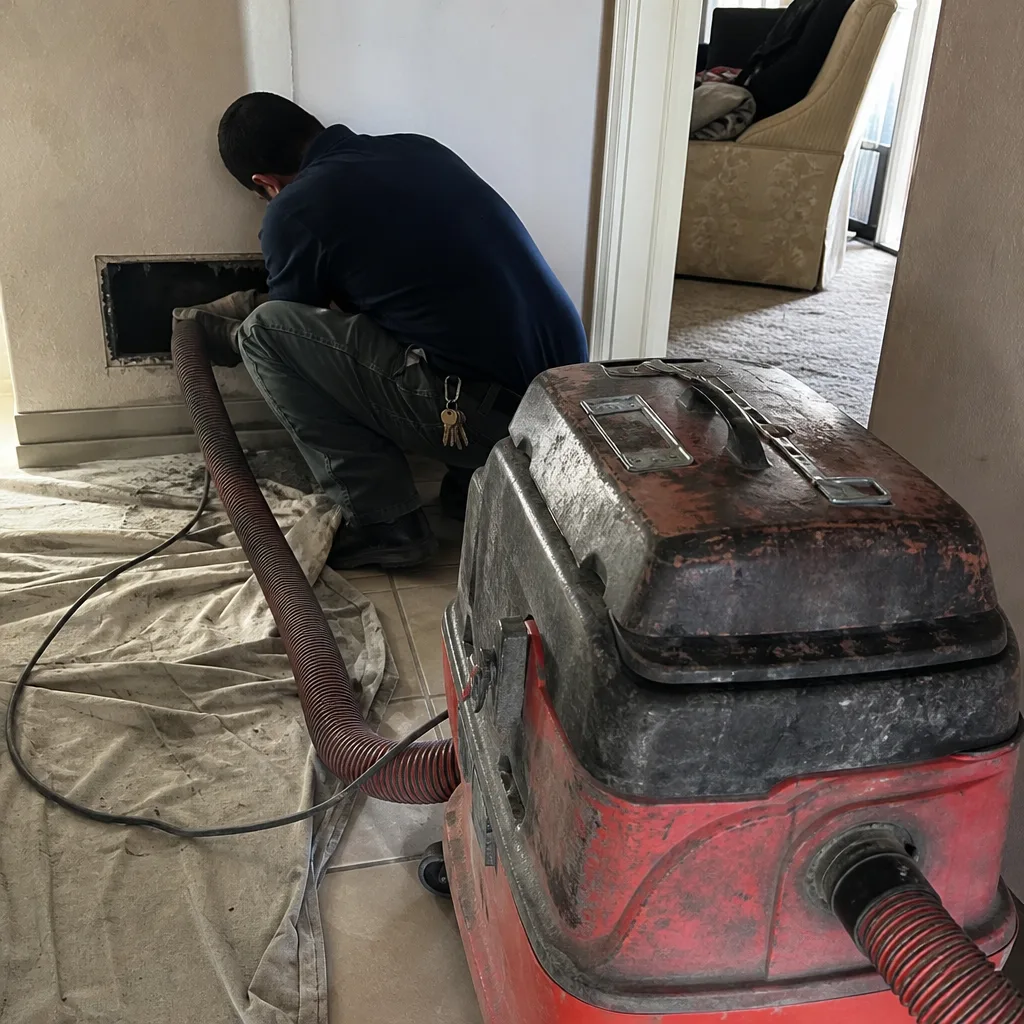 Before
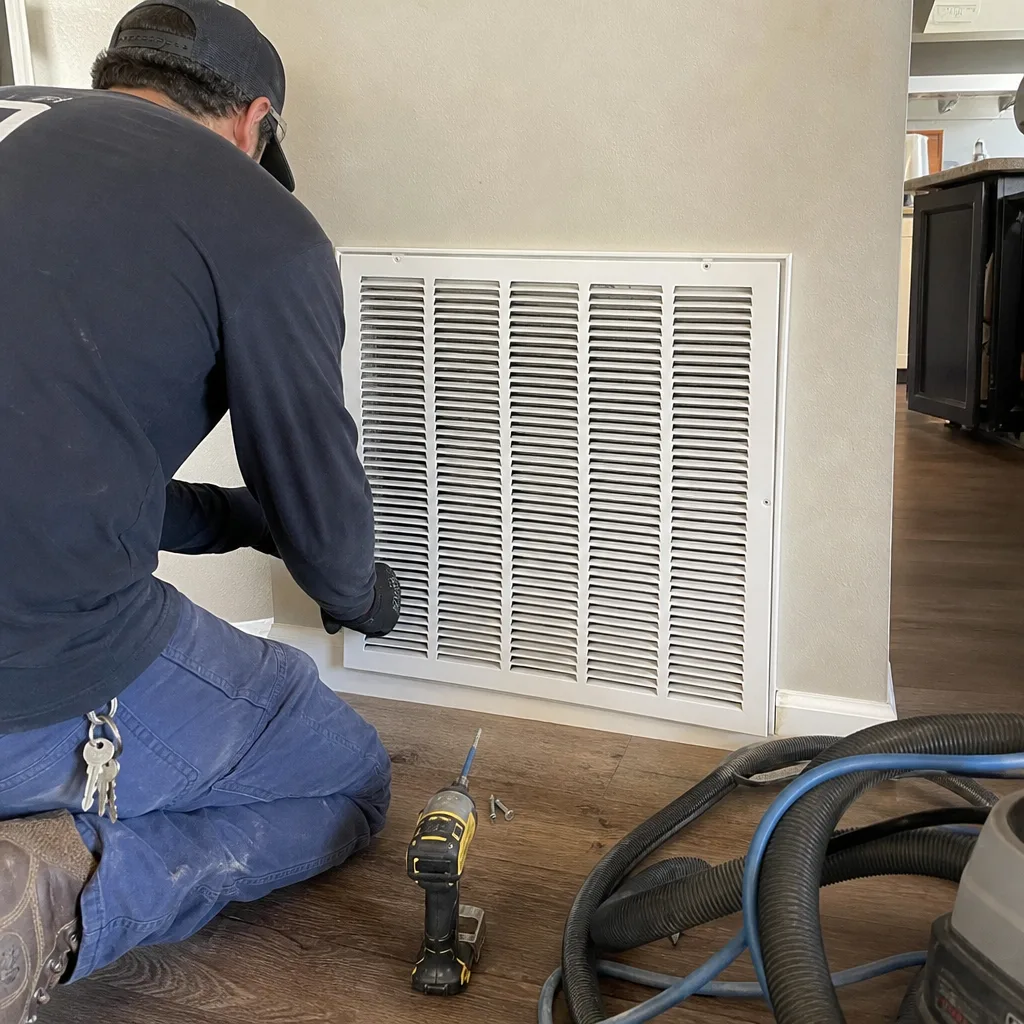 After
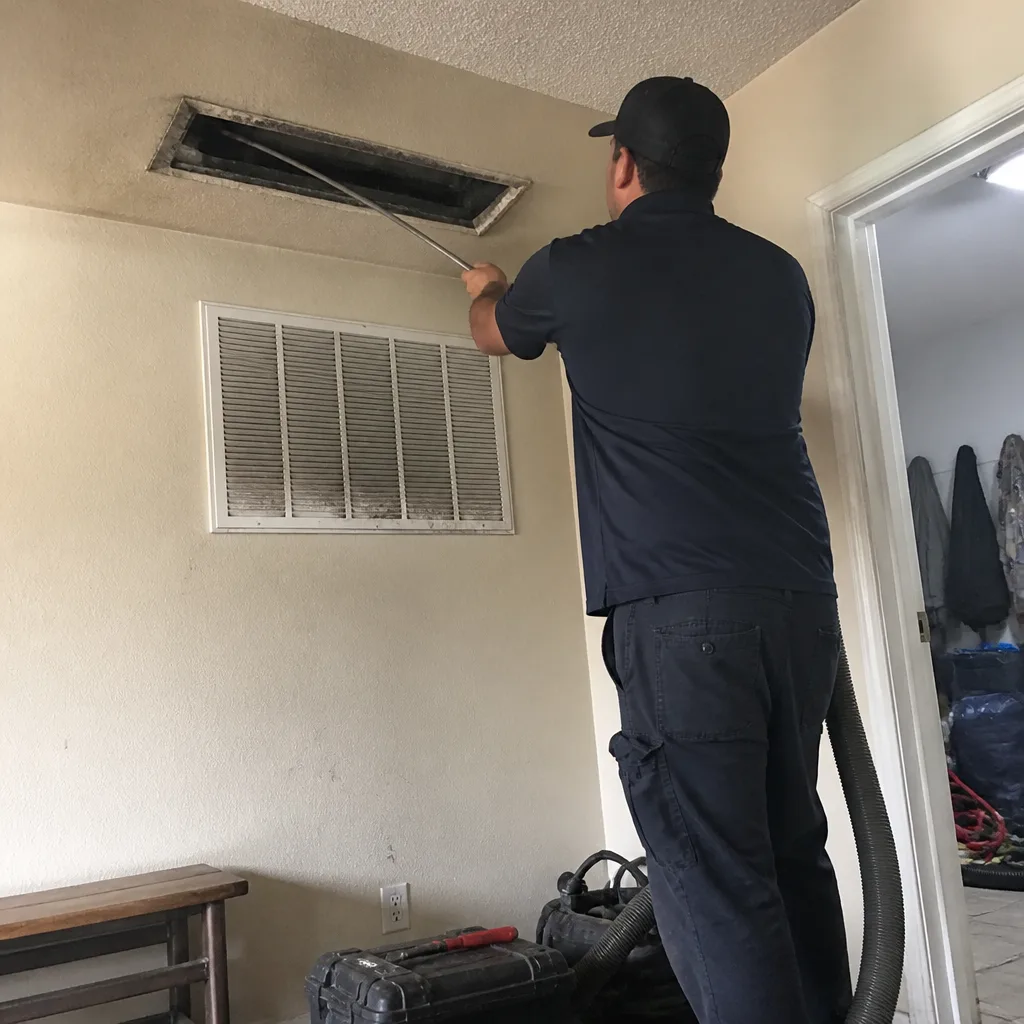 Before
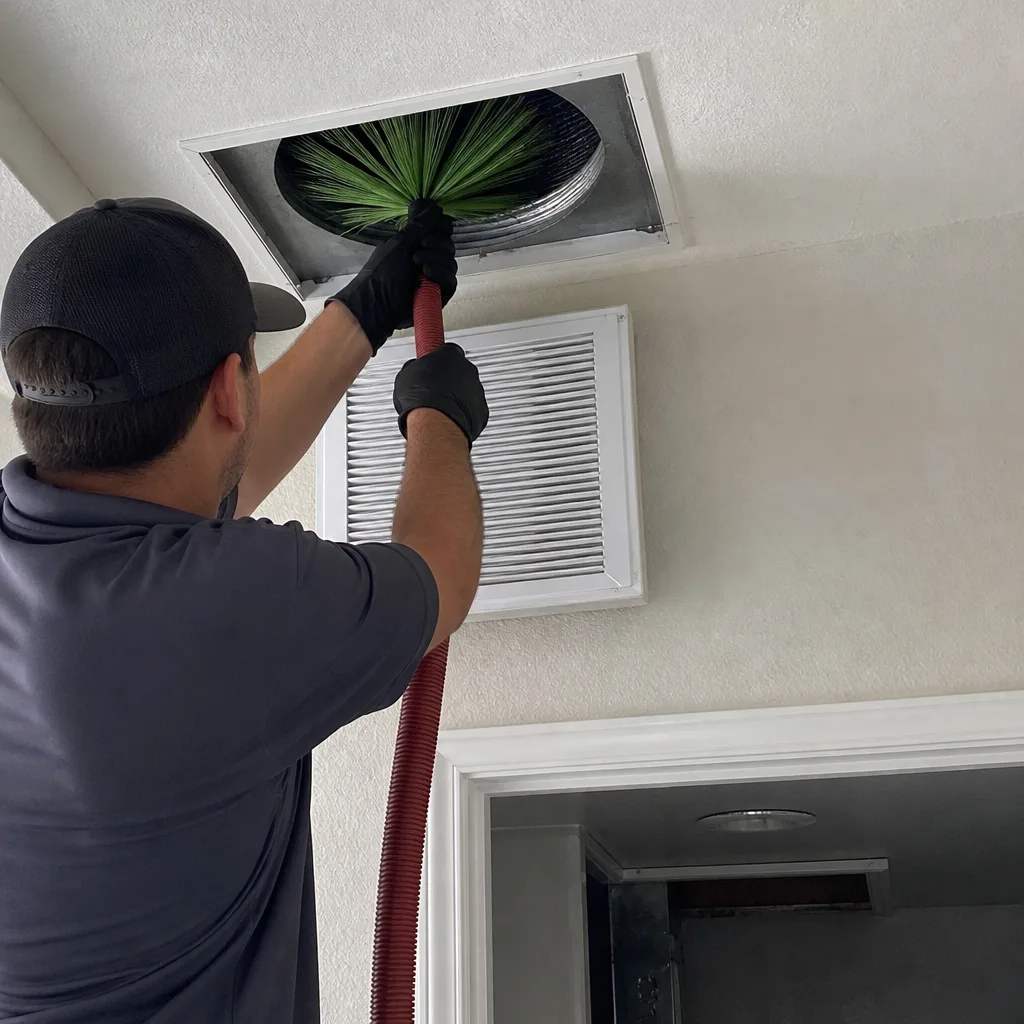 After
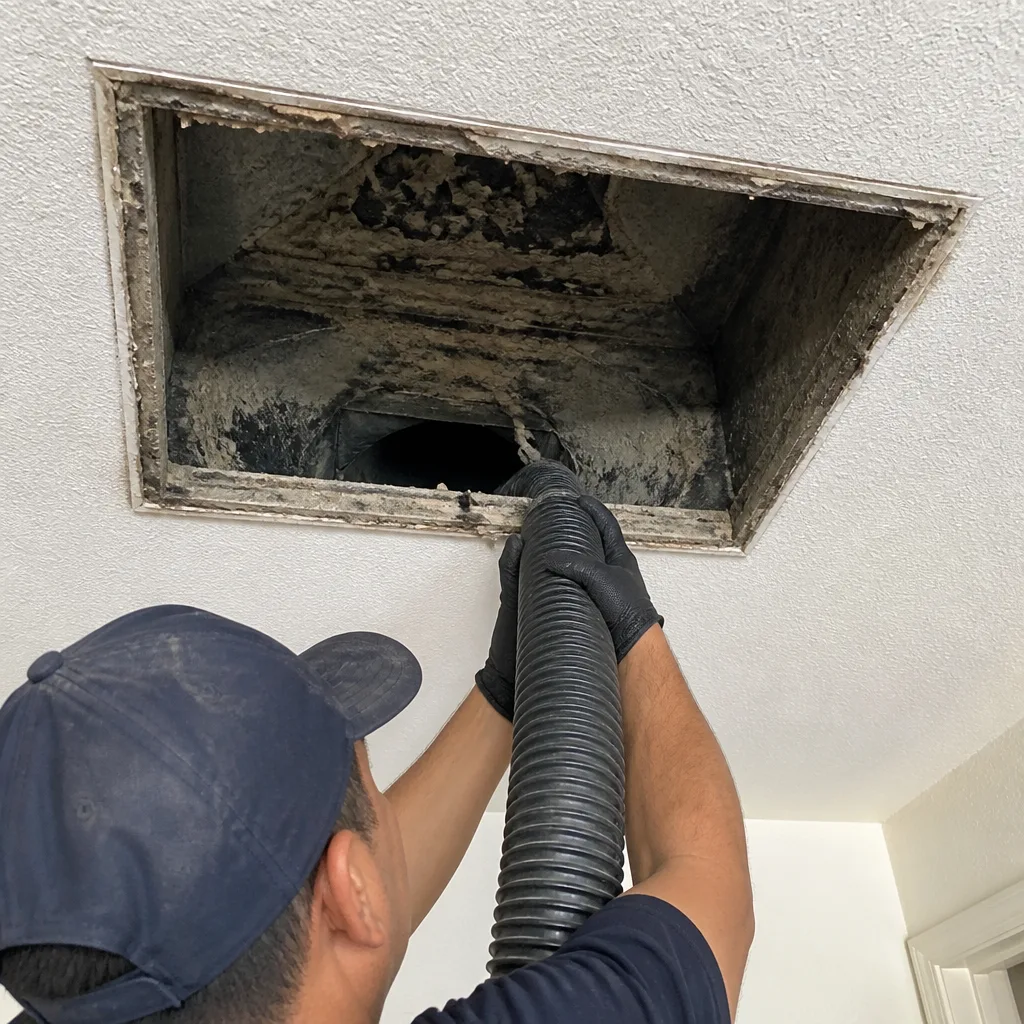 Before
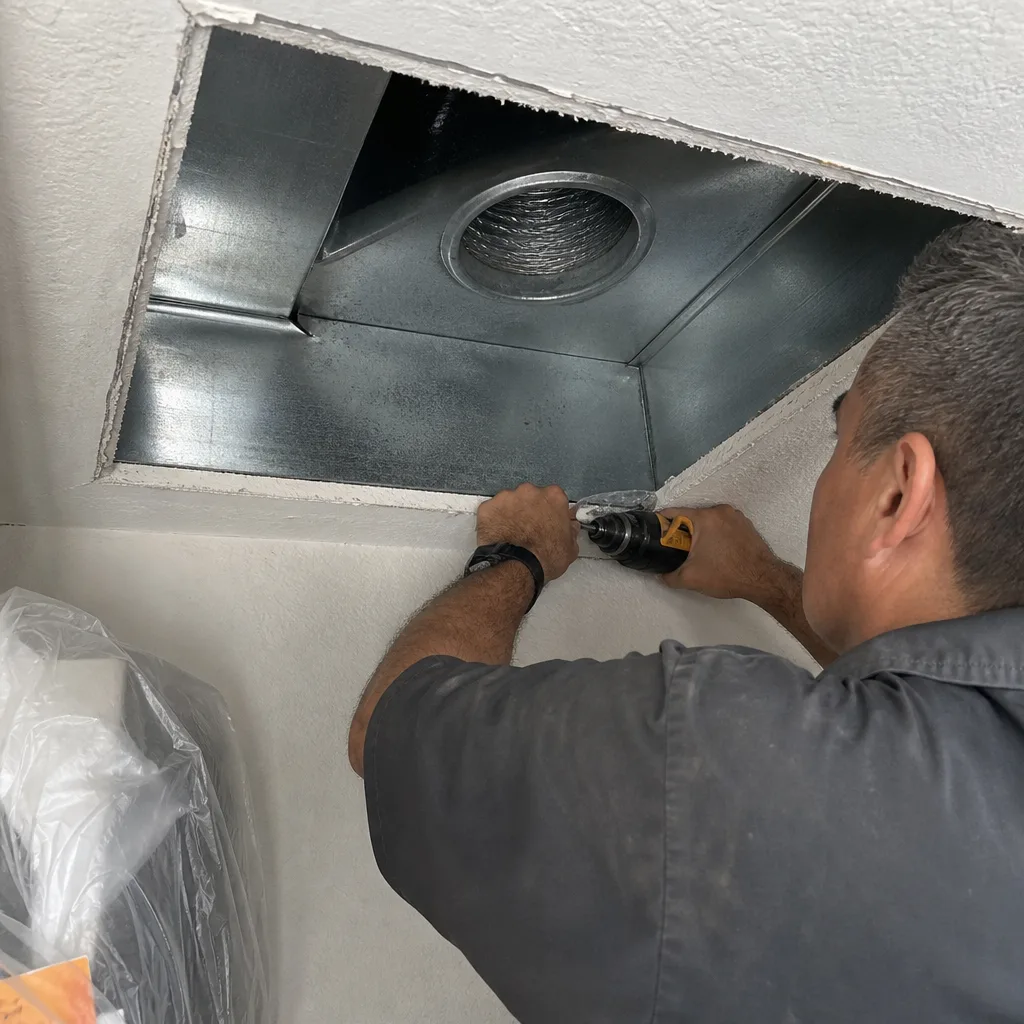 After