
Last updated November 2, 2026
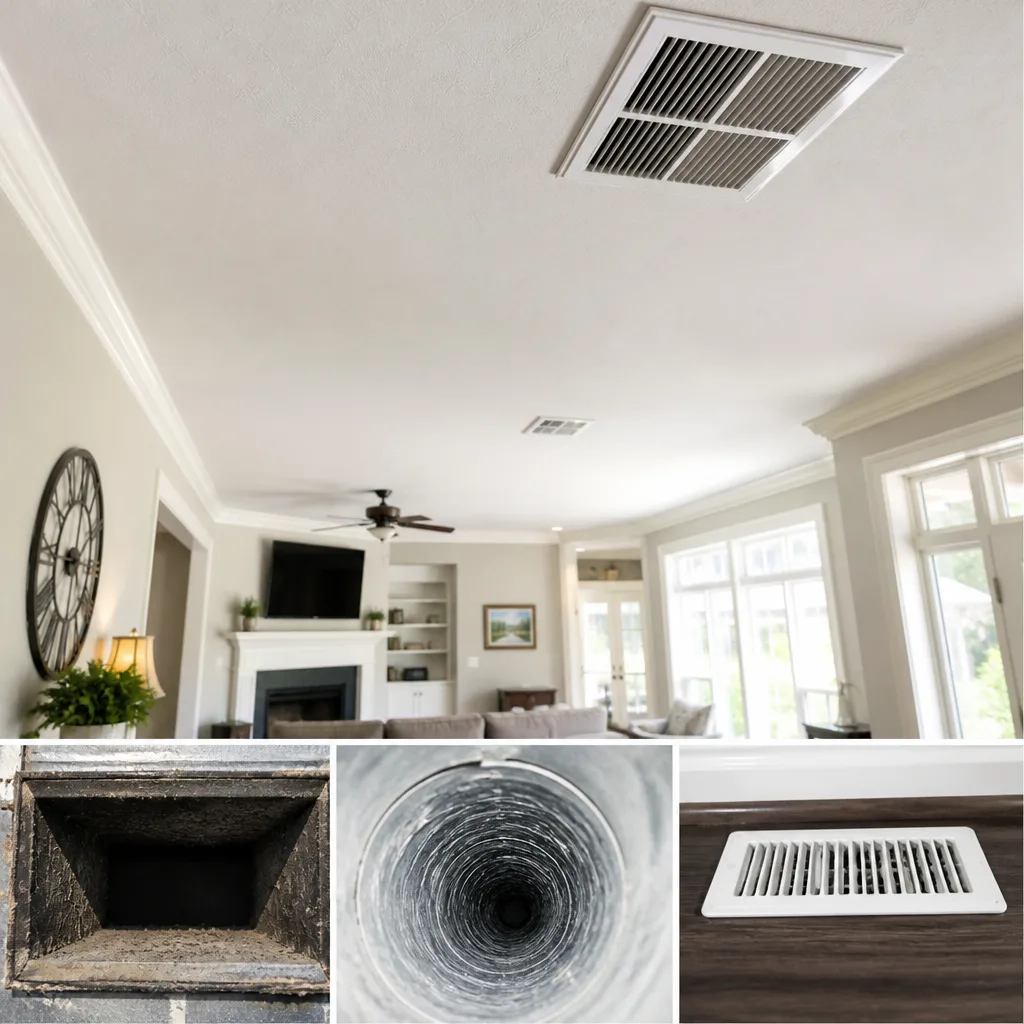 Whole-home duct cleaning
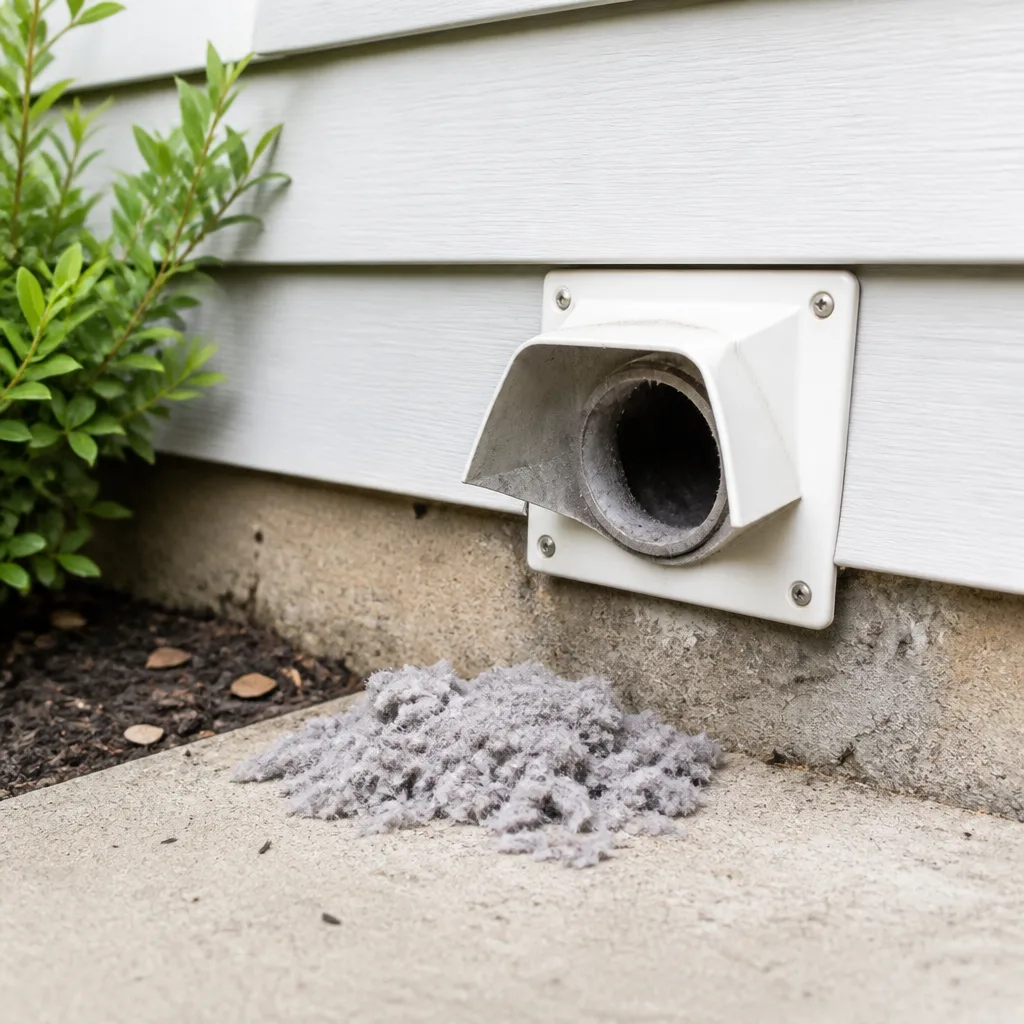 Dryer vent cleaning
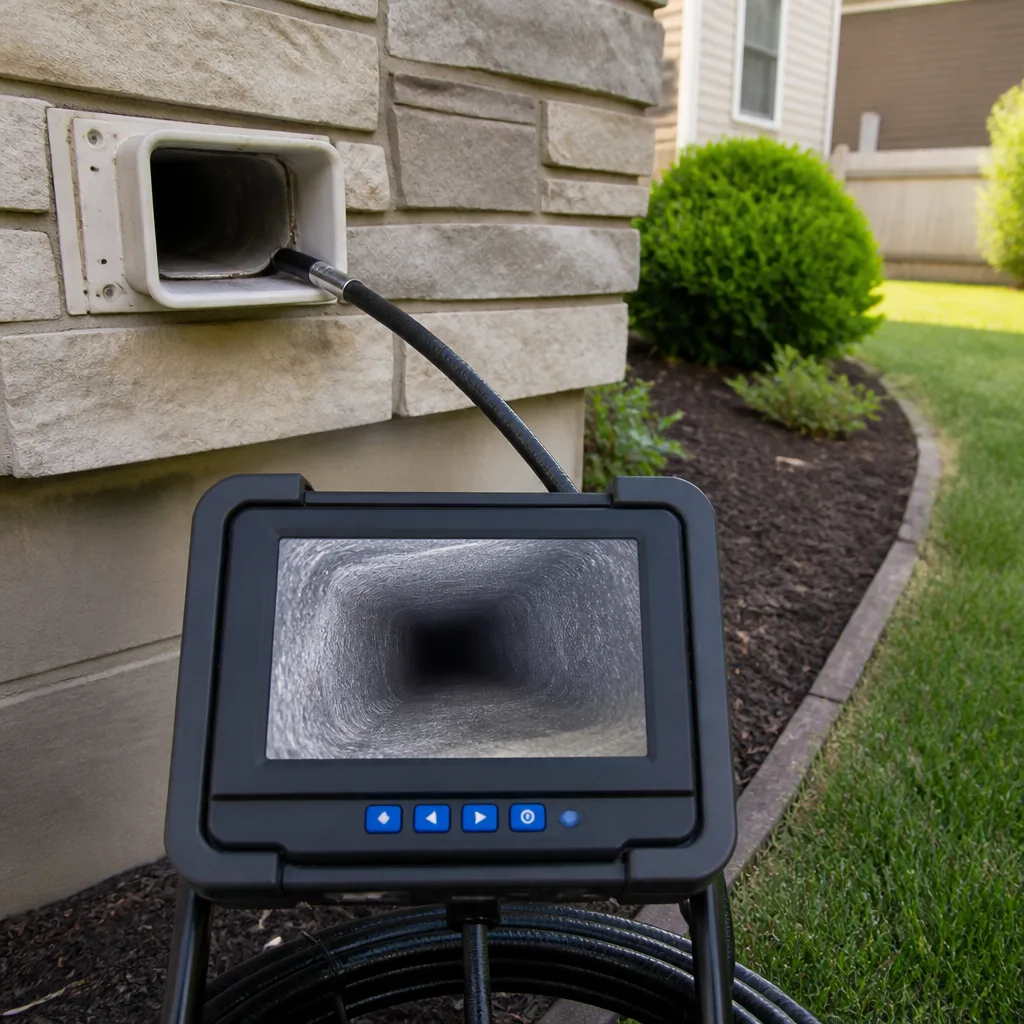 Camera inspection
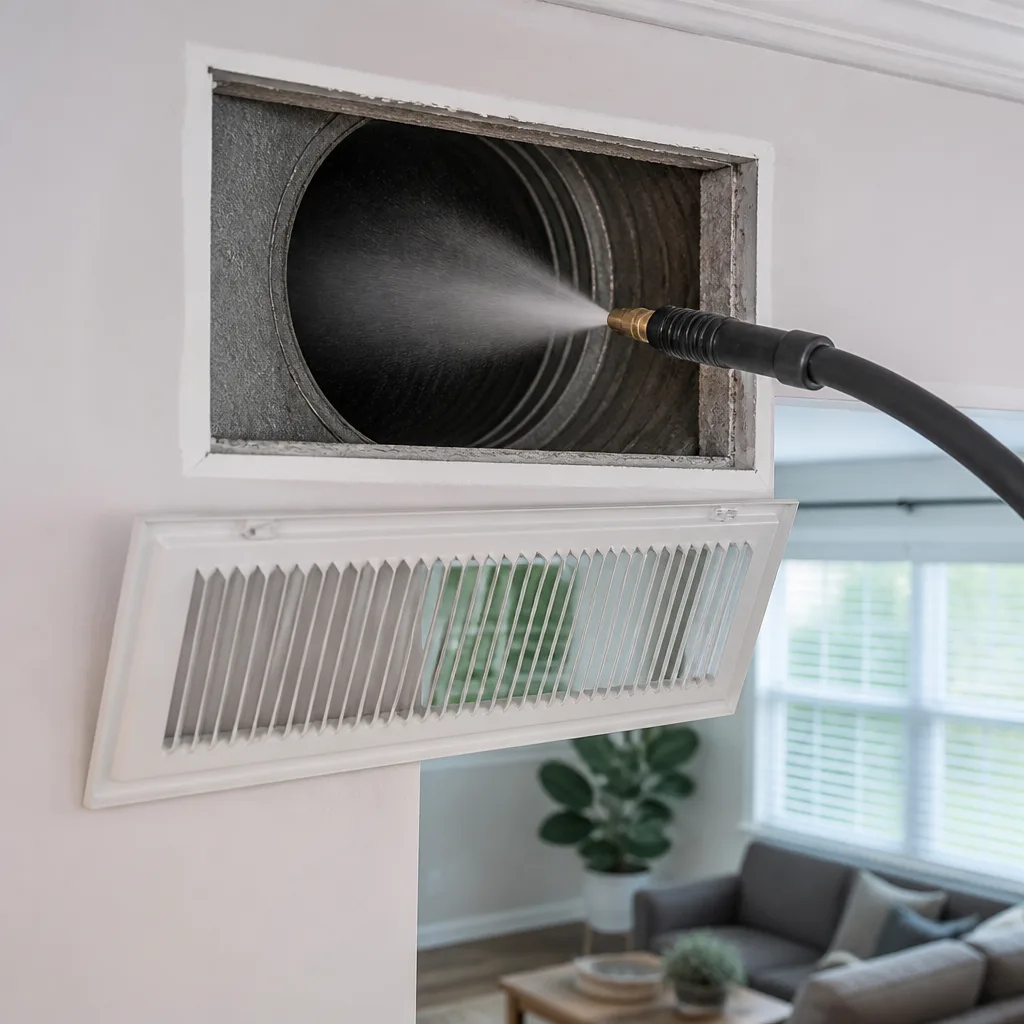 Sanitizing & deodorizing
Whole-system duct and dryer vent check with before-and-after photos - you see exactly what came out of your vents
That "$99 whole-house special" is a bait ad - the real number appears once they are in your hallway, or the "clean" is a shop-vac at the register. We photograph the inside of your ducts before and after instead.
Choosing the Right Air Duct Cleaning Brand: A Buyer’s Guide for Cathedral City
Here’s a truth most duct cleaning marketing won’t tell you: the brand name painted on the side of a van matters far less than the class of equipment inside it. A contractor who name-drops a recognizable vacuum brand but rolls up with a portable unit that can’t hold negative pressure across a full residential system is using brand credibility to hide an equipment gap. In Cathedral City, where desert dust and fine particulate settle into ductwork differently than in coastal climates, that gap shows up in what gets left behind. This guide will walk you through what actually differentiates professional duct cleaning systems, the brands worth asking about, and how to verify a contractor’s equipment on-site before you sign anything.
Quick Answer
The right air duct cleaning brand isn’t a single name – it’s a class of equipment. For Cathedral City homes, you want a contractor running contractor-grade negative-pressure systems (truck-mounted or high-CFM portable units from brands like Nikro or Rotobrush) with HEPA-filtered exhaust and proper agitation tools. What matters most is not the logo but whether the system can maintain at least 2,000 CFM of airflow at the point of extraction across your entire duct network, and whether the technician knows how to verify that pressure before starting.
Styles & brands we work with
- Whole-home duct cleaning
- Dryer vent cleaning
- Camera inspection
- Sanitizing & deodorizing
Table of Contents
- The Three Equipment Classes You’ll Actually Encounter
- Contractor-Grade Brands Worth Asking About by Name
- The Agitation Side: Why Suction Alone Isn’t Enough
- How to Verify Equipment On-Site Before the Job Starts
- Why Cathedral City’s Climate Makes Equipment Choice Matter More
- Why a Duct Specialist Outperforms a Generalist HVAC Company
- The Repair Capability Most Duct Cleaners Don’t Have
- Beyond Cleaning: Filtration Upgrades After the Job
The Three Equipment Classes You’ll Actually Encounter
Look past the brand names for a moment and you’ll find that duct cleaning equipment falls into three distinct classes. Understanding these categories is the single most useful thing you can do as a buyer, because a company’s equipment class determines what they can physically accomplish in your ductwork, regardless of what their marketing says.
Class 1: Truck-Mounted Negative-Pressure Systems. These are the top of the food chain. A powerful vacuum system is mounted inside a truck or trailer, connected to your ductwork through a large-diameter flex hose run through a door or window. These systems can generate 10,000 to 15,000 CFM of airflow – enough to pull air backward through every branch of your duct system and out to the truck. The contamination never passes through your living space. In our work across Cathedral City, we’ve found this class produces measurably different results on homes with extensive duct runs or heavy dust loading.
Class 2: High-CFM Portable Units. These are the serious portables – self-contained units weighing several hundred pounds, often on wheels, running 2,000 to 8,000 CFM with multi-stage filtration including HEPA exhaust. Brands like Nikro and Rotobrush build these units for commercial and remediation-grade work. They’re brought into the home and connected directly to the main trunk line. For most residential systems, a properly used high-CFM portable can achieve the negative pressure needed for a thorough clean. The key word here is properly used – more on that in the verification section below.
Class 3: Low-End Portables. These are the units that give the industry its worst reputation. Small, consumer-grade machines – sometimes literally shop vacs with extended hoses – running 200 to 600 CFM. They cannot maintain negative pressure across a full duct system. They cannot pull debris from branch lines. In many cases, they do nothing more than loosen a small portion of dust near the register and blow the rest around. A contractor using this class of equipment and calling it “professional duct cleaning” is not selling a service; they’re selling the appearance of one.
The practical difference in Cathedral City: most homes here run their HVAC systems hard from April through October. Duct interiors accumulate a fine, dense dust load from the constant air movement and the desert environment. Low-end portables simply cannot move enough air to dislodge and extract that material from a full system. A contractor running Class 1 or Class 2 equipment can.
Contractor-Grade Brands Worth Asking About by Name
Brand names do carry signal when they refer to specific engineering standards. Here are the brands we run and why they matter in a desert market like Cathedral City.
Nikro. Nikro builds high-CFM portable negative-air duct cleaning systems used in both residential and commercial settings. What distinguishes their equipment is the combination of high airflow and multi-stage filtration – including HEPA exhaust options that ensure the air returning to your home during cleaning is cleaner than the air being extracted. For Cathedral City homeowners concerned about indoor air quality during the cleaning itself, a system with HEPA exhaust is a meaningful differentiator. Dust gets pulled out of your ducts; it does not get redistributed into your living room.
Rotobrush. Rotobrush is known for its integration of agitation and extraction in a single system. Their rotary brush systems scrub duct walls while simultaneously vacuuming, which matters in situations where dust has adhered to duct surfaces rather than simply resting in the duct. This is common in Cathedral City because of the low humidity – dust remains dry and lightweight, but repeated heating and cooling cycles can bake finer particles onto metal duct surfaces. A brush system physically dislodges what suction alone leaves behind.
Abatement Technologies. This name comes up when a job requires more than routine cleaning. Abatement Technologies builds HEPA-filtered negative-air machines and containment systems used in remediation and sensitive-environment work. If a duct system houses contamination beyond typical dust – construction debris from a remodel, vermin activity, or a past water event – HEPA-filtered negative-air containment is the appropriate tool. Not every home needs this level of service, but a company that owns this equipment has a capability edge over one that has to rent it from a supplier, or that simply avoids jobs requiring it.
You’ll notice we didn’t mention Honeywell or Aprilaire in the context of duct cleaning equipment. That’s intentional. Those are product lines for filtration and humidity control that live inside your HVAC system – relevant to what happens after the ducts are clean, not during the cleaning itself. We’ll get to that distinction later in the guide.
The Agitation Side: Why Suction Alone Isn’t Enough
If negative pressure is the engine of duct cleaning, agitation is the transmission. Suction alone will remove loose debris, but the fine, adhered particulate common in Cathedral City ductwork requires physical disruption before it can be extracted. The tools used for this agitation matter as much as the vacuum system, and different tools suit different duct materials.
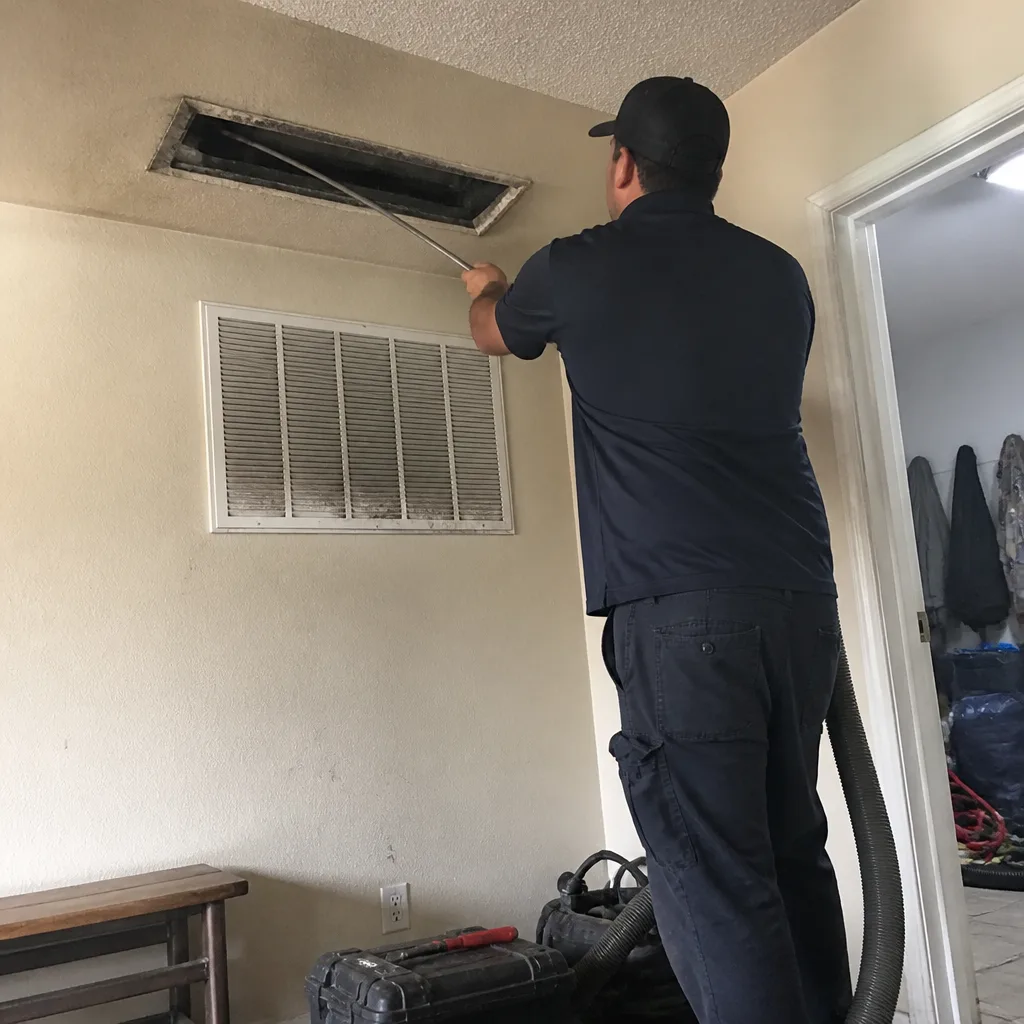
Pneumatic Whips. A pneumatic whip is a flexible rod with spinning tip nozzles, inserted through access points into the ductwork. Compressed air drives the whip, which strikes the duct walls and dislodges dust and debris. Think of it as a mechanical broom that moves through the system. Whips are the workhorse for standard sheet-metal ductwork – effective at breaking loose the fine, baked-on particulate that builds up in Cathedral City systems.
Air Skippers. These are flat, flexible devices that ride on a cushion of compressed air along the bottom surface of a duct, agitating debris upward into the extraction airstream. They’re particularly useful in square or rectangular trunk lines where gravity has settled material along the bottom edge. In our experience, air skippers are underutilized in the industry – a lot of competition relies on whips alone and leaves the bottom-plane debris behind.
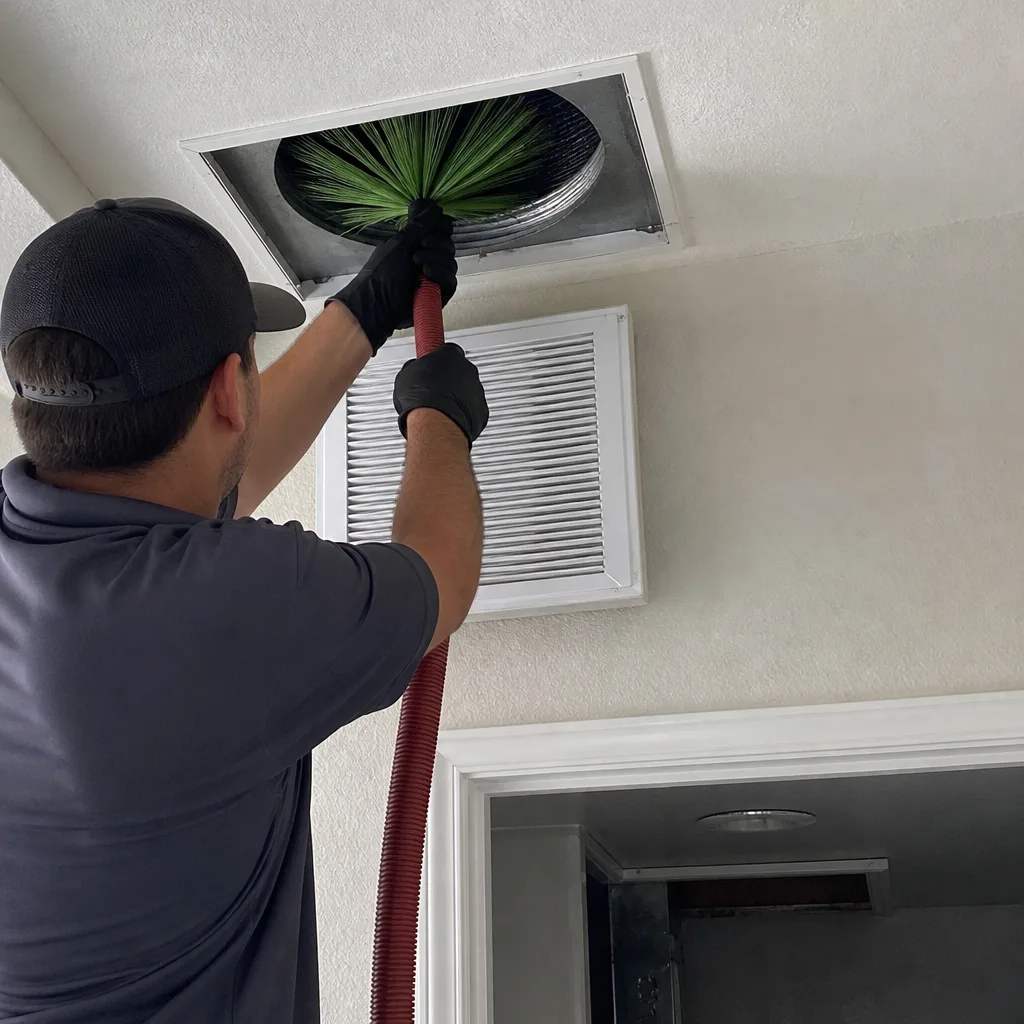
Rotary Brush Systems. When you’re dealing with flex duct – the insulated, wire-coil tubing used in many residential branch lines – a rotary brush is the appropriate agitation tool. Whips and skippers can be too aggressive for flex duct, risking tears in the inner liner. A rotary brush system, like those integrated into Rotobrush units, cleans the interior surface with controlled contact. This matters in Cathedral City because a high percentage of single-family homes use flex duct in attic spaces, where daytime temperatures exceed 120°F and compromised flex liner becomes an immediate air-loss problem.
The wrong agitation tool for the duct material is not just ineffective – it can be damaging. A company that runs one technique on everything is a company that either doesn’t understand duct construction or doesn’t care. Ask what agitation method they plan to use and why it’s suited to your system’s materials.
How to Verify Equipment On-Site Before the Job Starts
This is the section that will save you from most of the industry’s bait-and-switch behavior. You don’t need to be an HVAC engineer to verify that a contractor’s equipment can do what they claim. Here’s a five-step process you can run before the work begins:
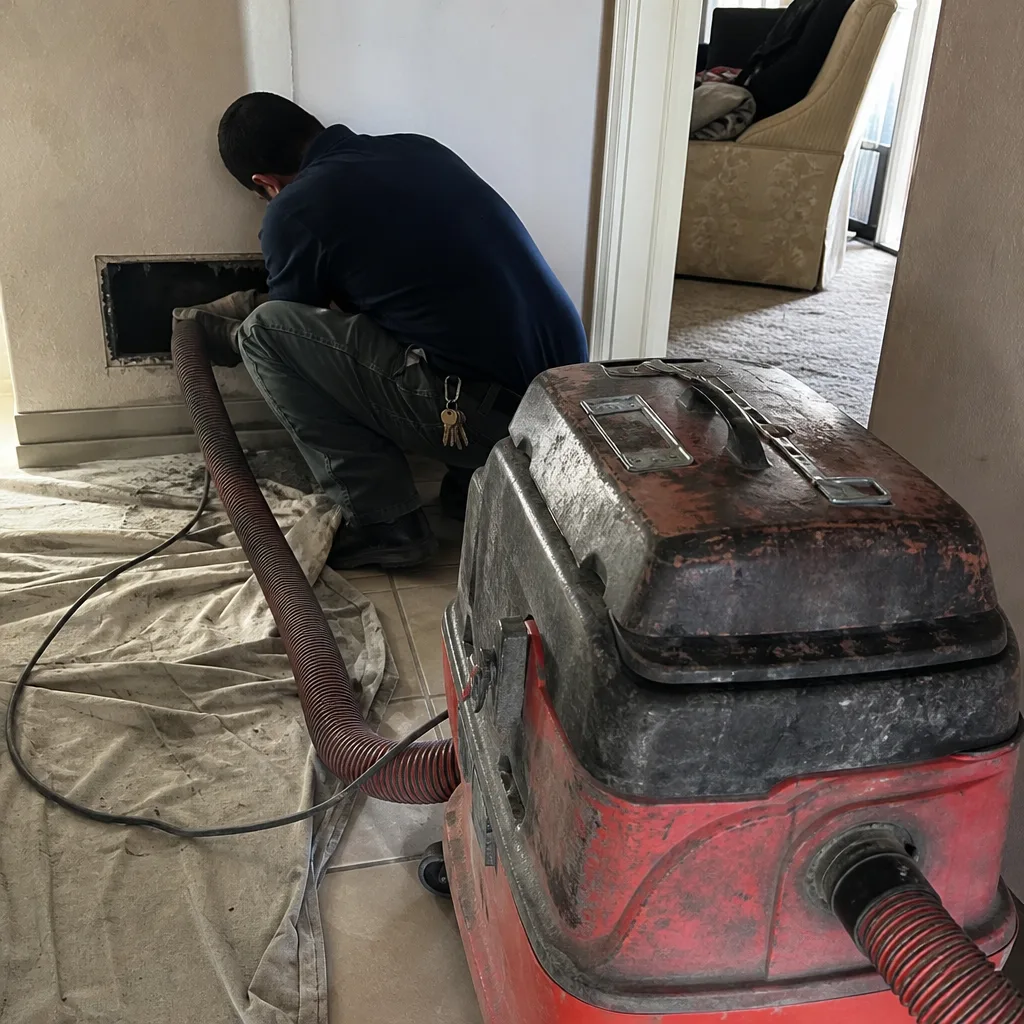
- Look at the unit before it’s connected. A contractor-grade negative-pressure system is large. It has visible filtration housings, a powerful motor assembly, and a duct connection port of at least 8 inches in diameter – often larger. If the entire machine can be carried in one hand, it cannot clean a full duct system. A Nikro or equivalent high-CFM portable weighs several hundred pounds. A truck-mounted system is even more obvious: there’s a large vacuum unit installed in the vehicle and a hose running to your home.
- Ask to see the filtration setup. Contractor-grade systems have multi-stage filtration – typically a pre-filter for bulk debris followed by a fine filter (sometimes HEPA) for exhaust air. If the technician cannot open a filter housing and show you a filter, the machine is not filtering what it extracts; it may be exhausting fine dust back into your home.
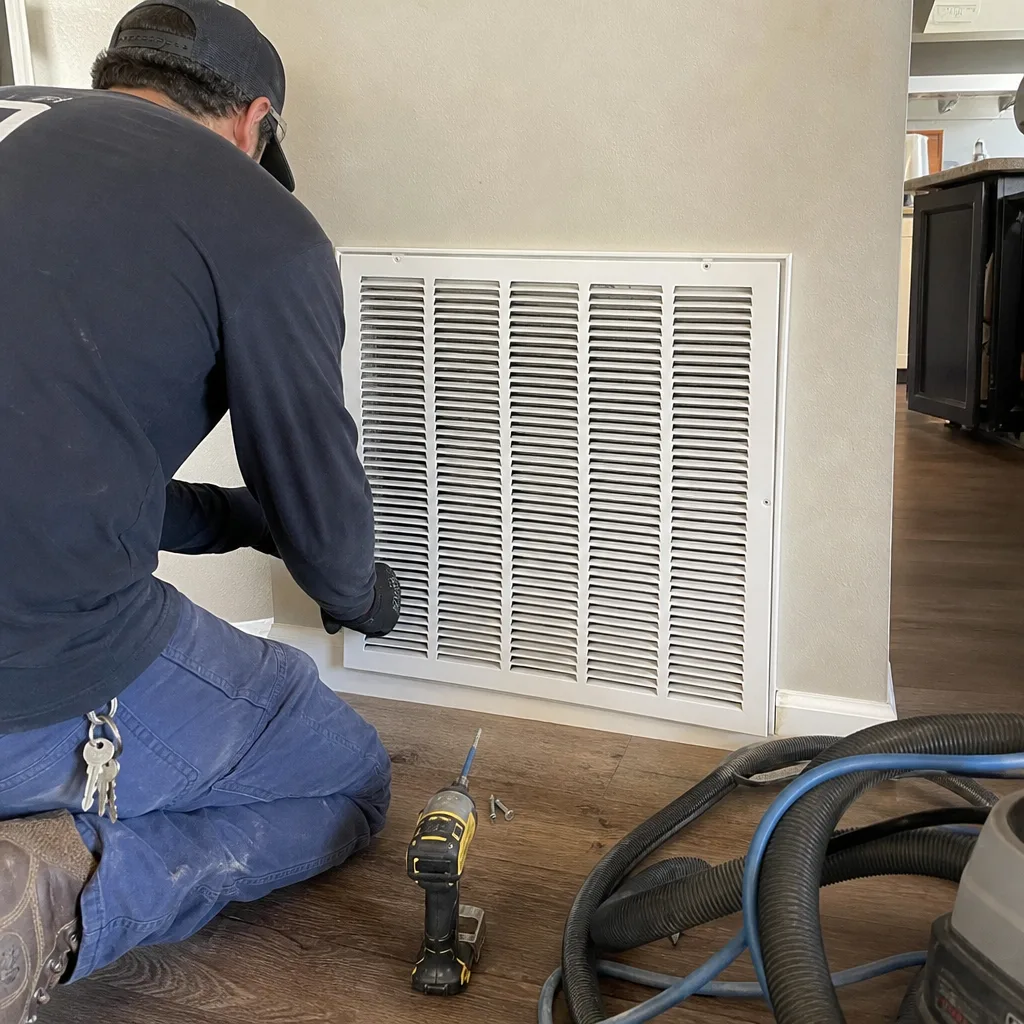
- Confirm the vacuum is actually connected to the system. The extraction hose should connect to your main trunk line, not simply be placed inside a register. Look for the connection point: a section of duct opened up, a hose collar attached, and the hose running from that point to the vacuum. If the technician appears to be vacuuming individual registers with a handheld hose, that is not negative-pressure duct cleaning. That’s surface cleaning.
- Run the plastic-bag test. While the system is running and connected, hold a standard kitchen trash bag up to a supply register in a room distant from the extraction point. A properly set-up negative-pressure system will pull the bag against the register opening – gently but visibly. No suction at the register means the system is not pulling air through that branch. That’s the simple test that reveals whether equipment is actually doing what the technician says it’s doing.
- Ask what access points they’re creating. Proper duct cleaning requires creating access holes in the ductwork – typically in the trunk line or plenum – that are sealed afterward with metal patches and sealant. A contractor who plans to clean exclusively through existing registers is not accessing the full system. This is a major tell: no access points, no full-system clean.
We’ve run these steps dozens of times in Cathedral City homes, and we’ve seen the full range of reactions from other contractors. A professional has no problem with any of this. A contractor running inadequate equipment will get defensive, change the subject, or find a reason to leave. That response is its own answer.
Why Cathedral City’s Climate Makes Equipment Choice Matter More
Duct cleaning is not a one-size-fits-all service, and Cathedral City’s specific environmental conditions change what adequate cleaning performance looks like. Here’s what we observe regularly in this market.
Fine particulate loading. The Coachella Valley sees consistent wind-driven dust from the surrounding desert. That dust is finer and more abrasive than the household lint and pet dander common in more temperate climates. Fine particulate works its way through return-air filters more readily and accumulates in duct systems faster. It also responds differently to agitation – it tends to pack into corners and along the bottom plane of ducts, requiring more aggressive mechanical disruption than a standard home in, say, San Diego would need.
Extended run seasons. Cathedral City HVAC systems run heavily for six to eight months of the year, often continuously during summer peaks. That constant air movement means more air passes through the duct system each year than in a coastal home with a shorter cooling season. More air movement equals more particulate deposited per year. A duct system here may reach the same contamination level in three years that a milder-climate system reaches in eight.
Dry heat and adhesion. The low relative humidity in Cathedral City has a counterintuitive effect. Dust that enters the ductwork remains dry and often lightweight – but repeated thermal cycling, where attic temperatures swing from 70°F overnight to 140°F during peak summer days, causes fine particulates to embed into duct surfaces. The combination of dry, lightweight dust and baked-on adhesion means a cleaning system needs both high airflow for the loose debris and effective agitation for the adhered layer. A low-CFM portable has neither.
Attic-installed flex duct. A significant share of Cathedral City single-family homes were built during the housing expansion of the 1980s and 1990s, with HVAC systems installed in attic space. That means long flex-duct runs in the hottest part of the house. Duct damage in attics – from heat degradation, rodent activity, or poor original installation – directly impacts system efficiency and indoor air quality. A cleaning that doesn’t include an inspection of those attic runs is incomplete.
This is also where air duct repair capability in Cathedral City enters the picture. In attic-installed systems, the line between “cleaning problem” and “structural problem” is often blurry. We’ll address that in a later section.
Why a Duct Specialist Outperforms a Generalist HVAC Company
Here’s a structural fact about the duct cleaning industry that most consumers never see: a lot of the companies advertising duct cleaning are general HVAC contractors who treat it as an add-on service. Duct cleaning is not what they do; it’s what they do when a service call volume is low or when a customer asks about it. This matters for outcomes, and here’s why.
Equipment ownership vs. rental. A full-service duct specialist owns and maintains contractor-grade cleaning equipment. It’s the core of their operation, and it gets used regularly, serviced properly, and operated by people who know it deeply. A generalist HVAC company that offers duct cleaning as a secondary service often rents portable equipment per job – which means the technician may be using a machine they see once a month, with variable quality, and no institutional expertise in its operation. The equipment brand on the rental unit might be the same as a specialist uses. The operational competence won’t be.
Scope of work clarity. A specialist knows what a full-system clean actually involves: creating access points, agitating each branch, extracting under negative pressure, documenting results. A generalist dispatched to a duct cleaning job may default to a shorter protocol – that’s just human nature when something is not the primary trade. We’ve seen this in Cathedral City: customers who paid for a “full duct cleaning” that consisted of vacuuming the registers and calling it done.
Diagnostic depth. This is the distinction that matters most for homeowners. A duct specialist who spends every working day inside duct systems develops diagnostic pattern recognition that a generalist doesn’t have. We see issues that a vacuum-and-go operator will miss: a disconnected flex-duct branch in an attic chase, a crushed section where a previous contractor knelt on the trunk line, a return-air leak pulling attic air into the living space. Those are repair findings, not cleaning findings – and most duct cleaning companies can’t do anything about them even if they find them.
If you’re evaluating contractors in Cathedral City, ask a simple question: what percentage of your company’s total work is duct-related? A specialist will say most or all of it. A generalist will hedge. That answer tells you more than any equipment brochure.
The Repair Capability Most Duct Cleaners Don’t Have
Here’s the gap that separates a comprehensive duct service from a basic cleaning operation: what happens when the cleaning uncovers damage? Because in Cathedral City, damage is common. Attic-installed flex duct degrades in the heat. Rodents find their way into attic chases. Construction work knocks sections loose. Past HVAC service calls leave disconnections nobody noticed.
A traditional duct cleaning company can show you the problem – if they notice it at all. But they can’t fix it. You’ll get a cleaning report with a note saying “duct damage found, contact an HVAC contractor” and then you start a second round of phone calls, estimates, and scheduling. Two service visits, two invoices, two gaps in the timeline.
This is where our operation is structured differently. We treat air duct repair as a core service, not an afterthought. The same technician who finds a disconnected branch, a crushed trunk section, or a failed flex liner can repair it in the same visit. The repair work is done before the cleaning is finalized, so you’re not paying for a clean system that immediately re-contaminates through a gap in the ductwork.
This capability matters more in Cathedral City than it would elsewhere, because attic conditions here accelerate duct failure. The notion of “we clean it, and if we find damage we fix it” is not a marketing slogan for us – it’s the only logical way to deliver a duct cleaning that actually holds its result. A cleaning that leaves damage in place is a temporary improvement at best.
What should you look for here? Ask a prospective contractor directly: “If you find damaged ductwork during cleaning, can you repair it on the spot, or do I need to hire someone else?” The answer reveals whether you’re dealing with a cleaning-only operation or a true duct specialist.
Beyond Cleaning: Filtration Upgrades After the Job
Once the ductwork is clean, a logical next question presents itself: how do I keep it that way? This is where the Honeywell and Aprilaire product lines we mentioned earlier enter the conversation, and it’s worth understanding what these products actually do.
Honeywell. In this context, the relevant Honeywell product line is whole-home filtration – media cabinets and electronic air cleaners installed at the HVAC system itself, capturing particulate before it enters the ductwork. A media cabinet with a high-MERV filter element captures significantly more fine dust than a standard 1-inch fiberglass filter. For Cathedral City homeowners dealing with desert dust, this is a meaningful upgrade. The clean ducts stay cleaner longer because less material is entering the system in the first place.
Aprilaire. Aprilaire is best known for whole-home humidification and dehumidification systems. In Cathedral City’s dry climate, whole-home humidification is less common – most homeowners here are fighting dryness, not excess humidity. But Aprilaire’s filtration products and thermostat-integrated air quality controls do apply. The practical point: a duct specialist who stocks these product lines can integrate them into the same service visit as the cleaning, upgrading the whole air-quality picture rather than just the duct interior.
One of the advantages of working with a company that handles the full spectrum – duct cleaning, repair, and air quality upgrades – is that the upgrade recommendation is grounded in what was actually found during the cleaning. Not a speculative upsell. If we see a duct system that was heavily loaded with fine particulate despite a standard filter, that’s evidence for a media cabinet upgrade. If the ductwork loads were modest and the filter was adequate, we say so. The cleaning informs the recommendation, and the recommendation is specific to your system, not a scripted pitch.
Common Mistakes to Avoid
Here are the most frequent errors Cathedral City homeowners make when selecting a duct cleaning contractor, and what each one costs them.
- Choosing on price alone. A $99 whole-house duct cleaning in Cathedral City is not a deal; it’s a signal that the company cannot afford to run professional equipment. Low-end portables or register-only vacuuming is what fits in that price point. The result is a surface-level clean that leaves the system body untouched. You’ve paid for the appearance of service.
- Never asking about equipment class. Most homeowners ask about years in business, licensing, or reviews – all reasonable – but skip the single most predictive question: “What equipment are you using, and what CFM does it move?” A contractor who can’t answer this question fluently either doesn’t know their own equipment or is running something they’d rather not describe.
- Accepting register-only cleaning. If the technician’s plan is to vacuum through your existing wall registers without creating access points in the trunk line, that is not a duct cleaning. It’s a visible-dust removal service. The majority of your duct system – the trunk lines and branches behind the walls – remains untouched.
- Hiring an HVAC generalist for duct work. It can feel natural to call the company that installed or services your HVAC system. But duct cleaning requires a different equipment set and a different skill focus than HVAC service. A generalist is often renting portable equipment they don’t know well, and they don’t have a repair capability for duct-specific damage.
- Skipping dryer vent service. Dryer vents are a separate system from your HVAC ducts and a major fire hazard when neglected. Cathedral City’s dry air compounds the issue – the lint load is drier and more combustible. A proper duct specialist should be able to handle dryer vent cleaning in Cathedral City as a standalone service, not as an afterthought.
- Not documenting the before and after. Any reputable contractor should offer before-and-after documentation – typically photos or video of the duct interior before and after cleaning, often through the access points they create. If a contractor can’t or won’t show you the interior of your ducts, how do you know the work was actually done? This is not an unreasonable request; it’s the verification a professional should welcome.
- Ignoring the repair question. The sequence matters. If you clean first and discover damage later, you’ve paid for a service that will not hold. In Cathedral City, where attic duct damage is common, ask the repair question up front: what happens if you find damage? The answer determines whether you’re buying a clean that lasts or a clean that looks good for a month.
See the difference
 Before
 After
 Before
 After
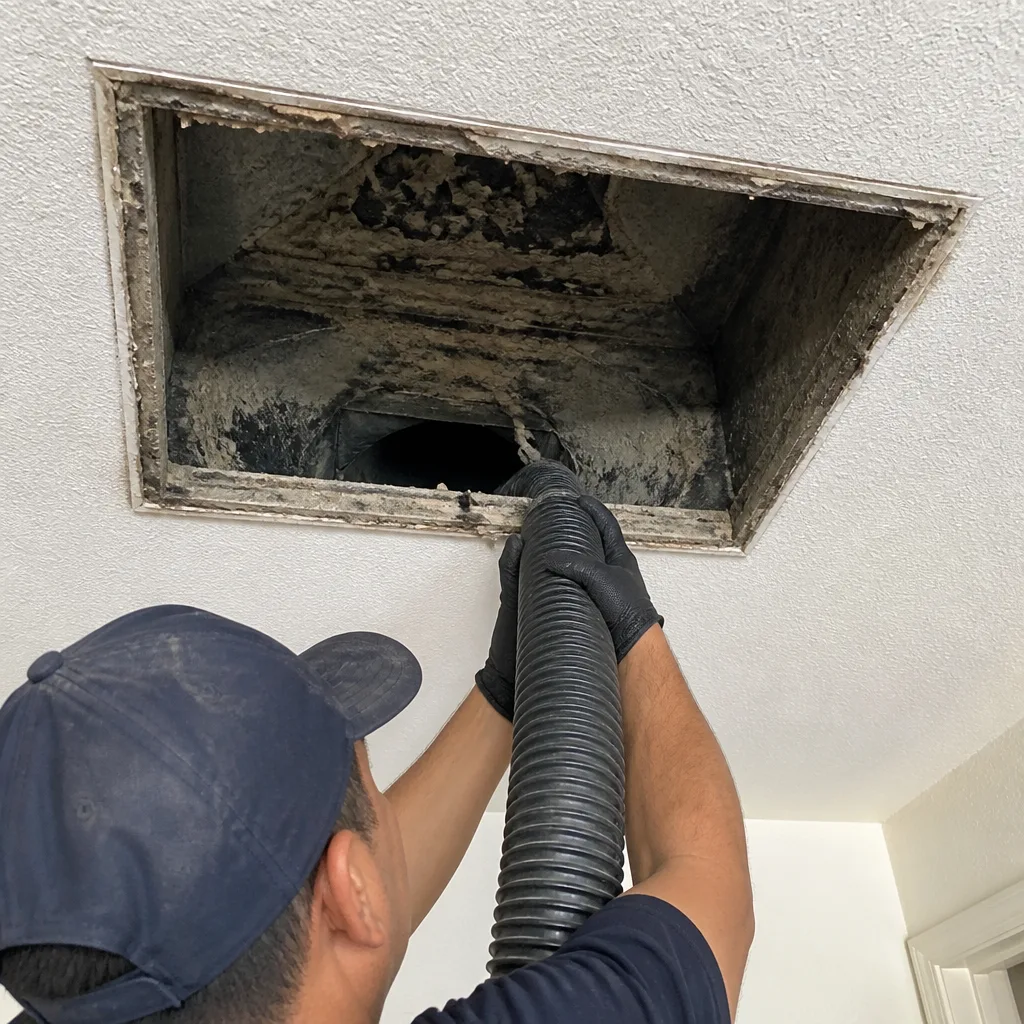 Before
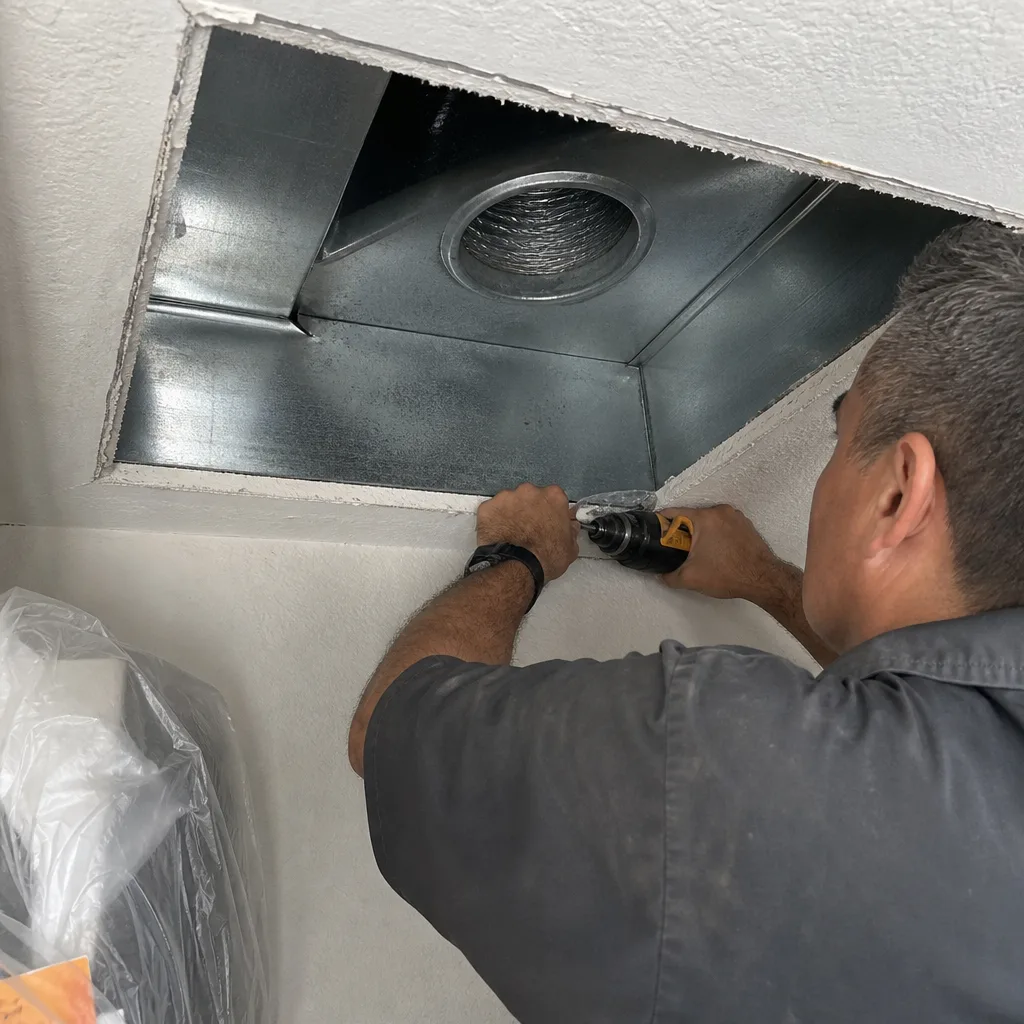 After
When to Call a Professional
Some situations clearly call for professional equipment and a trained duct specialist. If you notice visible dust accumulating quickly on furniture despite regular HVAC operation, if some rooms in your Cathedral City home are consistently dustier than others, or if you can see dust buildup inside the vent registers themselves, those are signs the duct system is contributing to the problem. A musty smell when the system starts up, unexplained allergy symptoms at home, rising energy bills without a change in usage, or a recent renovation or construction project that put drywall dust into the system are all also signals that the ducts need attention. If you’ve never had your ducts cleaned and you’ve lived in Cathedral City for five or more years, the odds are your system would benefit from an inspection. Duct Cleaning Cathedral City offers free estimates in Cathedral City – call (866) 968-5699 to schedule a consultation.
Frequently Asked Questions
For a single-family home in Cathedral City, a full-system air duct cleaning with contractor-grade negative-pressure equipment typically runs between $400 and $800, depending on the size of the home, the number of systems, and the accessibility of the ductwork. Homes with multiple HVAC systems, extensive attic-installed flex duct, or heavy contamination levels will run higher. Be cautious of quotes below $200 – they almost always represent register-only cleaning or low-end portable equipment that cannot clean a full system. Call (866) 968-5699 for an exact quote on your home. Estimates are free.
Cheaper quotes almost always reflect cheaper equipment and a shorter scope of work. A company quoting $99 or $149 is not running a truck-mounted or high-CFM portable system – the cost structure doesn’t allow it. They’re typically using low-end portables and cleaning only visible register areas, not the full duct system. The work takes less time, requires less skilled labor, and leaves most of the ductwork untouched. The price difference isn’t a bargain; it’s a signal about what will actually be done to your system.
Ask for before-and-after photo or video documentation through the access points created during the job. A professional duct cleaning requires cutting access holes into the ductwork, and those access points provide a direct view of the duct interior. Any contractor can photograph before and after through those openings. If a contractor refuses or cannot provide interior documentation, treat that as a red flag. You can also run the plastic-bag test during the job to confirm negative pressure is actually being maintained at your registers.
In Cathedral City’s high-dust, heavy-run climate, most homes benefit from a full duct cleaning every 3 to 5 years. Homes with pets, residents with allergies or respiratory conditions, recent renovations, or smokers in the household may need service more frequently. Homes in areas with heavy wind-driven dust exposure may also fall on the shorter end of that range. After a professional cleaning, run the system with a clean filter and note how the air quality holds up – that will tell you more about your specific home’s pace of accumulation than any generic guideline.
Cleaning removes particulate – dust, debris, pet dander, construction material – through mechanical agitation and negative-pressure extraction. Sanitizing, when offered, typically involves applying an antimicrobial product to the interior surfaces of the ductwork after cleaning. It’s not a substitute for mechanical cleaning, and in homes where the primary concern is dust rather than biological contamination, it may not be necessary. If a contractor is selling sanitizing as a substitute for cleaning, or pricing it as an expensive add-on after a barely-effective clean, walk away. The mechanical removal is the core of the service.
In some cases, yes – but not through the mechanism most people assume. Duct cleaning itself doesn’t typically produce large direct energy savings; the coil and blower are larger factors. What does move the needle is the repair work that a proper duct service identifies and resolves. A disconnected flex duct branch in an attic space means conditioned air is blowing into a 140°F attic instead of into your living room. That’s a direct, measurable energy loss, and it’s the kind of finding that emerges from a proper duct inspection during a cleaning. The cleaning creates the access; the repair delivers the efficiency gain. Call (866) 968-5699 to have your system evaluated.
The Bottom Line
Choosing the right air duct cleaning brand in Cathedral City comes down to understanding equipment capability rather than brand recognition. A contractor running high-CFM negative-pressure equipment with proper agitation tools – and with the diagnostic skills to identify and repair duct damage – produces a fundamentally different outcome than a company running a low-end portable or a generalist renting equipment for a one-off job. Verify equipment on-site, ask the repair question, and insist on documentation. The right contractor will welcome every one of those checks. The wrong one will resist them.
Written by the team at Duct Cleaning Cathedral City, serving Cathedral City since 2012.