
Last updated November 2, 2026
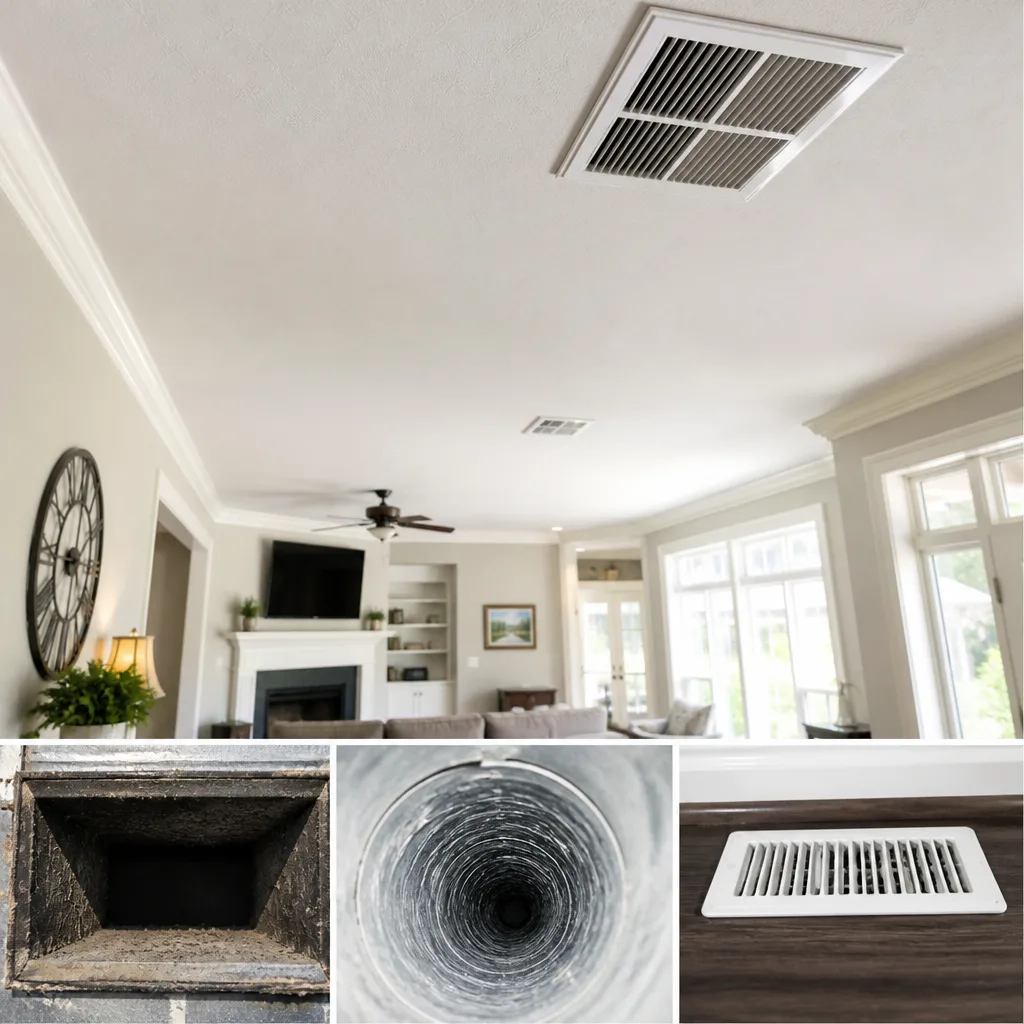 Whole-home duct cleaning
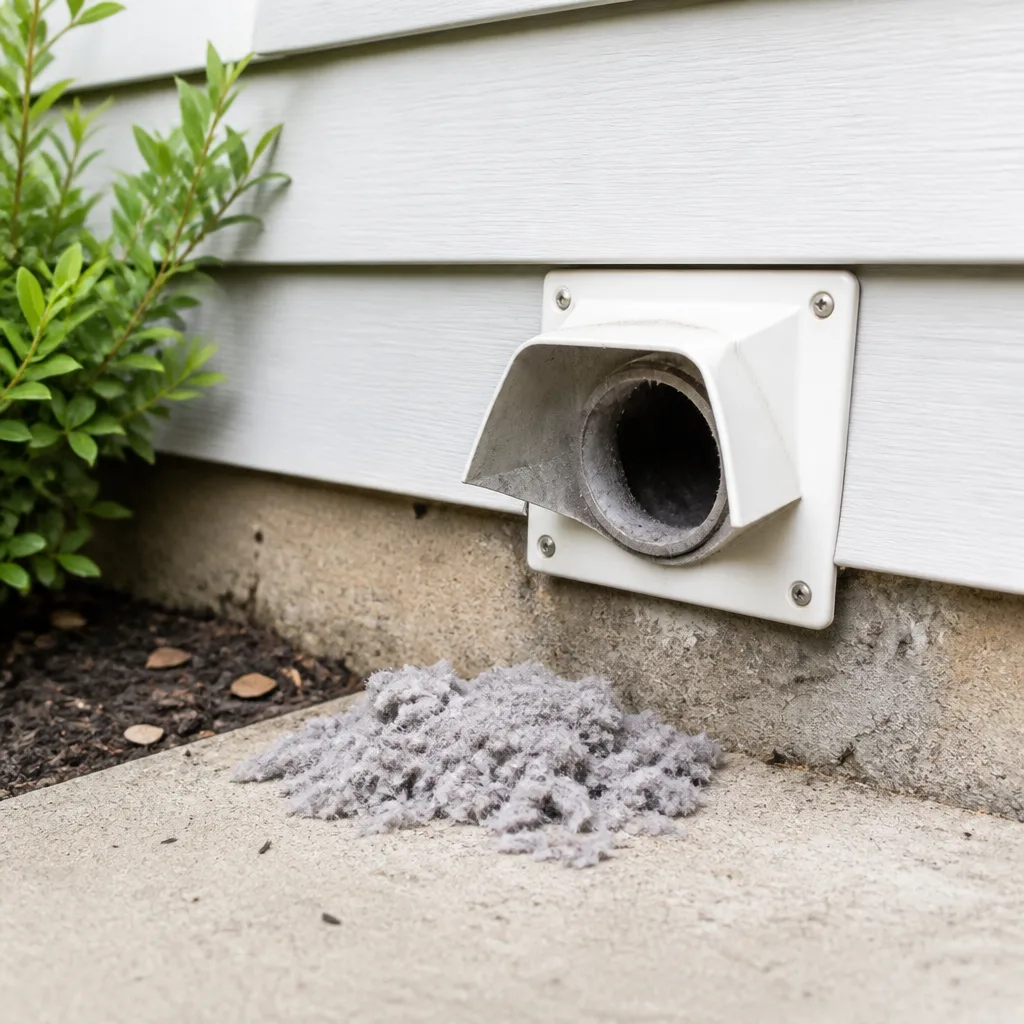 Dryer vent cleaning
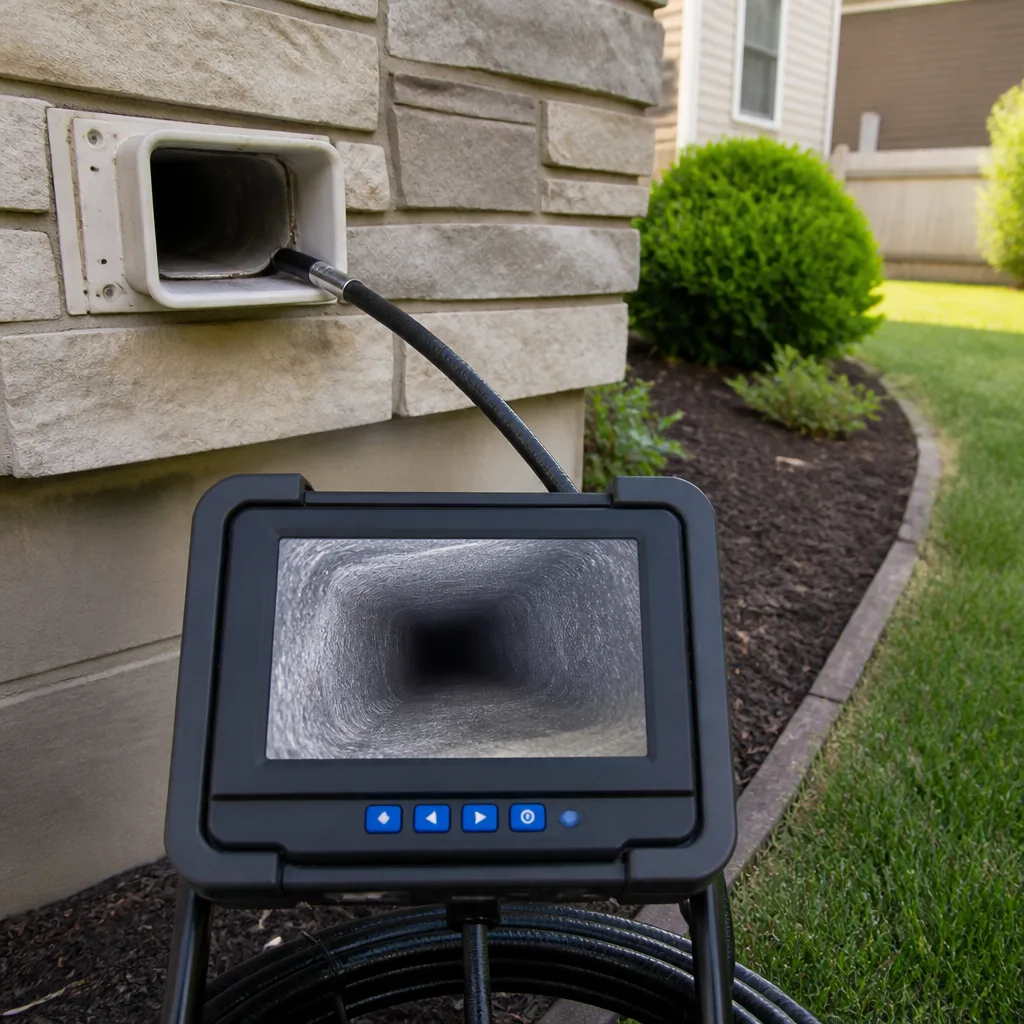 Camera inspection
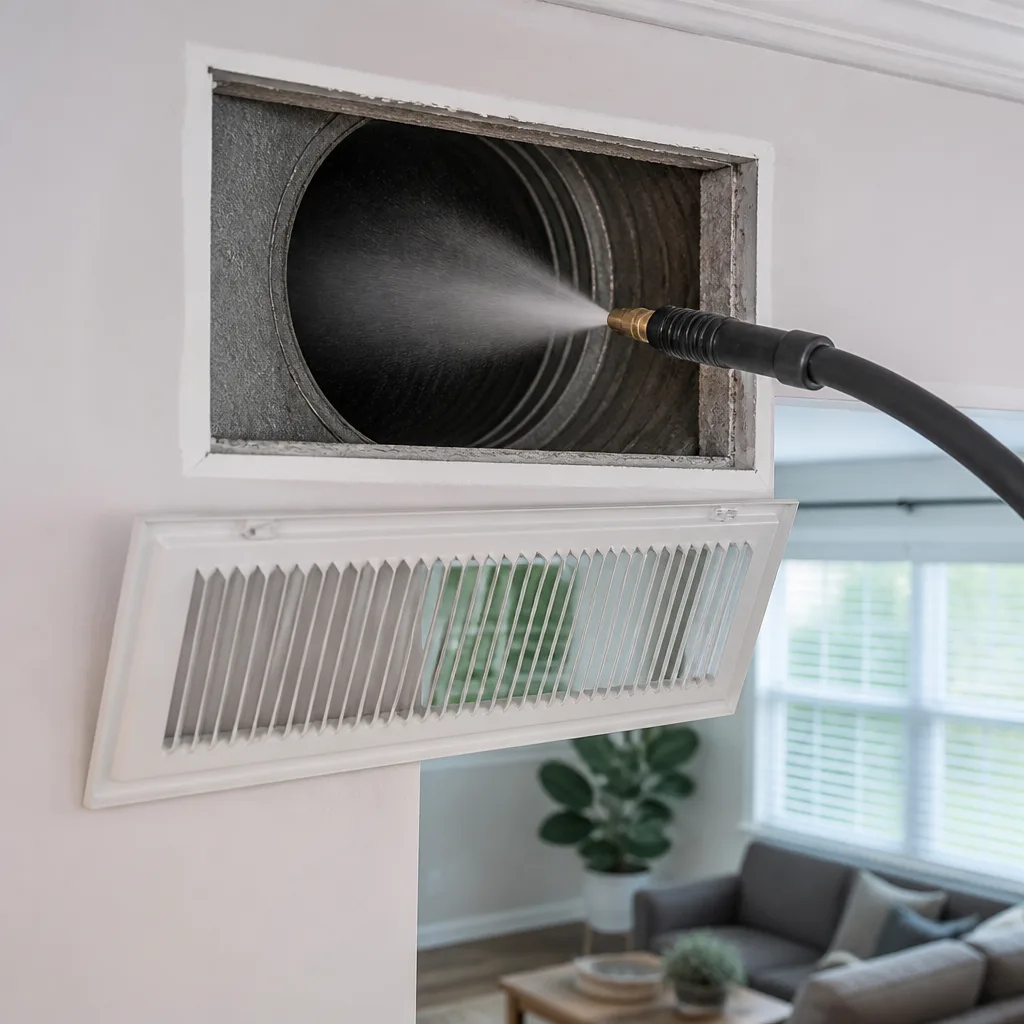 Sanitizing & deodorizing
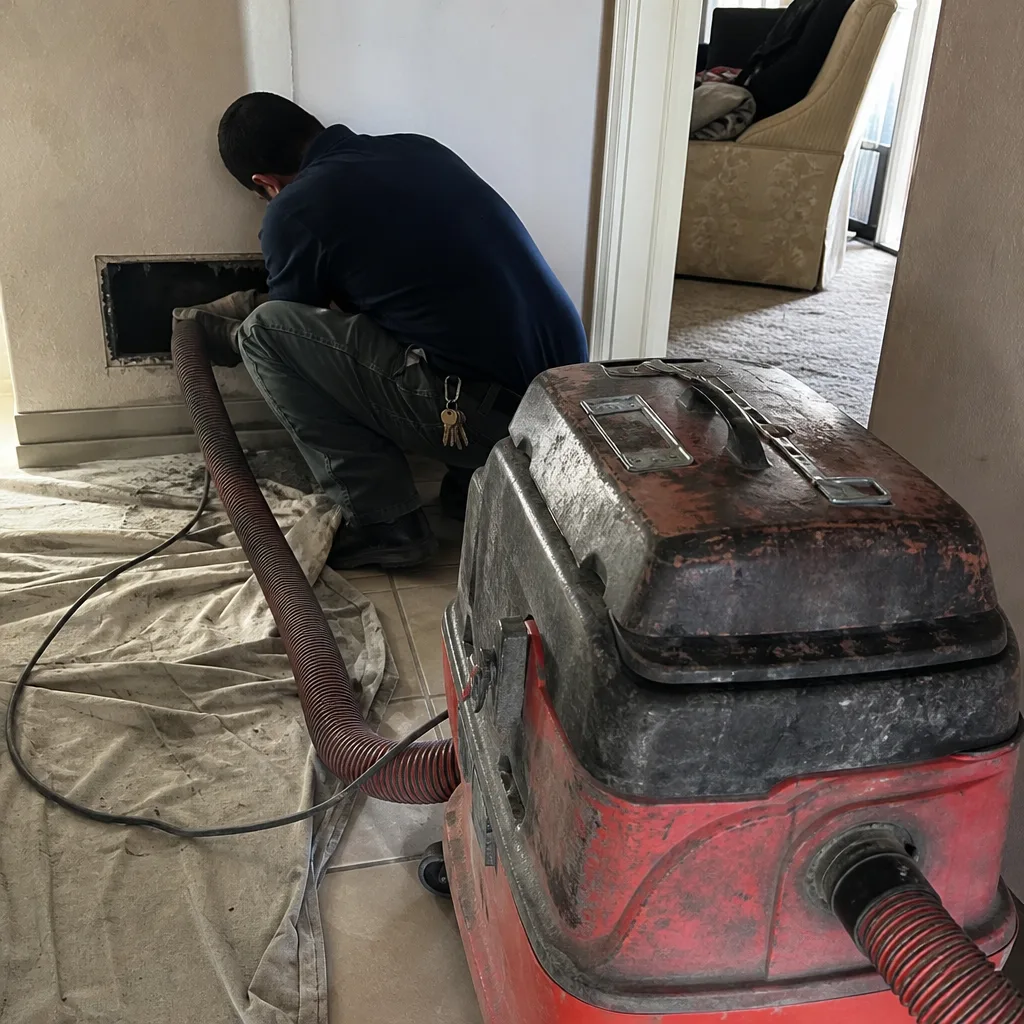
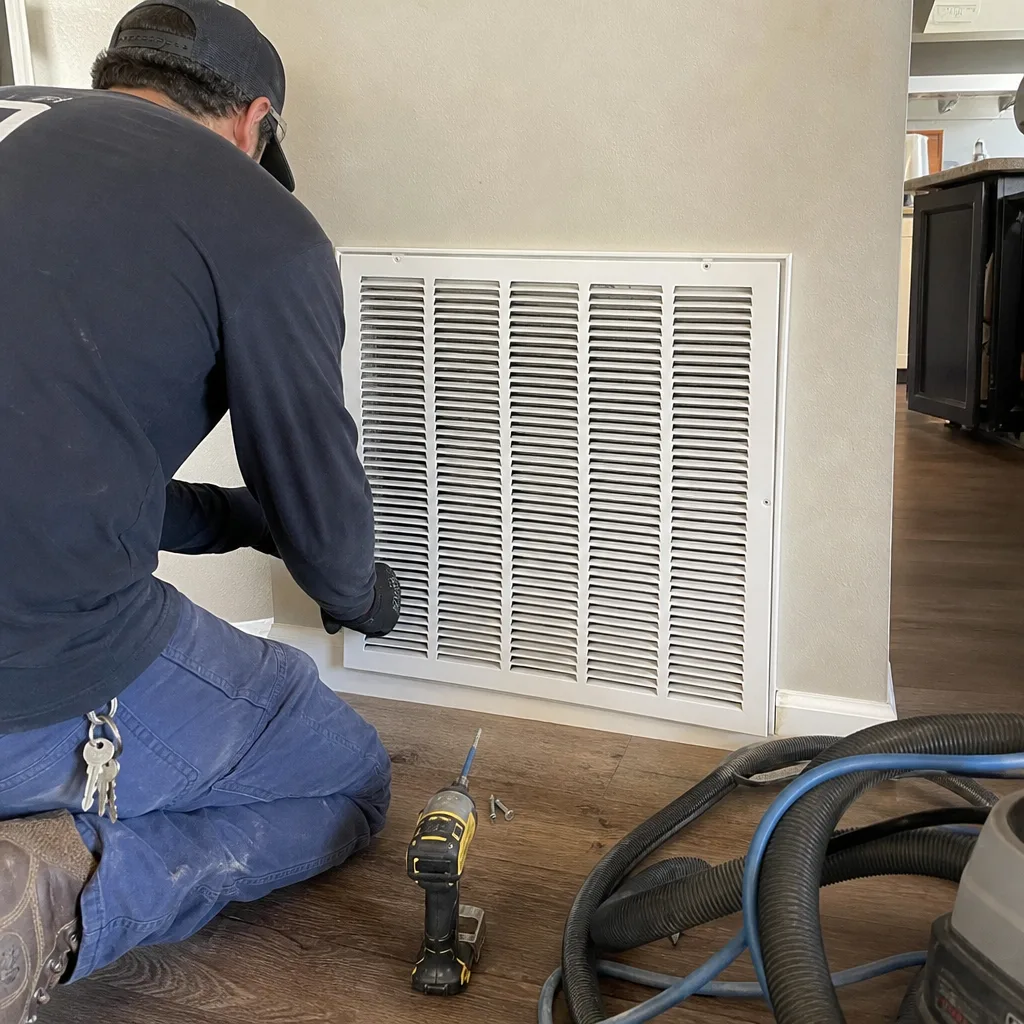
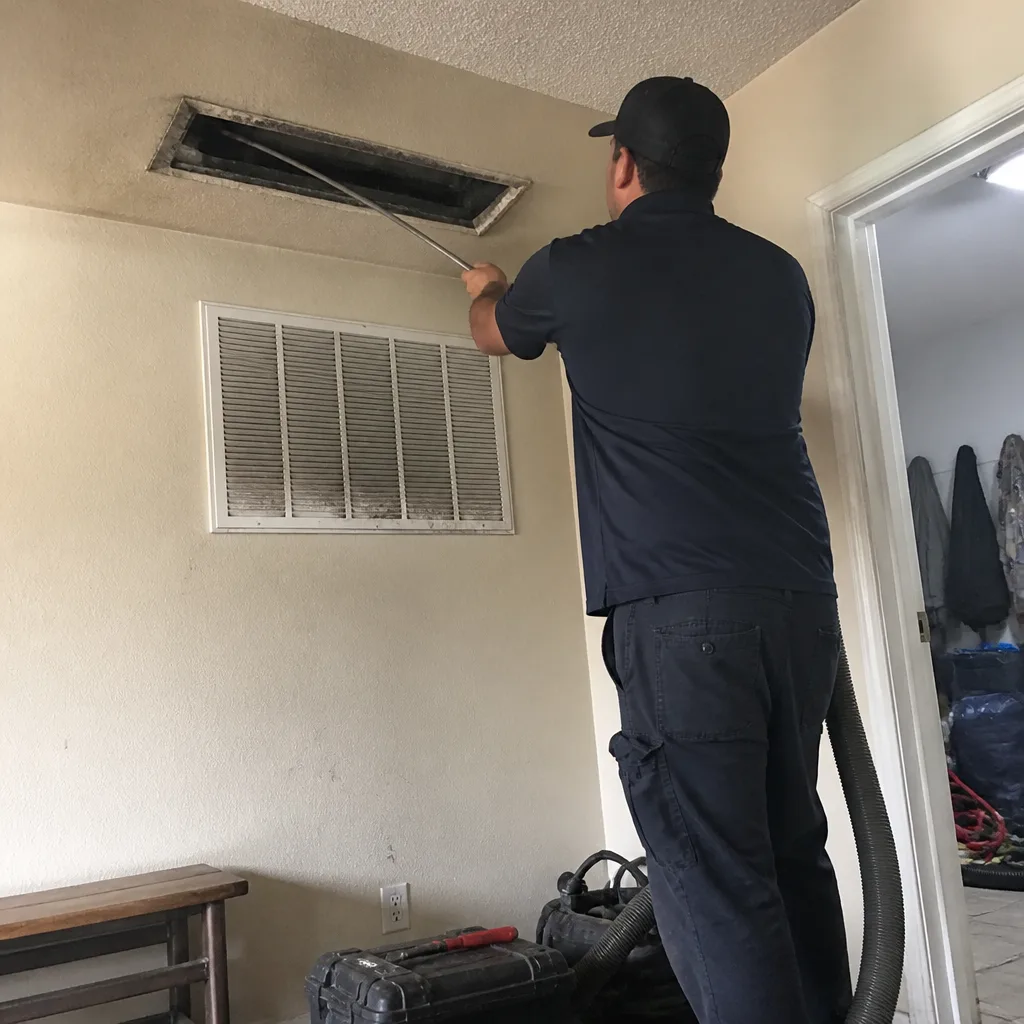
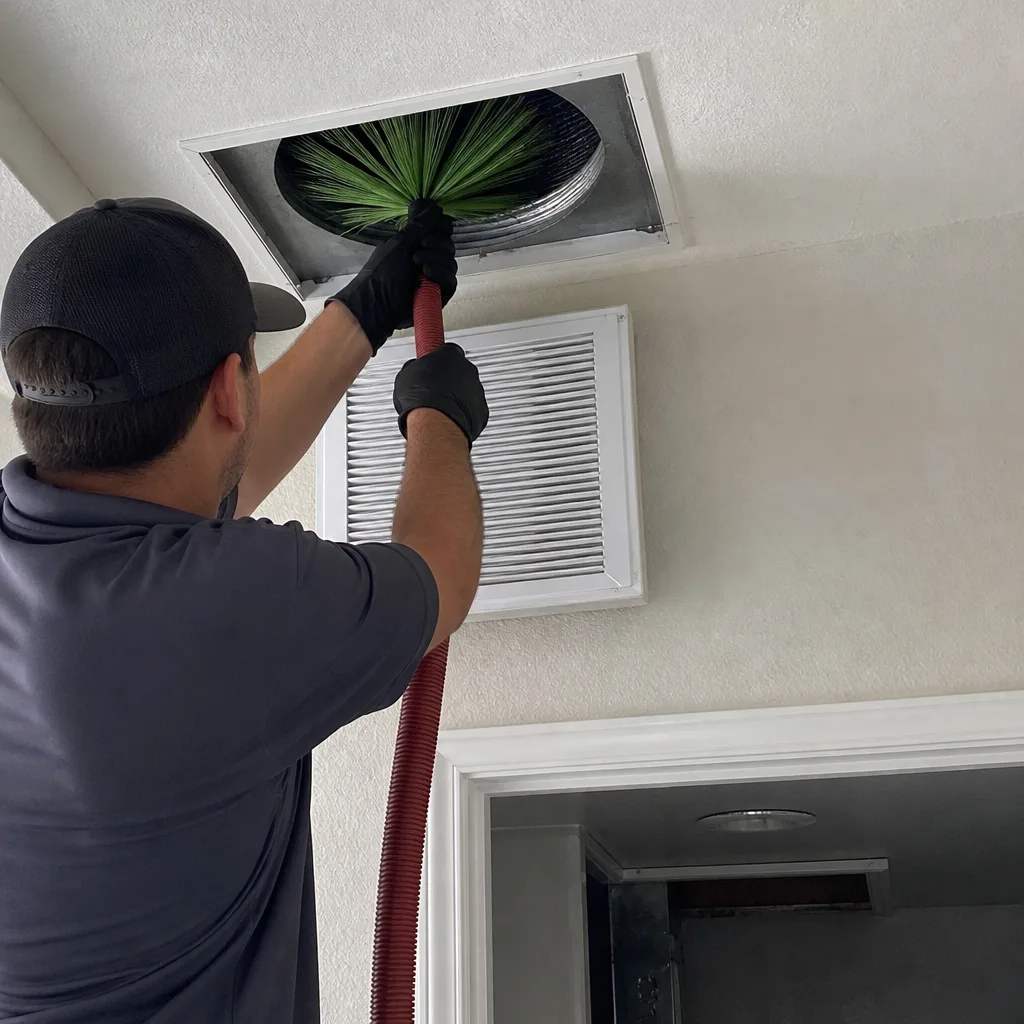
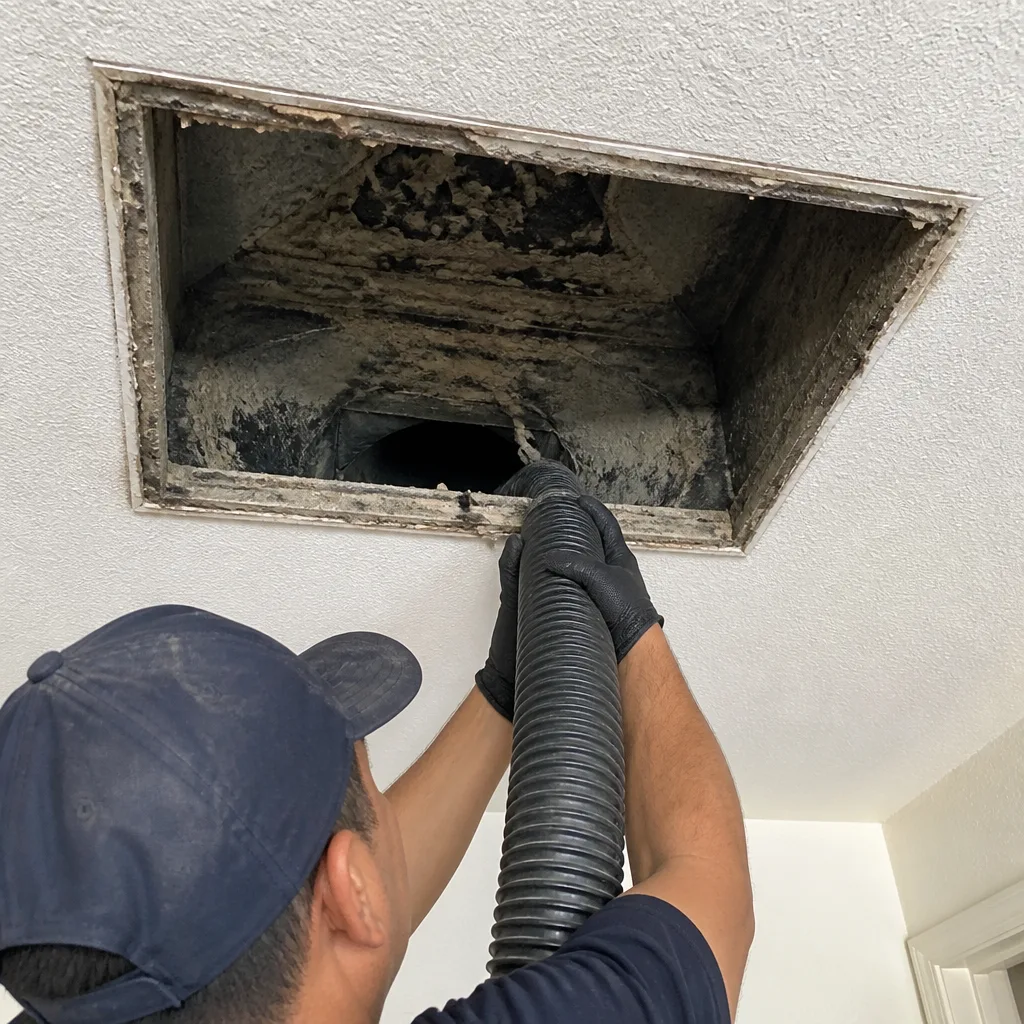
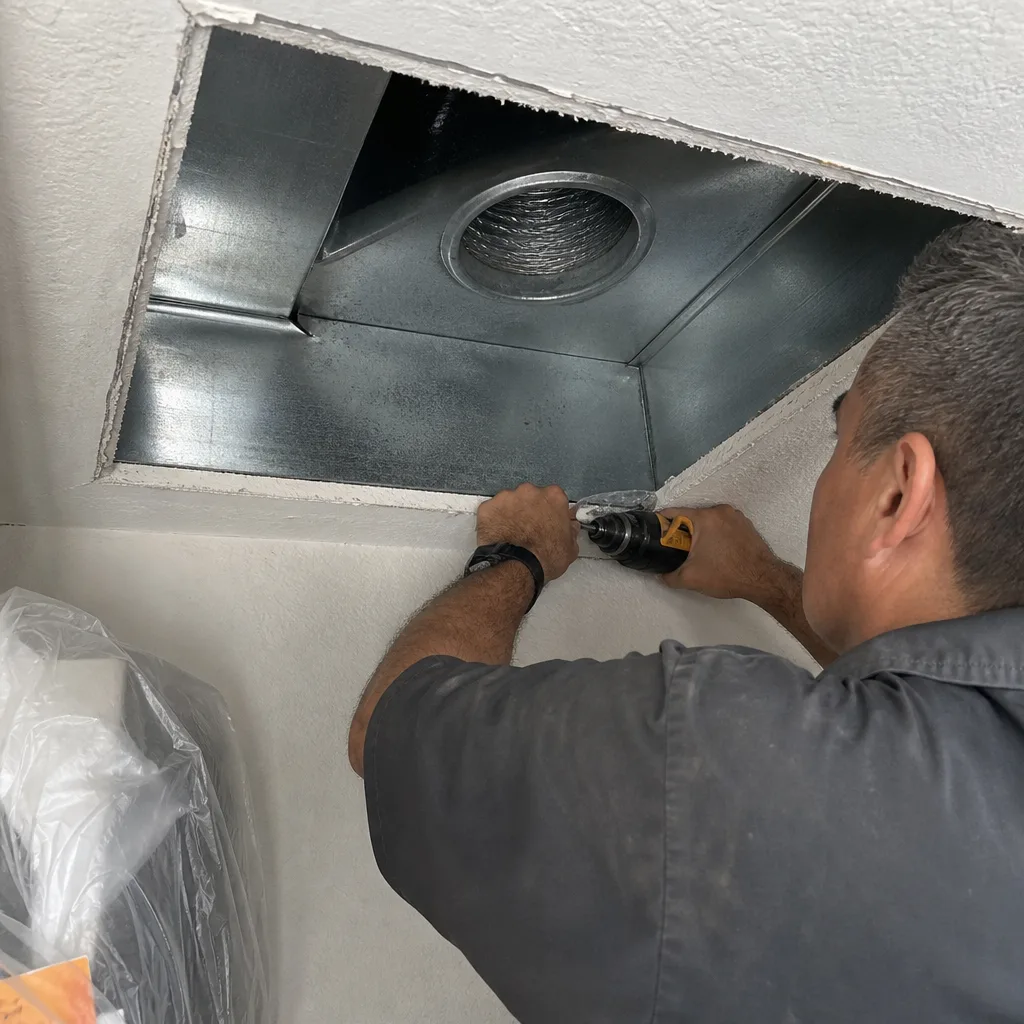
Whole-system duct and dryer vent check with before-and-after photos - you see exactly what came out of your vents
That "$99 whole-house special" is a bait ad - the real number appears once they are in your hallway, or the "clean" is a shop-vac at the register. We photograph the inside of your ducts before and after instead.
DIY vs Professional Air Duct Cleaning: The Cathedral City Homeowner’s Decision Guide
Running a shop vac hose into a supply register feels productive. The motor hums, dust swirls, and you can see material disappearing into the canister. What most Cathedral City homeowners don’t realize is that a consumer-grade vacuum pulls somewhere between 80 and 120 cubic feet per minute at the hose end once attached to a long, flexible run. A professional Rotobrush or Nikro system pulls 2,000 CFM or more at the point of contact. The difference matters because your ducts aren’t a straight pipe: they’re a branching network that can stretch 40, 60, or over 100 feet through your attic, with bends, sags, and flex sections that hold fine desert particulate. A shop vac dislodges material it cannot extract. That’s the honest starting point for this guide. By the end, you’ll understand exactly what DIY can and cannot do, what professional equipment actually delivers, and which path makes sense for your home in Cathedral City.
Quick Answer
Professional air duct cleaning is the right choice for most Cathedral City homes because contractor-grade negative-pressure systems extract fine desert silica and embedded debris from full duct runs in a way consumer vacuums physically cannot. DIY makes sense for three limited tasks: replacing furnace filters, cleaning visible register covers, and brushing short, accessible dryer vent runs. If your system hasn’t been professionally cleaned in five or more years, runs through an attic, or serves occupants with respiratory symptoms, hire a specialist. That’s the straightforward answer. The rest of this guide explains the equipment physics, the local conditions, and the decision framework behind it.
Styles & brands we work with
- Whole-home duct cleaning
- Dryer vent cleaning
- Camera inspection
- Sanitizing & deodorizing
Table of Contents
- What DIY Duct Cleaning Actually Accomplishes (And What It Doesn’t)
- The Physics of Extraction: CFM, Negative Pressure, and Why Equipment Matters
- Why Cathedral City Conditions Shift the Math Toward Professional Service
- The 4 Duct-Related Tasks Homeowners Can Legitimately Do Themselves
- The Hidden Costs of Ineffective DIY Cleaning
- A 3-Factor Decision Framework for Cathedral City Homes
- What Professional Equipment Actually Does (And Why It’s Different)
- Common Mistakes to Avoid
- When to Call a Professional
- Frequently Asked Questions
What DIY Duct Cleaning Actually Accomplishes (And What It Doesn’t)
Before we talk about equipment ratings and CFM numbers, let’s be honest about what happens when you put a shop vac hose into a floor register. Your duct system in Cathedral City is likely a combination of rigid sheet metal trunk lines and flexible insulated duct branching to individual rooms. The flex sections, common in homes built after the 1980s, are corrugated inside. Every ridge of that corrugation is a collection point for dust, pet dander, and the fine silt-like dust that blows through the Coachella Valley year-round.
A shop vac attached at a single register pulls air from that register’s immediate vicinity. It creates localized suction at the opening, but it does not create negative pressure through the entire duct run. What it does create is turbulence. That turbulence agitates settled debris, lifting some of it into the air stream where the vacuum captures it, but also pushing some of it further down the run and some of it back into the living space through other registers. The result, measured honestly, is a partial redistribution of particulate rather than a removal.
Here’s what DIY tools can actually achieve on a typical Cathedral City system:
- Register cover cleaning: Removing floor or ceiling register covers and washing them removes visible surface dust and grime. This is genuinely useful and should be done regularly.
- Reachable duct boot cleaning: The first 12 to 18 inches of duct below a floor register is often accessible with a vacuum and can be cleared of visible debris. Beyond that reach, the tool stops being effective.
- Filter replacement: Replacing the HVAC filter is the single most important homeowner maintenance task, and it requires no special equipment. A clean MERV 8-13 filter captures particulate before it enters the system.
- Short dryer vent runs: If your dryer is mounted on an exterior wall with a vent run under 6 feet, a consumer dryer vent brush kit can clear visible lint. Longer runs, roof-terminated vents, or anything with bends needs professional attention.
What DIY cannot do is clean the full duct run. Not partially, not adequately. The tooling doesn’t generate the extraction force, and the access points available to a homeowner don’t allow full-system treatment. We’re not dismissing DIY: we’re defining its ceiling. Knowing what a shop vac can and cannot do is the first step in making an informed decision about your home’s air quality.
The Physics of Extraction: CFM, Negative Pressure, and Why Equipment Matters
Air duct cleaning is, at its core, a material extraction problem. You have particulate matter, sometimes grease-like films, sometimes construction debris, settled inside enclosed channels. To remove it, you need two things working together: agitation to dislodge material from surfaces, and airflow to carry that dislodged material out of the system entirely. If either component is weak, the job doesn’t get done.
The industry metric for airflow is CFM, or cubic feet per minute. This measures how much air moves through the cleaning system per minute. Here’s the comparison that matters:
- Consumer shop vac on a long hose run: 80-120 CFM at the hose end. The vacuum’s rated CFM, typically 150-200, drops significantly once you attach a 10, 20, or 30-foot flexible hose because friction against the hose walls reduces effective suction.
- Consumer leaf blower pushed into a duct: 200-400 CFM of unidirectional air flow. This pushes air in one direction, which moves debris but doesn’t extract it. The debris has to go somewhere; often that somewhere is other rooms through other registers.
- Professional Rotobrush system: 1,800-2,200 CFM with integrated agitation and HEPA-filtered collection. The brush head spins and scrubs the duct interior while the vacuum pulls at a rate that captures dislodged material before it can settle elsewhere.
- Professional Nikro truck-mounted or portable negative-air unit: 2,000-4,000+ CFM depending on the unit. These systems seal the duct network and create a vacuum throughout the entire system, then deploy agitation tools through access points to scrub surfaces while the negative pressure constantly extracts.
Here’s the practical translation. A supply duct run in a 2,000-square-foot Cathedral City home might be 30 to 50 feet from the plenum to the furthest register. Air moving at 100 CFM through a 6-inch duct travels fast enough to keep some light dust airborne, but it cannot overcome the settling force on heavier particulate or material embedded in flex-duct corrugations. Air moving at 2,000 CFM, combined with mechanical agitation, creates a scouring action that lifts embedded material and carries it out of the system before it can re-settle.
This is why the tooling matters, and why it’s not about effort or thoroughness. A homeowner could spend an entire weekend moving a shop vac from register to register and never produce the extraction velocity required to clean the system. It’s a mechanical ceiling, not a question of diligence.
Why Cathedral City Conditions Shift the Math Toward Professional Service
Duct systems in every region collect dust. But Cathedral City and the broader Coachella Valley present three specific conditions that make local ductwork significantly more demanding than, say, a coastal climate like San Diego or a forested region like the Pacific Northwest.
1. Fine desert silica behaves differently than household dust.
The airborne particulate in Cathedral City includes fine sand and mineral dust from the surrounding desert floor. This silica-based dust is dense, abrasive, and extremely fine. It settles into duct interiors and embeds itself into the greasy film left by cooking aerosols, candle residue, and the breakdown of synthetic fibers from carpets and furniture. Once embedded, it requires mechanical agitation plus high-velocity extraction to remove. A low-CFM vacuum simply moves the light stuff and leaves the silica and the film behind. We see this consistently in Cathedral City ductwork: systems that look visually fine at the register but have a fine, gritty coating throughout the entire run once we access it with a camera.
2. Flex duct configurations in desert homes trap debris in sags.
Most Cathedral City homes built since the 1980s use flexible insulated duct for branch runs. In attic installations, these flex runs are supported by straps. Over years of 110-degree attic heat, the outer jacket deteriorates slightly and the inner liner develops sags between support points. Every sag becomes a collection point. Debris that would flow through a taut metal duct settles in these low points and stays there. Professional cleaning equipment can address these sags because the high-CFM negative pressure and powered agitation tools reach into them. A homeowner with a shop vac working from a register opening cannot push through the sag to reach the material.
3. Attic-based systems are genuinely difficult to access and properly re-seal.
Most Cathedral City HVAC systems are either roof-mounted package units or split systems with the air handler in the attic. Attic access in the Coachella Valley is hot, cramped, and often complicated by insulation, roof trusses, and the natural hesitation most people have about spending time in a 130-degree attic. Cleaning a system properly requires creating access points in the duct network, running equipment, and then re-sealing those access points with code-compliant materials. A homeowner who tries to clean from the register side never addresses the main trunk lines in the attic at all. The result is a system that looks cleaner at the vents but carries the same accumulated material in the primary runs.
These three factors are specific to Cathedral City and the surrounding desert communities. They’re not theoretical. We’ve worked in hundreds of local homes, and the pattern is consistent across Rancho Mirage, Palm Springs, Desert Hot Springs, and every Cathedral City neighborhood from Panorama to Date Palm Estates. Desert dust creates a harder cleaning problem, and flex-duct attic installations make it harder to reach.
For homeowners in Cathedral City who want to understand what professional equipment actually does to address these specific conditions, our Air Duct Cleaning in Cathedral City page walks through the complete process step by step.
The 4 Duct-Related Tasks Homeowners Can Legitimately Do Themselves
There’s a real place for homeowner maintenance in duct care. We’re not suggesting you hire a professional for everything. In fact, there are four specific tasks that we tell Cathedral City homeowners to do on their own, for practical and financial reasons. Done regularly, these tasks extend the life of professional cleanings and improve day-to-day air quality.
Task 1: Replace your HVAC filter on schedule.
- Locate your filter slot. In Cathedral City homes with attic air handlers, the filter is typically at the return grille in the hallway ceiling or at the air handler itself.
- Determine the filter size printed on the existing filter frame. Do not guess: a 20x20x1 and a 20x25x1 look similar but are not interchangeable.
- Choose a MERV rating between 8 and 13 for most households. MERV 8 captures most dust and pollen. MERV 13 adds capture of fine particulate and is good for allergy sufferers, though it increases static pressure slightly, so check that your system handles it without airflow reduction.
- Replace the filter every 60-90 days. In Cathedral City, where the system runs heavily from May through October, 60 days is the maximum we recommend during cooling season.
- Write the installation date on the filter frame with a permanent marker so you always know when it went in.
Task 2: Clean your register and return-grille covers.
- Unscrew the register cover from the floor or wall. Most have two small screws.
- Wash the cover in warm water with a degreasing dish detergent. Desert dust mixed with cooking oils leaves a film that plain water won’t cut.
- Wipe down the visible metal duct boot below the register with a damp cloth. This is the one area where a reachable surface clean is genuinely useful.
- Let the cover dry completely, then reinstall. Do this twice a year in Cathedral City, ideally in spring and fall before heavy system use.
Task 3: Visually inspect your ducts for problems.
A flashlight and a smartphone camera can spot issues that warrant professional attention. Look for visible dust accumulation at the register opening, signs of moisture or staining, damaged flex duct visible in the attic, disconnected runs, or rodent activity. In Cathedral City, roof rats and pack rats are a genuine concern in attic spaces, and their presence in or around ductwork requires professional attention. You can see the entry points and the damage, but you should not attempt removal or repair yourself.
Task 4: Maintain a short, accessible dryer vent run.
- If your dryer is on an exterior wall and the vent exits directly behind the unit, disconnect the vent from the dryer back (after unplugging the dryer).
- Use a consumer dryer vent brush kit to remove visible lint from the short run behind the dryer and the exterior vent cap.
- Remove lint from the dryer’s own lint trap housing and the accessible duct connection.
- Reconnect the vent, secure with the existing clamp, and push the dryer back into position carefully so you don’t crush the vent.
- Do this every 6 months if the run is short and accessible.
What these four tasks have in common is that they maintain the accessible surfaces of your system. They do not clean the interior of the duct runs themselves. That’s the honest boundary line. Homeowners who do these four tasks consistently get a cleaner, healthier system between professional cleanings, and they make the professional cleaning more effective by reducing the volume of new material entering the ducts.
If your dryer vent is longer than a direct exterior-wall run, roof-terminated, or routed through the attic or crawl space, that’s not a DIY task. Our Dryer Vent Cleaning in Cathedral City service handles runs up to 35 feet with bends, including roof terminations common in Cathedral City homes.
The Hidden Costs of Ineffective DIY Cleaning
There’s a temptation to frame DIY duct cleaning as “free” versus professional service as “expensive.” That framing misses what actually happens when a well-intentioned cleaning attempt doesn’t extract what it disturbs. The costs show up in four specific ways.
1. Disturbed but not extracted particulate.
You agitate settled dust with a shop vac that can’t pull it out of the run. Some of that dust lifts into the air stream. When the system next runs, that loose particulate circulates through the house. For Cathedral City residents with allergies, asthma, or COPD, this isn’t theoretical: it’s an immediate, measurable worsening of symptoms in the hours and days after a DIY attempt. The visible improvement at the register you cleaned masks the invisible redistribution throughout the system.
2. Damaged register boots and duct connections.
Pushing a rigid tool, a wire brush, or an improvised attachment into a duct from the register side can bend register boots, separate taped joints, or puncture flex duct. These are light-gauge metal and thin mylar materials. Force applied at the wrong angle, especially while reaching awkwardly into a floor register, tears material. The repair costs $75 to $250 per damaged point, and until it’s fixed, conditioned air leaks into unconditioned spaces while additional dust enters through the breach.
3. Higher subsequent professional costs.
Professional duct cleaning is priced based on system size and condition. When we arrive at a Cathedral City home after multiple DIY attempts, the system often has added complications: tool marks, dislodged registers that don’t seat properly, disconnected flex runs in the attic where someone pulled from the wrong angle. Fixing these conditions before cleaning is additional labor. A straightforward cleaning becomes a cleaning-plus-repair, and the total bill is higher than it would have been had the system been professionally cleaned in the first place.
4. The false sense of completion that delays real cleaning.
The most expensive cost of ineffective DIY is the delay it introduces. A homeowner spends a weekend cleaning registers and believes the system has been addressed. Months pass. The system continues to accumulate desert dust, and the underlying conditions, whether it’s a compromised return that pulls attic air or a flex-duct sag full of debris, remain unaddressed. By the time professional service happens, the system is worse than it would have been with no DIY attempt at all.
None of this is meant to discourage the legitimate maintenance tasks we covered above. It’s a warning about the line between maintenance and attempted cleaning. Maintenance maintains. Extraction requires equipment. Confusing the two costs Cathedral City homeowners time, money, and air quality.
A 3-Factor Decision Framework for Cathedral City Homes
Rather than a blanket “always hire a professional” recommendation, here’s a useful decision framework based on three concrete factors. Answer these honestly for your Cathedral City home, and the path forward becomes clear.
Factor 1: System age.
How old is your ductwork, and how long have you lived in the home? If the ducts are original to a home built before 1995, they’ve had 25 to 50 years of desert dust accumulation, and no amount of register-side vacuuming addresses that. If the home is newer construction with ducts under 10 years old, the accumulation is lighter, and DIY maintenance plus a first professional cleaning at the 5-7 year mark is a reasonable schedule. Cathedral City has a significant stock of homes built in the 1970s and 1980s boom years, and those systems carry that entire history.
Factor 2: Last professional cleaning date.
If you know the last time the system was professionally cleaned, that date anchors the decision. Under 3 years: maintain filters and registers, inspect visually, and don’t worry about another cleaning yet. Three to 5 years: schedule a professional cleaning, especially if you have pets, live near open desert, or run windows seasonally. Over 5 years, or unknown: the system is overdue. In Cathedral City’s dusty environment, 5 years is a long interval for ductwork. The National Air Duct Cleaners Association recommends 3-5 years under normal conditions, and Cathedral City conditions are dustier than average.
Factor 3: Symptom severity.
Are you observing actual symptoms that point to duct-related air quality problems? Dust reappearing on furniture within days of cleaning. Persistent respiratory irritation that improves when you leave home. Uneven room temperatures that suggest airflow obstruction. Visible dust plumes from registers when the system starts. Musty or stale odors that worsen when the AC runs. Any of these symptoms suggests a level of contamination or obstruction that DIY methods cannot address. No symptoms plus recent professional cleaning: maintenance-only is fine.
Here’s the decision output in plain terms:
- All three factors point to DIY: System under 10 years old, professional cleaning within 3 years, no symptoms. Do the four maintenance tasks and check again in a year.
- One factor points to professional: Schedule a professional inspection and cleaning, particularly if that factor is symptom severity. Symptoms are the most reliable signal that something in the system needs attention.
- Two or more factors point to professional: Don’t delay. Book a professional cleaning. Continued DIY attempts will not resolve the condition and may worsen it through further disturbance.
This framework prevents both extremes: the homeowner who pays for cleaning too often, and the homeowner who delays for a decade while duct conditions deteriorate. It’s a tool for rational decision-making, not a sales script.
What Professional Equipment Actually Does (And Why It’s Different)
We’ve referenced CFM numbers and negative pressure throughout this guide. This section explains what happens when a professional duct specialist arrives at a Cathedral City home, what the equipment does at each stage, and why the equipment itself is the difference between partial and complete cleaning.
A professional duct cleaning deployment, whether it uses a Rotobrush rotating-brush system or a Nikro negative-air setup, follows a defined sequence.
Step 1: System inspection and access point creation.
Before any cleaning begins, the system is inspected. We look at the plenum, the trunk lines, the branch runs, and the return path. We identify access points: existing openings at the plenum and return, plus new access points cut into trunk lines where necessary to reach full runs. These access points are cut with precision, cleaned through, and re-sealed with code-compliant materials and a tight mechanical seal at the end of the job.
Step 2: Negative pressure deployment.
A high-CFM vacuum unit is connected to the system, typically at the plenum or main trunk. This creates negative pressure throughout the duct network. In a properly sealed professional setup, air moves through every register and every run toward the collection point. This is the extraction pathway. It’s not localized suction: it’s a system-wide vacuum that ensures dislodged material moves in one direction only – toward the collection unit.
Step 3: Mechanical agitation.
With negative pressure established, agitation tools are deployed through register openings and access points. Rotobrush systems use a powered spinning brush head that scrubs duct interior surfaces while simultaneously vacuuming at the brush head. Nikro systems use compressed-air whips and skipper balls that travel through duct runs, breaking material loose from surfaces. In both cases, the agitation is powered and the extraction is continuous. Material that gets dislodged is immediately carried toward the collection point by the negative-pressure air stream.
Step 4: HEPA-filtered exhaust.
The air pulled from the duct system passes through HEPA filtration before being exhausted. For most Cathedral City homes, this filtration is at the equipment level. For contamination-sensitive environments, Abatement Technologies HEPA-filtered negative-air machines provide an additional layer of containment, appropriate when the ductwork shows evidence of pest intrusion, heavy biological growth, or when occupants have severe respiratory sensitivities that demand the highest level of particulate control.
Step 5: Documentation and repair identification.
After cleaning, the system is inspected again, often with a camera. We look for what the cleaning revealed: damaged flex runs, disconnected joints, compromised insulation, sagging sections. If we find damage, we can repair it on the spot, because we do Air Duct Repair in Cathedral City as a core service. This is a meaningful difference from a cleaning-only company, which identifies damage and refers you elsewhere. One call covers cleaning and repair.
The equipment gap between DIY and professional is not a matter of degree. It’s a categorical difference in what the machinery can physically accomplish. Consumer tools agitate. Professional systems extract. The agitation-without-extraction failure mode is exactly what we described in the opening of this guide, and it’s the single most common reason DIY attempts lead to worsened air quality.
For Cathedral City homeowners who have never had a professional cleaning and want to understand what the full process looks like from scheduling to completion, our Air Duct Cleaning in Cathedral City page covers it in detail.
Common Mistakes to Avoid
- Using a leaf blower to push debris through ducts. This is the single worst DIY technique we see in Cathedral City. A leaf blower generates unidirectional air that pushes debris down the line. There’s no collection point. The debris exits through whichever register offers least resistance, distributing material throughout the house. It also has no agitation function: it moves loose surface dust and leaves the embedded particulate in place.
- Cutting access holes in ductwork without knowing how to reseal them. Creating an access point is fine if you have the materials and technique to reseal it to code. Most homeowners don’t. An unsealed or improperly sealed access hole becomes a permanent leak point, pulling attic air into the conditioned space and costing energy year-round.
- Using chemical cleaners or sanitizers purchased online. Pouring or spraying anything into ductwork without understanding the material, the application method, and the ventilation requirements is risky. Some products leave residues that attract dust. Others off-gas volatile compounds into the living space. Duct surfaces are not surfaces you treat casually with consumer chemicals.
- Ignoring the return side. Most DIY attention goes to supply registers because they’re visible and accessible. The return side pulls air back to the system and typically carries the heaviest particulate load. In Cathedral City homes with a single central return, that return grille and the run behind it should receive equal or greater attention.
- Doing DIY work on systems with known pest intrusion. If you’ve seen rodent droppings, nesting material, or signs of pest activity in or near your ducts, DIY cleaning is the wrong approach. The material in question requires HEPA-filtered handling, and the underlying entry points need professional repair. This is a health and safety issue, not a cleaning issue.
- Waiting for visible debris at the register to justify professional service. Visible debris at the register is a late-stage indicator. Systems accumulate significant material in trunk lines and flex-duct sags long before it becomes visible at the register. By the time you see it, the system is already heavily loaded. Use the timeline framework from the previous section rather than visual cues alone.
When to Call a Professional
Call a professional when any of these conditions apply to your Cathedral City home: the system hasn’t been professionally cleaned in five or more years, you see visible dust plumes from registers at startup, a family member has unexplained respiratory symptoms that improve away from home, you’ve had construction or renovation work that left drywall dust in the system, you see evidence of pest intrusion in or around ductwork, you have a roof-terminated or long dryer vent that hasn’t been cleaned in over a year, or your home is new to you and the service history is unknown. Each of these scenarios represents a condition that consumer equipment cannot address. Duct Cleaning Cathedral City offers free estimates in Cathedral City. Call (866) 968-5699 to schedule an inspection and get a flat-price quote before any work begins.
Frequently Asked Questions
Professional air duct cleaning in Cathedral City typically costs between $350 and $650 for a standard single-family home, depending on system size, number of returns, and accessibility. Homes with two systems, extensive flex-duct runs, or pest-related contamination run higher. Be wary of quotes under $200: they almost always represent a bait-and-switch where the visible price covers minimal work and the actual invoice grows significantly. Our company provides a flat per-system price agreed before work starts, with no per-vent upcharges. Call (866) 968-5699 for an exact quote based on your home.
In Cathedral City’s desert environment, we recommend professional cleaning every 3 to 5 years for most homes. Homes with pets, smokers, occupants with respiratory conditions, or properties adjacent to open desert land where wind-blown dust is constant should lean toward the 3-year interval. Homes that have been professionally cleaned and are maintained with regular filter replacement can extend to 5 years. The interval is shorter here than in coastal California because the airborne particulate load is higher.
You can clean the visible register covers and the first few inches of duct boot with a shop vac, but you cannot clean the full duct runs. A shop vac produces 80-120 CFM at the end of a long hose, while professional cleaning systems produce 2,000 CFM or more. The shop vac dislodges material it cannot extract, which redistributes dust through the system. For full-run cleaning, hire a company with contractor-grade negative-pressure equipment.
A reputable duct cleaning company documents the work with before-and-after photos or video from inside the ductwork. Ask for this documentation before scheduling. At Duct Cleaning Cathedral City, we show you what your system looked like on camera before cleaning, and we show you the same runs after. You should never be asked to take the work on faith. If a company won’t show you interior photos, they haven’t earned the invoice.
Low-price duct cleaning quotes almost always indicate a limited service. The company plans to clean only accessible registers and the first few feet of duct, not the full system. Some use consumer-grade equipment that cannot extract from full runs. Others quote a low introductory price and then identify “necessary” additional work once they’re in the home. In Cathedral City’s competitive market, quotes under $200 should be treated as marketing offers rather than service commitments. A legitimate full-system cleaning with professional equipment has real equipment, labor, and time costs that make very low pricing impossible.
Professional duct cleaning removes accumulated dust, pollen, pet dander, and desert silica from the air distribution system, reducing the volume of particulate that circulates when your AC runs. For Cathedral City residents with allergy symptoms that are worst at home and improve away from home, duct cleaning is often a meaningful intervention. The improvement is most significant when combined with a MERV 11-13 filter replacement and, where appropriate, an upgraded filtration or humidity-control product from brands like Honeywell or Aprilaire. Duct cleaning is not a medical treatment, but it removes a known particulate reservoir from your home’s air path.
For more on what our cleaning process includes and what to expect, visit our Duct Cleaning Cathedral City home page. If you’re dealing with airflow issues that suggest damage rather than simple accumulation, our Air Duct Repair in Cathedral City service handles structural fixes in the same visit as the cleaning, so you don’t need two companies.
The Bottom Line
The DIY-versus-professional question resolves to equipment capability, not effort. Consumer vacuums cannot generate the negative pressure required to extract debris from a full duct run, and partial attempts disturb more particulate than they remove. Cathedral City’s desert dust, flex-duct attic installations, and hot-climate system duty cycles make professional cleaning the right default for most homes on a 3-5 year interval. Between cleanings, homeowners should maintain filters, clean register covers, inspect for visible problems, and handle short dryer vent runs with a brush kit. Use the three-factor framework (system age, last professional cleaning, symptom severity) to decide when to schedule. When symptoms are present or the timeline is overdue, one call covers professional cleaning, repair if damage is found, and air-quality upgrades that make the clean last.
Written by the team at Duct Cleaning Cathedral City, serving Cathedral City since 2012.
See the difference
 Before
 After
 Before
 After
 Before
 After