
Last updated November 2, 2026
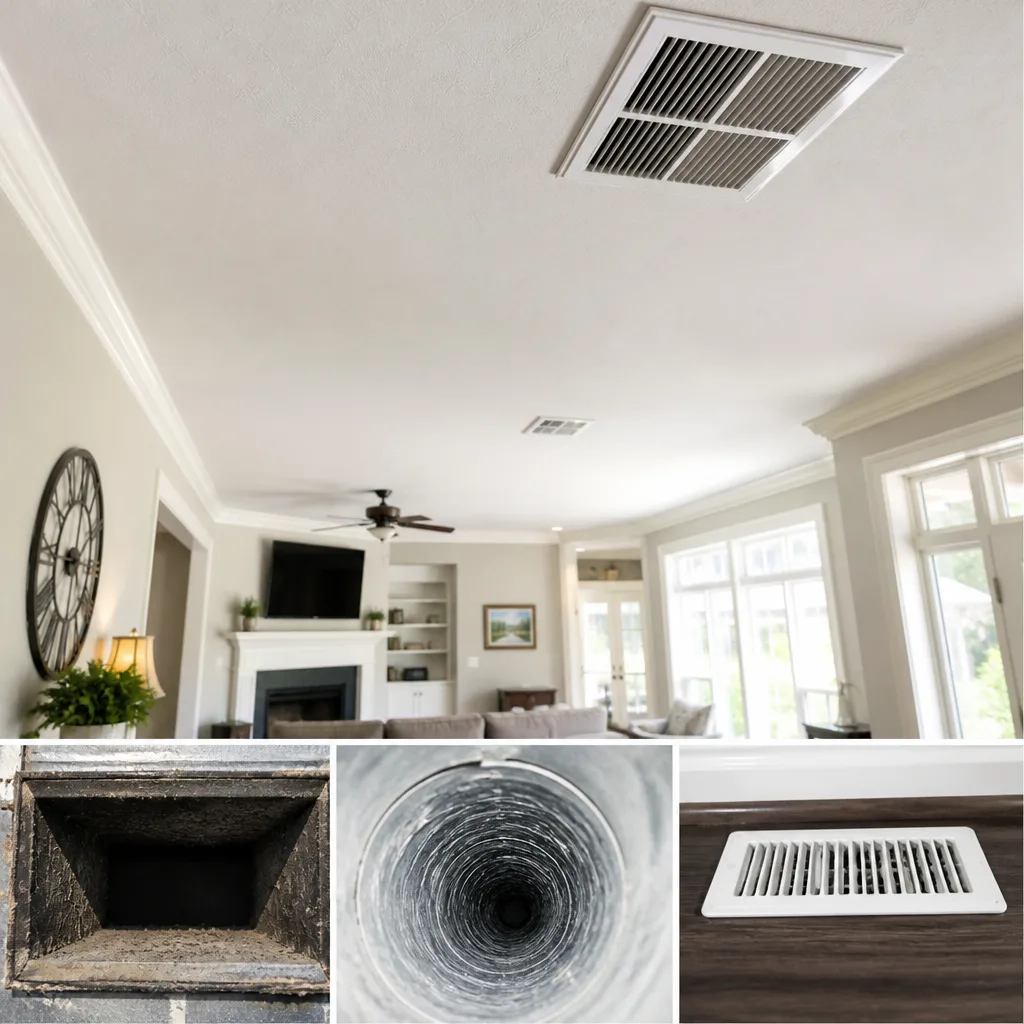 Whole-home duct cleaning
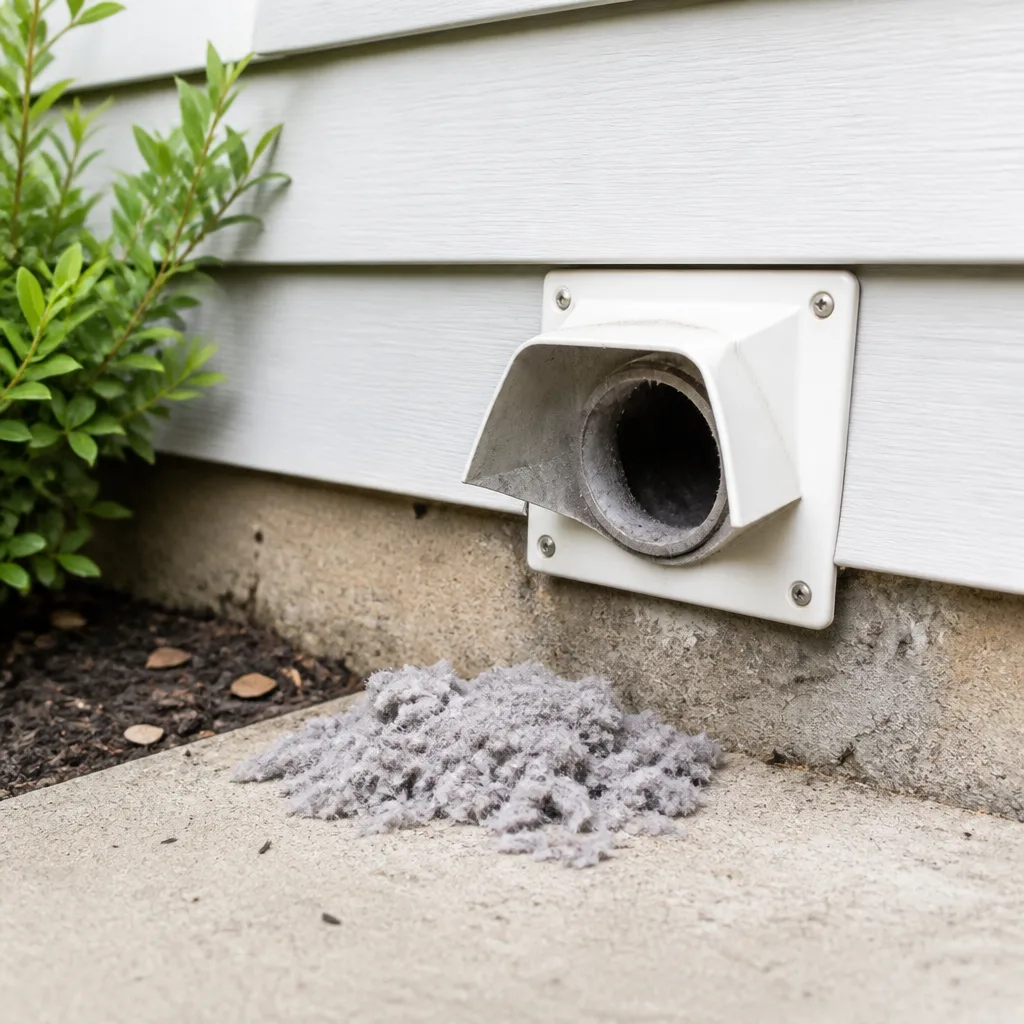 Dryer vent cleaning
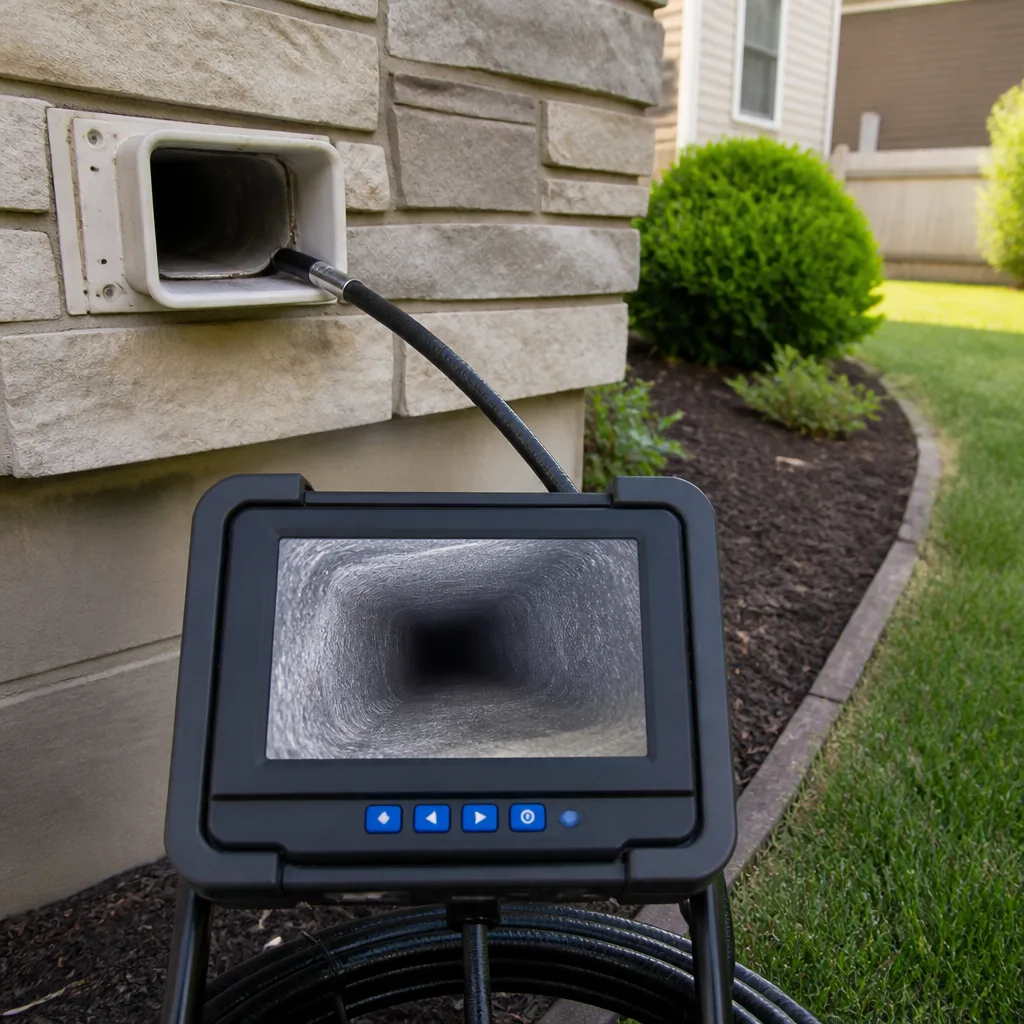 Camera inspection
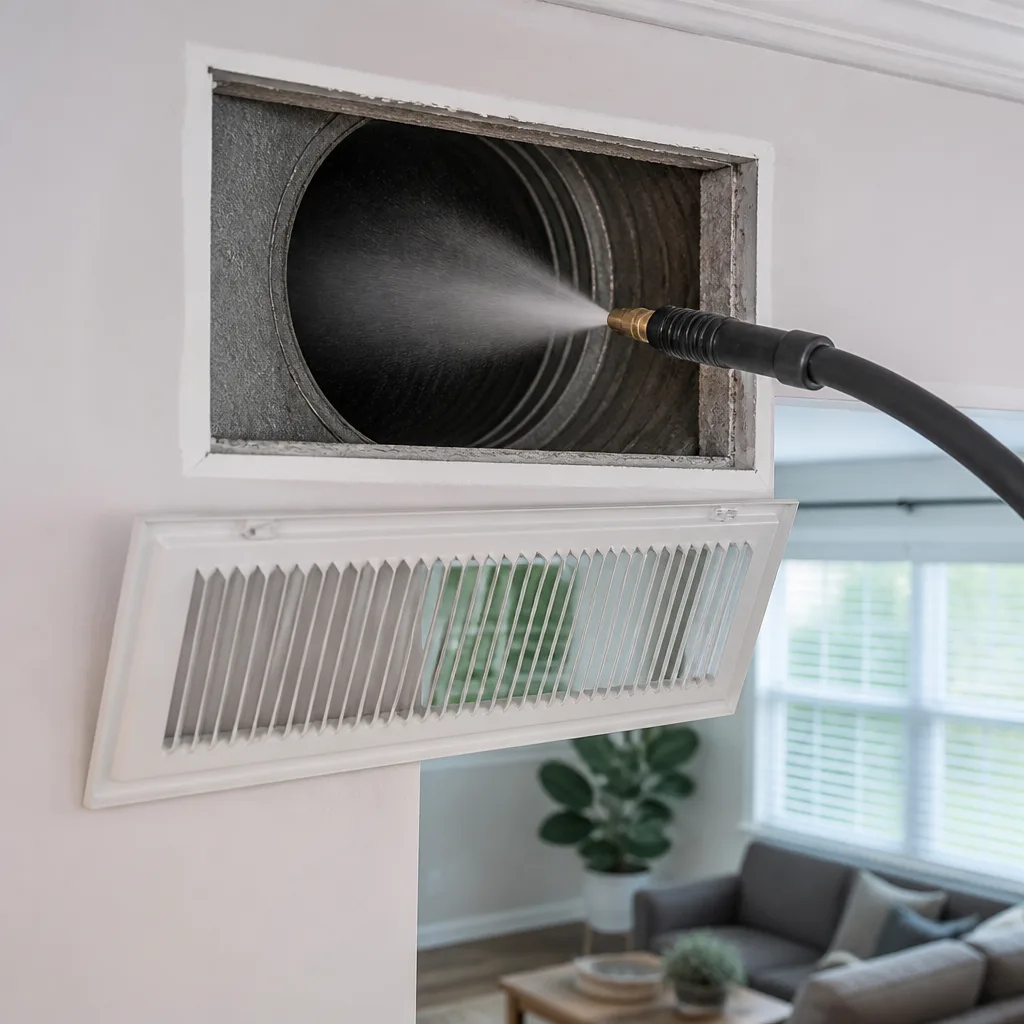 Sanitizing & deodorizing
Whole-system duct and dryer vent check with before-and-after photos - you see exactly what came out of your vents
That "$99 whole-house special" is a bait ad - the real number appears once they are in your hallway, or the "clean" is a shop-vac at the register. We photograph the inside of your ducts before and after instead.
How to Hire an Air Duct Cleaning Contractor in Cathedral City: A Step-by-Step Guide
Every winter, when the Coachella Valley fills with seasonal residents, a familiar flyer starts appearing on doorsteps across Cathedral City: “$49 whole-house duct cleaning.” It’s almost never what it seems. That price is a foot-in-the-door designed to get a technician into your home, where the real pitch begins, often for mold treatment, sanitizer packages, or replacement ductwork you may not actually need. Cathedral City’s hot climate makes any air-quality claim feel urgent, which makes this market a favorite for that business model. This guide gives you a practical vetting process built around equipment verification, scope documentation, and red-flag recognition, because the cheapest bid is rarely the cheapest outcome. For related more guides & resources, see our blog.
Quick Answer
Hiring an air duct cleaning contractor in Cathedral City means verifying three things before anyone arrives: that the company uses negative-pressure source removal equipment (not a contact vacuum), that they provide a written scope of work with line-item pricing before starting, and that they either do no upsell or limit recommendations to items you can verify with your own eyes. A legitimate contractor will explain their process, name their equipment, and offer before-and-after photo documentation without being asked.
Styles & brands we work with
- Whole-home duct cleaning
- Dryer vent cleaning
- Camera inspection
- Sanitizing & deodorizing
Table of Contents
- Why Cathedral City Homes Need a Different Standard
- Step 1: Verify Negative-Pressure Source Removal (Not Contact Vacuuming)
- Step 2: Ask the Equipment Questions Most Contractors Can’t Answer
- Step 3: Demand a Written Scope of Work Before the Job Starts
- Step 4: How to Read a Quote Without Getting Fooled
- Step 5: Duct Specialist vs. Generalist HVAC Company
- Step 6: Red Flags That End the Conversation
- Step 7: Verify the Work Actually Happened
Why Cathedral City Homes Need a Different Standard
Cathedral City sits at the base of the San Jacinto Mountains, and the geography creates a unique dust profile. Wind moving through the San Gorgonio Pass picks up fine particulate from the desert floor and pushes it into residential areas. Combine that with HVAC systems that run nearly year-round in our climate, and you get ducts that accumulate dust faster than in coastal California cities. Homes in Cathedral Cove, Panorama, and the older neighborhoods along Date Palm Drive often have ductwork that hasn’t been opened in a decade or more. Our Seasonal Air Duct Cleaning Care for Cathedral City: Year-Round Homeowner’s Guide explains how local conditions affect maintenance timing.
The desert climate also means dry air, which sounds like good news for mold prevention. It mostly is. But condensation forms on evaporator coils during summer months when humidity spikes during monsoon season, and that moisture mixes with dust inside the duct system. The result is a crusty, compacted buildup that a consumer-grade vacuum can’t remove. This is why equipment verification matters more in Cathedral City than in moderate climates. You’re not hiring someone to make your ducts look cleaner around the register covers. You’re hiring someone to remove the accumulation inside the full duct run.
For homeowners researching this topic for the first time, our Air Duct Cleaning in Cathedral City page walks through the full service and what to expect during the process.
Step 1: Verify Negative-Pressure Source Removal (Not Contact Vacuuming)
The single most important technical distinction in air duct cleaning is between negative-pressure source removal and contact vacuuming. Every legitimate industry association, including NADCA, builds its standards around the first approach. Here’s the difference in plain terms.
Contact vacuuming means a technician inserts a hose into each duct opening and uses suction to pull out loose debris. The hose has a brush attachment that loosens surface dust. It’s the same method you could approximate with a well-equipped shop vac. The problem: it only cleans what the hose can touch. Most of the interior surface area of a duct run remains untouched. Dust that’s compacted onto the duct walls stays put. When the system runs again, airflow picks up what the vacuum missed and redistributes it through your home.
Negative-pressure source removal works differently. A contractor-grade vacuum unit connects to the duct system and creates continuous negative air pressure throughout the entire run. While that vacuum holds the system under suction, an agitation device (a rotating brush or compressed air whip) moves through each duct from the access point, dislodging debris from the walls. The negative pressure carries that dislodged material downstream and out of the house entirely. The system is cleaned under pressure, not just touched by a hose.
Why does this distinction show up in your air quality? Because contact vacuuming removes loose surface dust but agitates deeper debris without capturing it. In the days and weeks after a contact-only cleaning, homeowners often notice more dust on surfaces as the system blows out what was stirred up. Negative-pressure source removal pulls that debris out during the job, not after.
When you call a contractor, ask directly: “Do you use negative-pressure source removal with the vacuum connected to the system while agitation happens, or do you clean register by register with a contact vacuum?” A real professional answers immediately and explains their process. A company fumbling for words or changing the subject has just told you everything you need to know about their method.
Step 2: Ask the Equipment Questions Most Contractors Can’t Answer
Every trade has a language, and in duct cleaning, equipment is that language. The right questions separate specialists from companies that bought a van and a website last month. Here are the questions to ask, and the answers that indicate a serious operation.
What vacuum unit are you bringing, and what’s its CFM rating?
CFM stands for cubic feet per minute, a measure of how much air the unit moves. Residential duct cleaning requires a minimum of roughly 2,000 CFM to effectively pull debris from an entire duct run. Many consumer-grade or budget contractor units fall well below that threshold. Professional operations run units rated at 4,000 CFM or higher. At Duct Cleaning Cathedral City, we run contractor-grade Rotobrush and Nikro equipment, the same systems used in commercial and remediation settings. When a contractor can name their equipment brand and CFM rating without hesitation, you’re talking to someone who knows their tools. When they say “a professional vacuum,” they’re probably describing a shop vac with a long hose.
How do you create access points, and how are they sealed after?
Proper source removal requires access holes cut into the ductwork, usually 8 to 10 inches in diameter, positioned strategically along the main trunk line. These holes are how the vacuum connects and how agitation tools enter. A professional will explain where they plan to create access, how they’ll cut holes without damaging surrounding duct material, and how each access point gets sealed when the job is done. The answer should include metal patches, HVAC-grade tape, or similar permanent seals. If a contractor says they clean everything from the register openings alone, they’re describing contact vacuuming, not source removal.
What agitation method do you use, and is it appropriate for my duct material?
Flexible duct requires gentler agitation than rigid sheet metal. A technician who uses the same aggressive rotating brush on both is asking to tear your flex duct. Ask what agitation tool they use and how they determine the setting or method based on duct type. Specialists know the difference. Operators don’t.
Step 3: Demand a Written Scope of Work Before the Job Starts
A written scope of work is the difference between a contract and a conversation. Without one, you’re trusting a technician’s memory and good intentions. The scope should be specific enough that two different technicians from the same company would perform the same job the same way. If it isn’t, you haven’t received a scope. You’ve received a sales brochure.
Here’s what a legitimate written scope of work includes:
- A room-by-room register count. How many supply and return registers are in each room? This number drives the cleaning time and the price. A scope that says “all registers” without a count leaves room for the technician to skip the hard-to-reach ones.
- Access point plan. Where will access holes be cut, how many, and how will each be sealed? If this isn’t in writing, ask why.
- Duct material identification. Does the system contain flex duct, sheet metal, duct board, or a combination? The scope should acknowledge what’s actually in your home, because it affects cleaning method.
- Inclusions and exclusions. Is the blower motor cleaning included? The evaporator coil? The return air drop? These are components most homeowners assume are included but often aren’t. A scope that lists them closes the gap between assumption and reality.
- Time estimate. A professional can estimate how long the job will take. For an average Cathedral City single-family home, a proper source-removal cleaning runs 3 to 5 hours. A company quoting 45 minutes is describing a contact vacuum job.
- Pricing tied to scope. The price applies to the defined scope. If the technician finds additional issues, any additional work requires a separate written change order that you approve before additional costs accrue.
Vague language like “full system cleaning” hides more than it reveals. What does “full” mean? Which components? Which parts of the system? A contractor using phrases like this may be entirely legitimate but poorly documented, or they may be creating ambiguity they can exploit later. Either way, the fix is the same: ask for specifics in writing before you sign anything.
Step 4: How to Read a Quote Without Getting Fooled
Duct cleaning quotes in Cathedral City range widely, from $300 to $900 for a typical single-family home, depending on system size, access difficulty, and the condition of the ducts. For a detailed breakdown, see our Air Duct Cleaning Cost Breakdown: The Cathedral City Homeowner’s Reference for 2026. Homes with two systems, extensive flex duct, or ducts that haven’t been cleaned in 15 years trend toward the higher end. Here’s how to evaluate what you receive.
Line-item breakdown vs. lump-sum bid.
A professional quote breaks down the job into line items: main trunk line cleaning, branch line cleaning, supply register count, return register count, blower motor cleaning, evaporator coil cleaning. Each line has a price. A lump-sum bid without breakdown isn’t automatically suspicious, but it does make comparison shopping nearly impossible. When you can’t see how the price was built, you can’t tell which company is charging more for the same scope and which is giving you less scope for the same price.
Legitimate add-ons vs. pressure tactics.
Some add-ons have genuine value depending on your system’s condition. Evaporator coil cleaning is one; a layer of dust and pet hair on the coil reduces cooling efficiency and drives up your electricity bill in Cathedral City’s desert summers. Duct sealing is another, if testing shows actual leakage. Filter upgrades to a Honeywell media cabinet or an Aprilaire whole-home purifier can make sense after a cleaning, when you’re already paying attention to air quality.
Then there are the pressure tactics. Sanitizer fogging that promises to “kill all germs” without the technician having identified any actual contamination is usually a margin-padding add-on. Mold treatment that’s pitched based on “what we usually find in this area” rather than what the technician actually saw is a scare sale. A reputable company can show you the evidence before recommending treatment. We carry Abatement Technologies equipment for jobs where contamination is actually present, which means we can show you what we found and discuss it with you, not sell you a treatment as a precaution.
Red-flag pricing phrases.
Be wary of prices quoted “per vent” that sound too low. A $15-per-vent quote on a 20-register home sounds cheaper than a $600 system quote, until the technician arrives and announces the job requires “special equipment” or “additional sanitizing” at three times the initial figure. Per-vent pricing is structurally designed to change once someone is on site. Whole-system pricing with a defined scope is much harder to inflate.
We quote one flat price per system, agreed before work starts. The price covers the defined scope. If we find damage during the job, we show you photos and discuss options before any additional work is approved. That’s how a specialist operates.
Step 5: Duct Specialist vs. Generalist HVAC Company
Most HVAC companies don’t specialize in duct cleaning. It’s an add-on service they offer because customers ask for it, and because it pairs naturally with their real revenue center: equipment installation and service contracts. There’s nothing wrong with that business model. But it has consequences for anyone hiring them to clean ducts.
A generalist HVAC company may send a technician who spends most of their year replacing compressors, charging refrigerant lines, and swapping capacitors. That technician knows HVAC systems well, but duct cleaning is a specialty trade with its own equipment, methodology, and quality standards. A technician who does it occasionally doesn’t develop the same depth of experience as someone who does it daily. They also may not have invested in contractor-grade cleaning equipment if the service is just a small part of their revenue.
Here’s how to identify the difference when calling around:
- Ask how much of their business is duct cleaning. A specialist answers quickly: it’s most or all of what they do. A generalist pauses, because duct cleaning represents a small percentage of their jobs. Neither answer is inherently wrong, but the specialist’s full-time focus translates to better equipment, more refined technique, and a stronger relationship with the work.
- Ask what happens if they find damaged ductwork. A generalist often stops at cleaning and refers you elsewhere for repairs. A full-service duct specialist can handle both. Our company offers Air Duct Repair in Cathedral City alongside cleaning, which means if we find a disconnected section, a crushed flex run, or a leaky joint, we can fix it during the same visit rather than handing you another phone number to call.
- Ask if they clean dryer vents. This is a telling question. Dryer vent cleaning addresses a leading cause of residential fires, and it’s a staple service for companies focused on ductwork and airflow. Generalist HVAC companies often don’t offer it. If a contractor offers Dryer Vent Cleaning in Cathedral City alongside duct cleaning, you’re likely talking to a specialist who treats airflow as their core trade, not a side category.
Single-trade focus matters because it concentrates equipment investment, training, and quality standards in one place. Every technician we send is a duct specialist. None of them get dispatched to swap a furnace in the morning and clean ducts in the afternoon. Duct work is the job, not the add-on.
See the difference
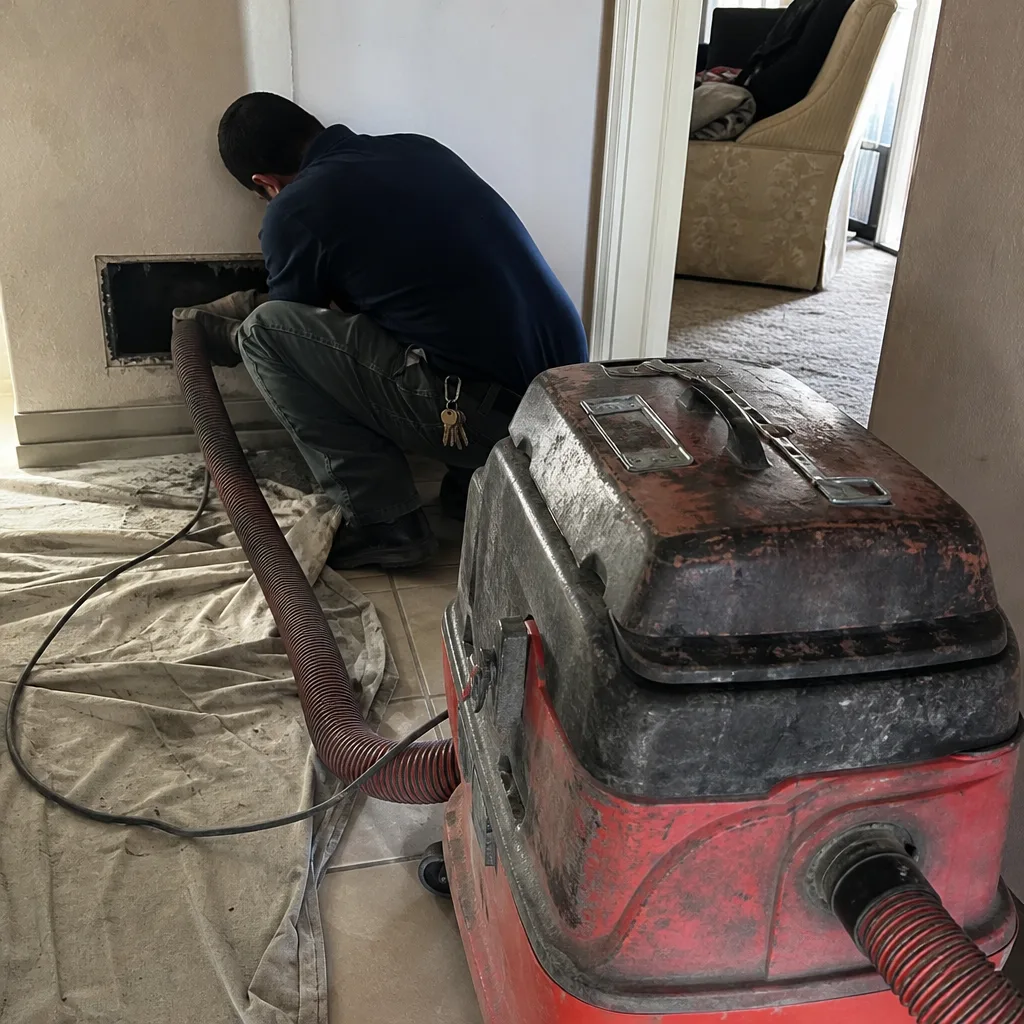 Before
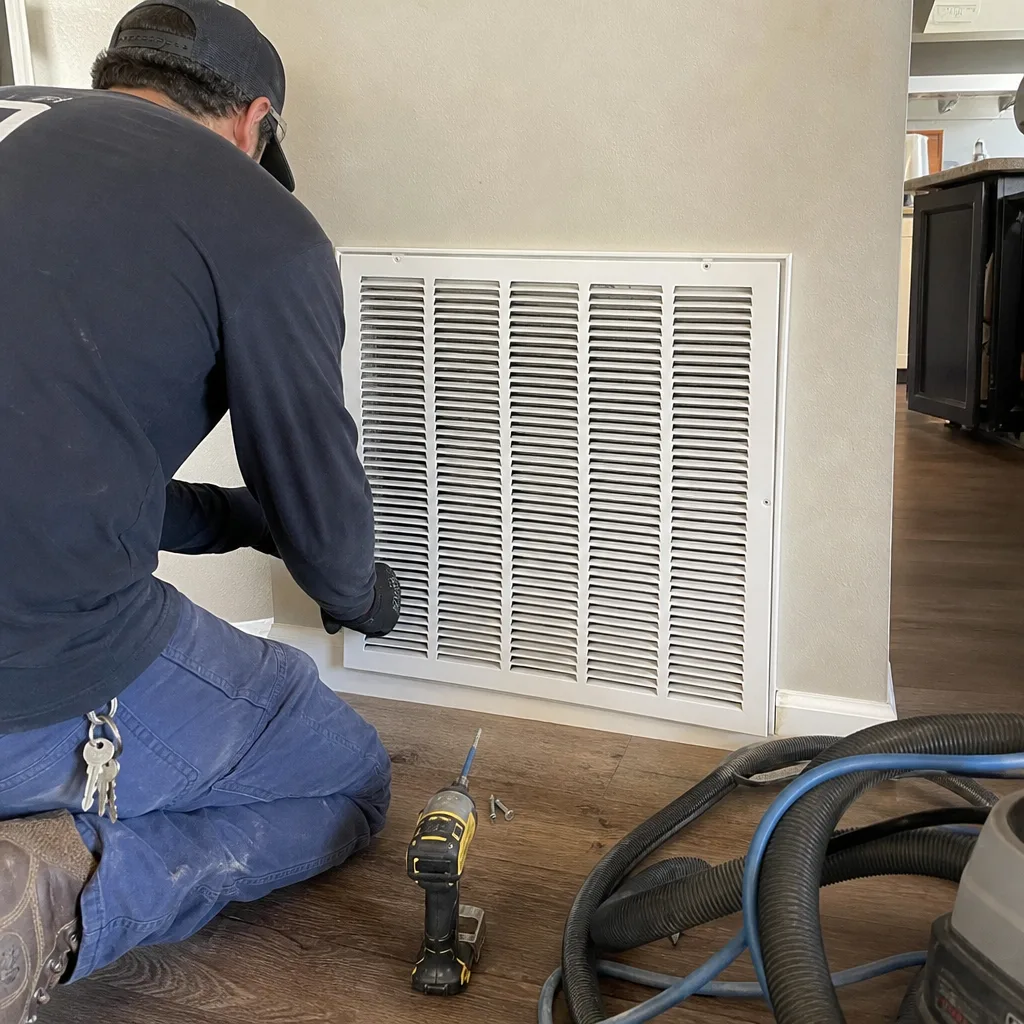 After
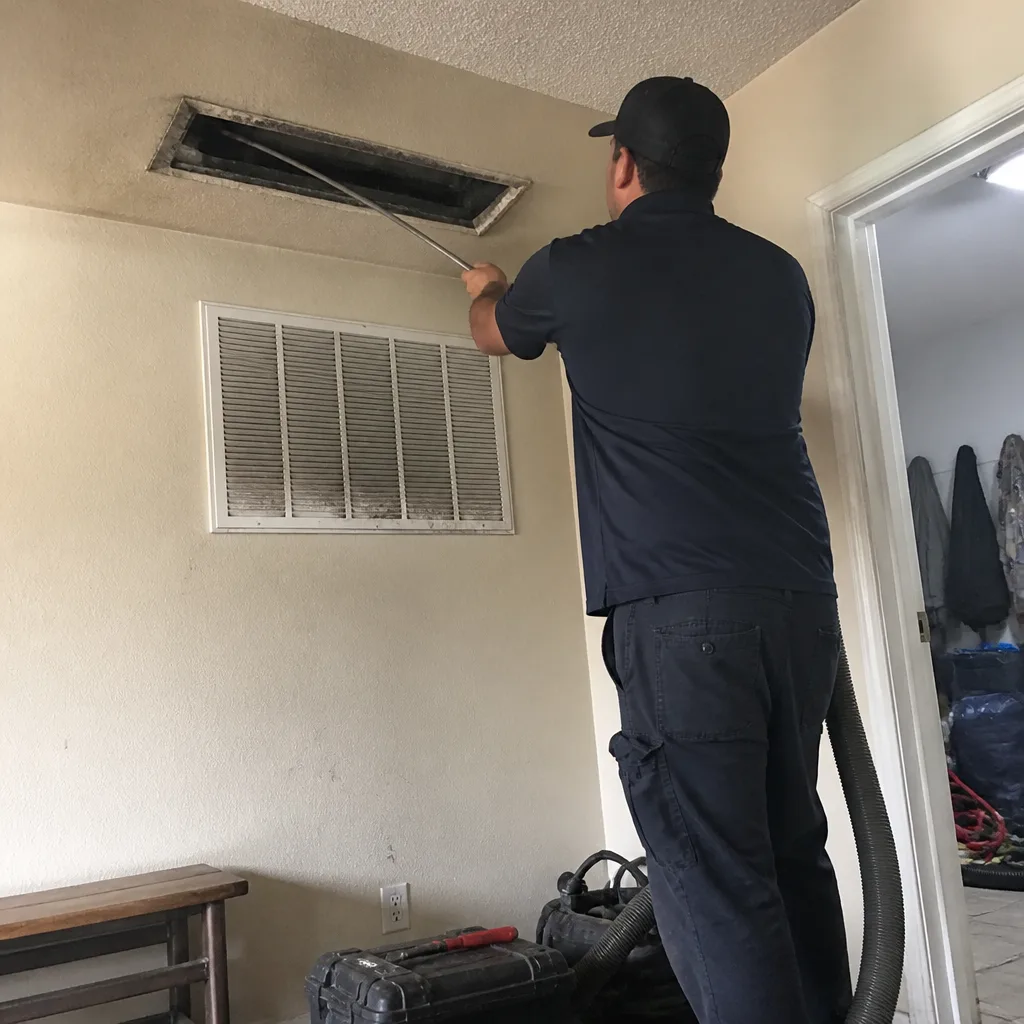 Before
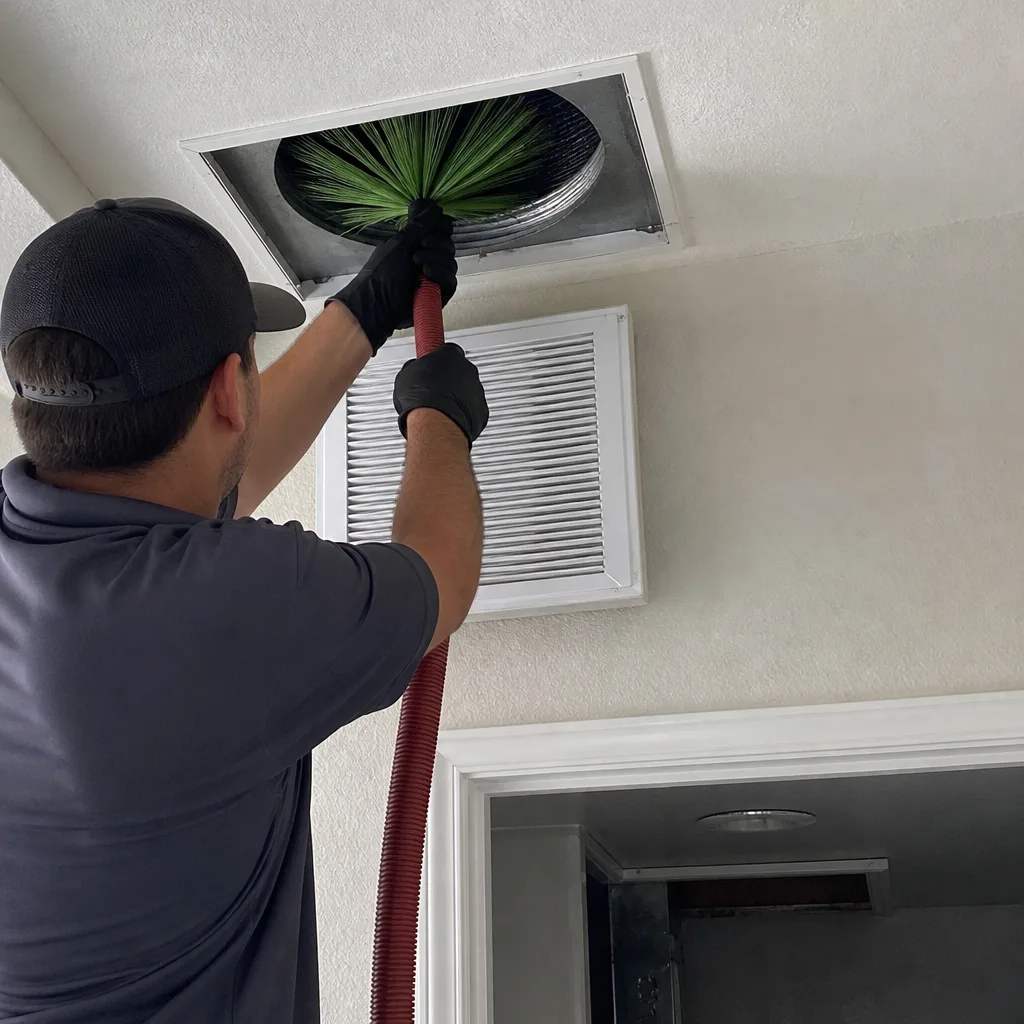 After
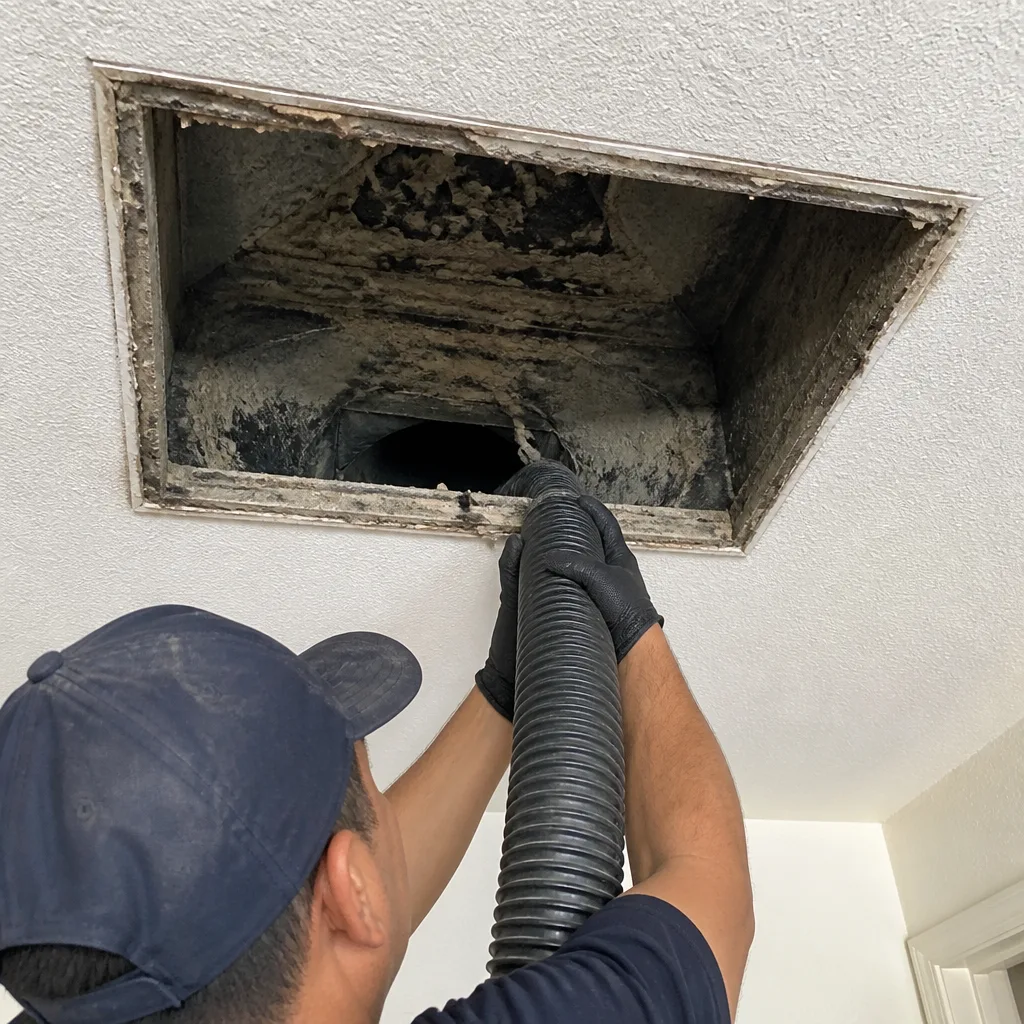 Before
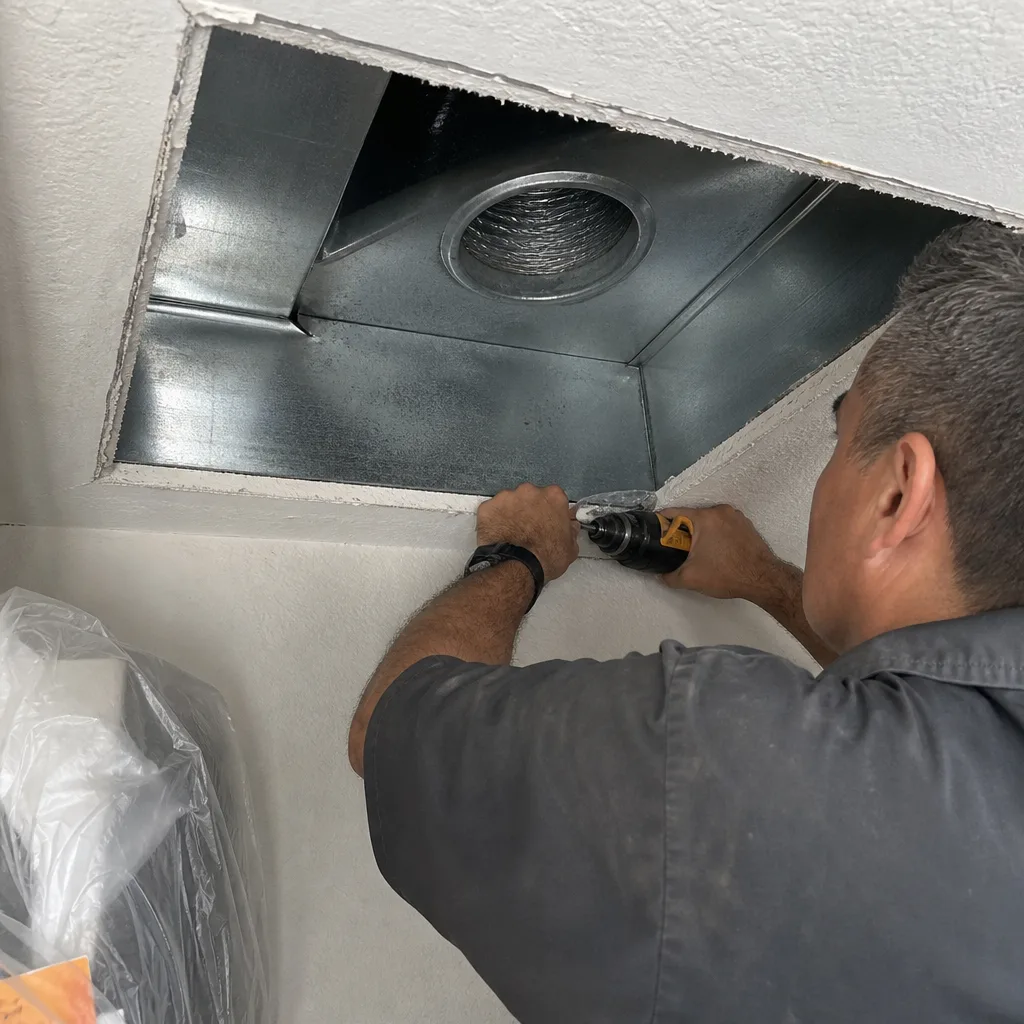 After
Step 6: Red Flags That End the Conversation
Some warning signs are obvious. Some are built into the way this industry’s bad actors operate. Here are the ones that tell you to hang up or show the technician the door.
1. The coupon price is the whole pitch.
If the first thing a company mentions is a $49 or $99 whole-house special, they’re not selling duct cleaning. They’re selling a lead that gets a salesperson into your home. The price on the flyer almost never matches the final invoice.
2. No written scope before the work starts.
We covered this already, but it bears repeating because it’s the single most reliable indicator of how the job will end. No scope, no contract, no work.
3. The technician arrives without telling you to expect them.
Professional companies schedule appointments and confirm them in writing. A truck that shows up unannounced claiming “we’re in the neighborhood” is running a canvassing operation, not a service business.
4. Pressure to decide immediately.
“This deal is only good today” is a sales script, not a service standard. Legitimate companies honor their quotes for a reasonable period and encourage you to compare.
5. Before photos that aren’t actually before photos.
A technician who shows you a photo of a filthy duct and tells you it’s yours should be able to locate that exact spot in your system. Ask to see the access point where the photo was taken. If they can’t walk you to it, the photo may be a stock image.
6. Mold claims without testing.
Mold inside ductwork is a real concern, and Cathedral City’s occasional humidity spikes during monsoon season can create conditions where it develops. But a legitimate company identifies mold by what they see and can show you. We carry Abatement Technologies equipment for jobs requiring HEPA-filtered containment and negative air pressure, which matters because actual contamination requires a different response than routine cleaning. When a contractor starts describing mold hazards before they’ve opened an access panel, they’re selling fear, not findings.
Step 7: Verify the Work Actually Happened
Duct cleaning happens inside places you can’t see without specialized tools. That makes verification more important than in almost any other home service. A plumber fixes a leak and you can see the dry pipe. An electrician replaces a panel and you can see the new breaker box. Duct cleaning requires you to either trust the technician’s word or demand evidence.
Here’s what verification looks like on a professional job:
- Before, during, and after photos. A serious contractor photographs the interior of your ducts at multiple stages. The photos should be taken through the access points, not just at the registers, and they should include a visible location marker so you know they’re actually yours. If we clean it, we can show you what was in there before and what it looks like after.
- Access point walk-around. After the job, the technician should walk you to each access point and show you the seal. Metal patches screwed into place, HVAC-grade tape applied over seams, and clean cuts are signs of professional work. Gaps, loose patches, or access points you can’t find are not.
- Debris container evidence. You should be able to see what came out of your ducts. Whether it’s a collection bag, canister, or the waste in the vacuum unit, the technician should be able to show you the material removed. If the answer to “can I see what you got out?” is vague, ask more questions.
- Post-cleaning system test. The system should run smoothly after the job. Listen for new rattles or hums that suggest something shifted during agitation. A professional comes back and fixes it if something’s off. An operator says “that’ll settle.”
In our experience, Cathedral City homeowners who’ve had a bad duct cleaning experience usually describe the same pattern: a quick job, a vague explanation, and no documentation. Our process includes photography at every stage, visible access-point sealing, and a walkthrough that answers the question most homeowners actually want answered: “what was in there, and is it gone now?”
Common Mistakes to Avoid
- Choosing the lowest bid without comparing scope. The $299 bid and the $599 bid are rarely for the same job. Side-by-side scope comparison, line by line, tells you which is actually cheaper for the work you’re getting. Without that comparison, the “cheapest” bid usually wins, and the homeowner usually gets less.
- Accepting “per-vent” pricing. Per-vent pricing is structurally built to expand once the technician is on site. Whole-system pricing with a defined scope of work closes the gap between quote and invoice.
- Skipping the equipment questions. If a contractor can’t name their vacuum unit and CFM rating, they probably can’t describe their cleaning methodology either. Equipment is the language of this trade. Ask the questions.
- Ignoring scope-of-work documentation. “Clean all ducts” is not a scope. A real scope includes register counts, access point plans, component inclusions, and sealing methods. Insist on specifics in writing.
- Falling for mold fear tactics in Cathedral City’s dry season. Actual mold growth inside ducts is less common in our desert climate than in humid regions. That doesn’t mean it never happens, but a contractor pushing mold treatment before opening an access panel is selling a product, not responding to evidence.
- Hiring a generalist when you need a specialist. An HVAC technician who occasionally cleans ducts doesn’t have the same equipment depth or process refinement as a full-time duct specialist. The difference shows up in your air quality.
- Not documenting before-and-after. Insist on photos. Your ducts are the one system in your home you can’t inspect yourself without cutting holes. Documentation is the only way to verify the work happened.
When to Call a Professional
Some situations call for professional attention rather than a DIY project. If you’ve noticed dust accumulating on surfaces within days of cleaning, that’s often a sign of loose debris in the duct system or an undersized filter allowing particulates through. If your energy bills have climbed through Cathedral City summer months despite a properly maintained HVAC unit, restricted airflow from duct buildup could be to blame. If you’ve renovated recently, construction debris often finds its way into open duct runs. If you’ve had a pest problem in the attic, droppings and nesting material can contaminate the system. If anyone in your home has unexplained respiratory irritation that improves when you’re away, duct contamination is worth investigating. And if you’ve never had the ducts inspected in a home you’ve owned for years, an inspection costs nothing to assess. Air Duct Cleaning Cathedral City offers free inspections with written scopes.y offers free estimates in Cathedral City, call (866) 968-5699.
Frequently Asked Questions
Air duct cleaning in Cathedral City typically costs between $300 and $900 for a single-family home, depending on system size, register count, duct material, and when the system was last cleaned. Homes with two HVAC systems or extensive flex duct trend toward the higher end. The key variable is scope, not sticker price. Two quotes at very different prices are usually describing two different jobs. Call (866) 968-5699 for a precise quote with a written scope of work, and our estimates are free.
Cheaper quotes usually describe less work, whether that’s contact vacuuming instead of negative-pressure source removal, fewer access points, or no component cleaning beyond the main duct run. Some cheap quotes are outright lead-generation tactics that expand once a technician arrives. The right comparison is scope-to-scope, not price-to-price. Get both quotes in writing with line items, then compare what’s actually included.
Demand before, during, and after photos taken through the access points, not just at the registers. Ask to see the debris collected in the vacuum unit or collection bag. Walk through the home to inspect each access point seal. A professional company does this as standard practice and treats documentation as part of the job. If a contractor is vague about showing you evidence, that’s your answer about whether the work happened as described.
For most Cathedral City homes, every 3 to 5 years is a reasonable interval, though several factors can shift that: homes with shedding pets, recent renovations that produced drywall dust, or systems that run nearly year-round in our desert climate may need more frequent attention. The honest answer is that the interval depends on what’s actually in your ducts. An inspection tells you more than a calendar ever can. Call (866) 968-5699 for a free assessment if you’re not sure.
A duct specialist focuses on ductwork as their primary trade. Their equipment investment, technician training, and quality standards are built around cleaning and repairing duct systems. An HVAC company offering duct cleaning as a secondary service often lacks the same equipment depth and may refer out repairs rather than handling them in-house. Ask how much of a company’s business is duct cleaning, and ask what happens if they find damaged ductwork. The answers will tell you which type you’re speaking with.
Duct cleaning removes the accumulated dust, pet dander, and pollen from the interior surfaces of your ductwork, which can reduce the amount of particulate circulating through your home each time the system runs. It won’t eliminate outdoor allergens entirely, since Cathedral City’s desert environment produces ongoing dust and pollen infiltration. But combined with a quality filtration upgrade, like a Honeywell media filter, a clean duct system gives your HVAC system a fighting chance at doing its job. We stock and install Honeywell and Aprilaire products for customers who want to pair a clean system with better filtration, not just a one-time service call.
The Bottom Line
Hiring an air duct cleaning contractor in Cathedral City comes down to demanding specifics that a serious professional provides without hesitation: equipment brand and CFM rating, negative-pressure source removal methodology, a written scope of work with register counts and access point plans, and photo documentation before and after. A contractor who can’t answer these questions isn’t necessarily dishonest. But they’re not prepared to do the job at a professional standard, and in a market flooded with low-ball lead-gen offers, preparedness is the difference between a real cleaning and a surface-level pass. Ask the right questions, get it in writing, and verify the work. Your ducts carry every breath your household takes. That’s worth the extra 20 minutes on the phone.
For more on what to expect from a professional cleaning, visit our Duct Cleaning Cathedral City home page or browse our service pages for cleaning, repair, and dryer vent work. Compare, ask questions, and get it in writing before anyone opens an access panel.
Written by the team at Duct Cleaning Cathedral City, serving Cathedral City since 2012.