
Last updated November 2, 2026
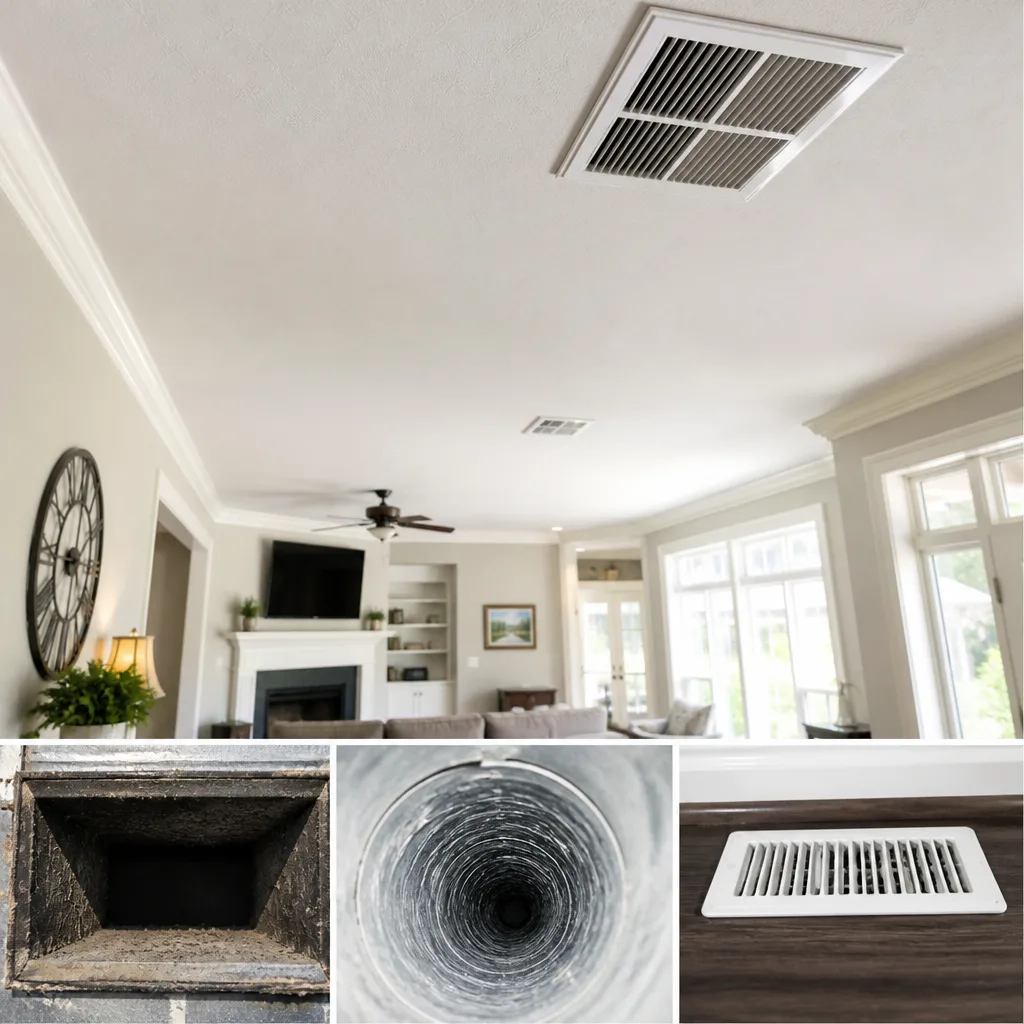 Whole-home duct cleaning
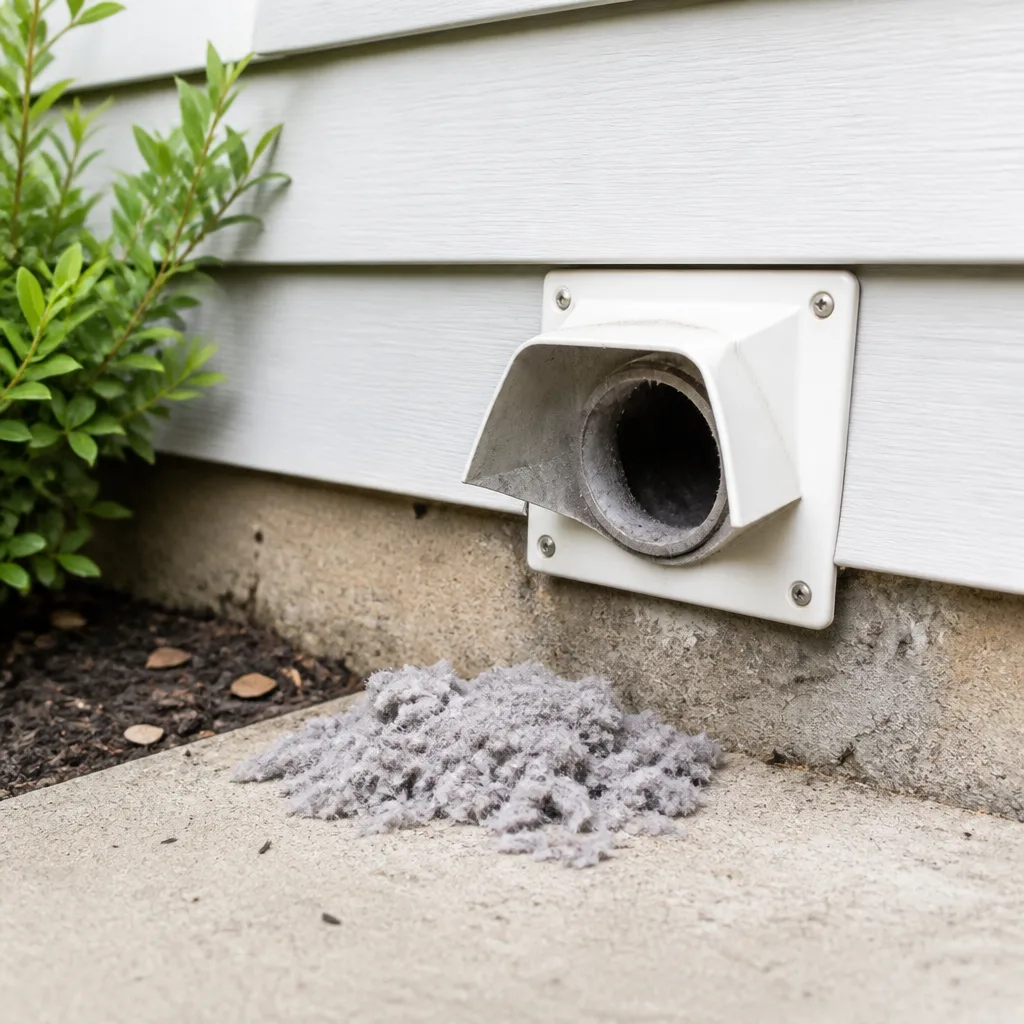 Dryer vent cleaning
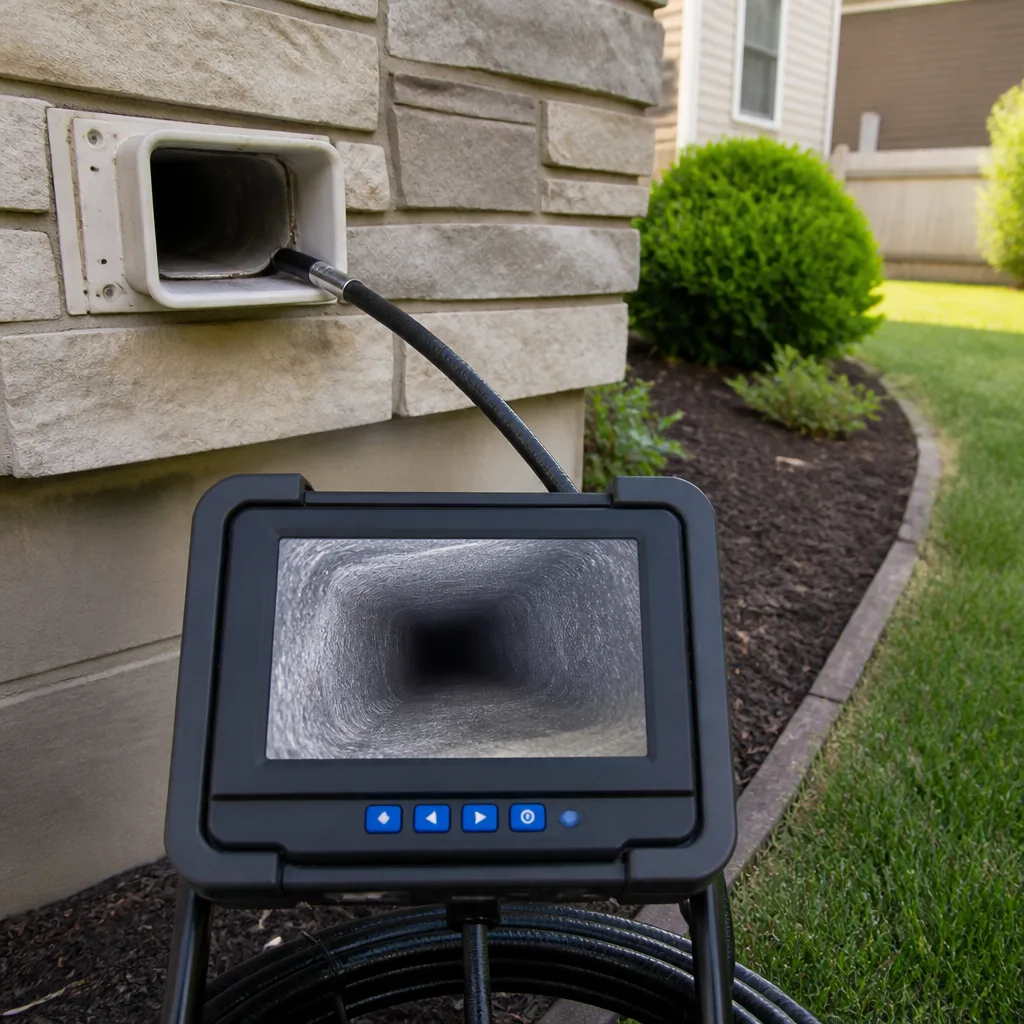 Camera inspection
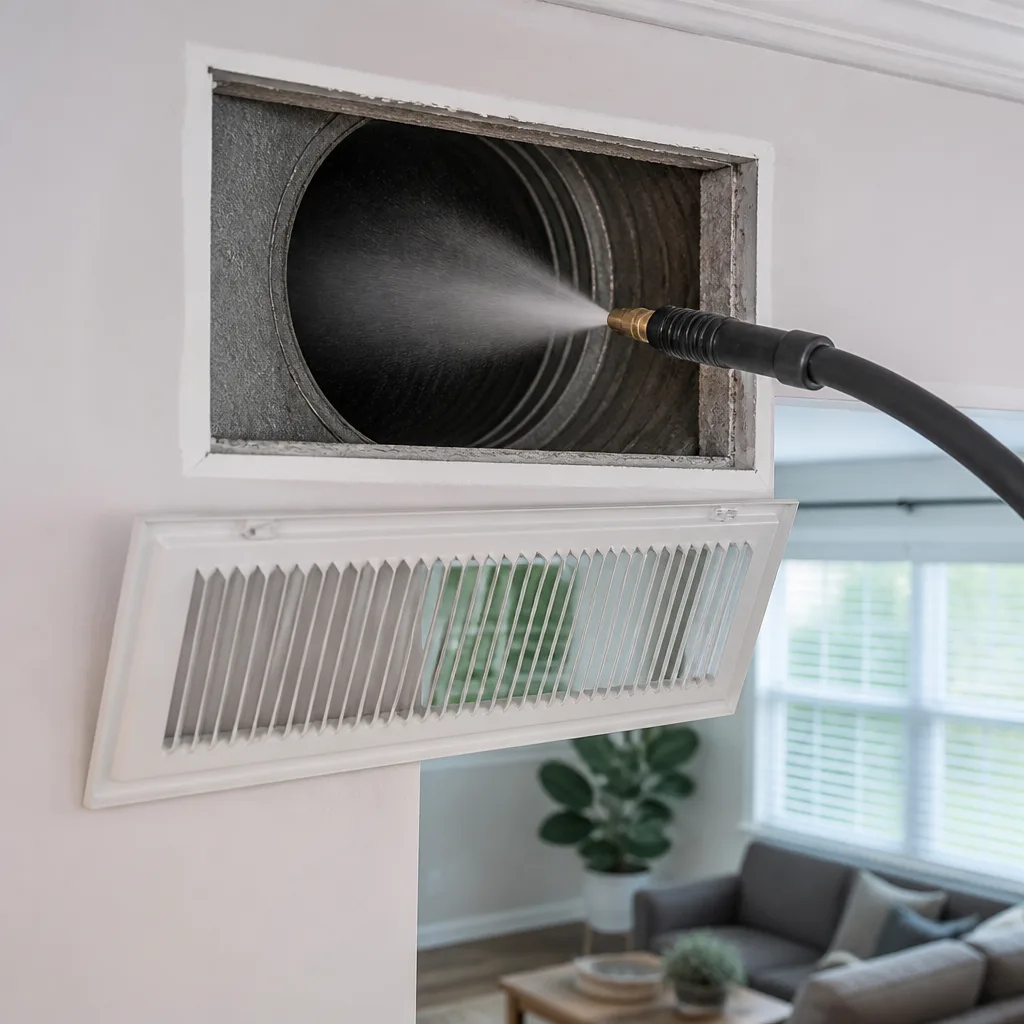 Sanitizing & deodorizing
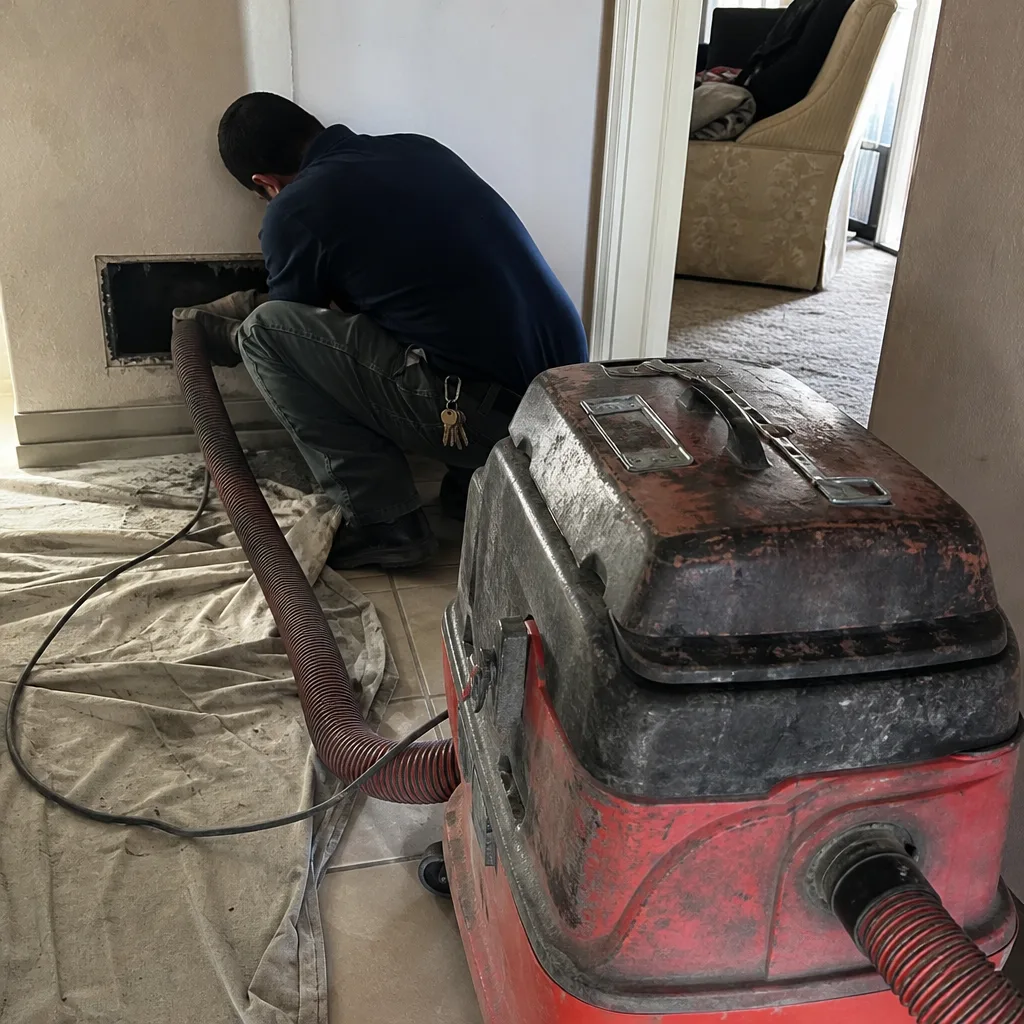
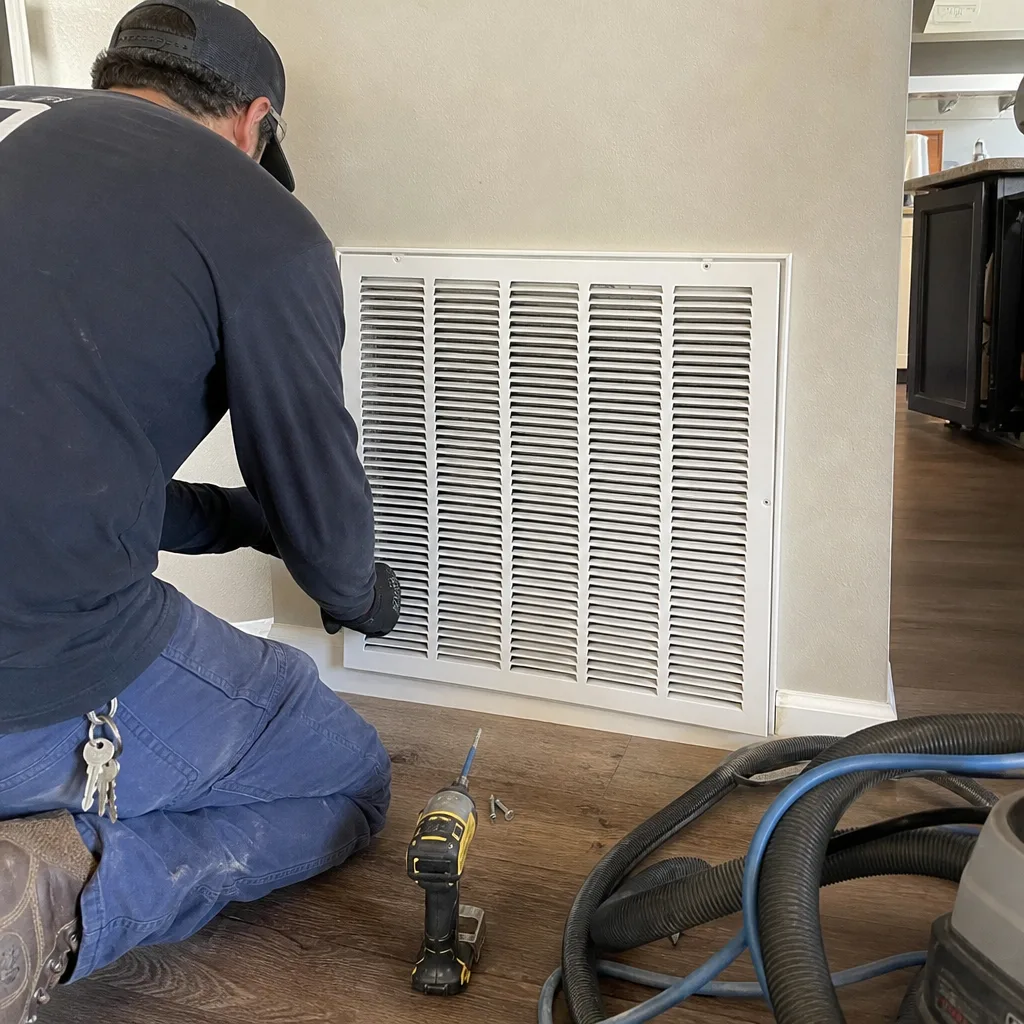
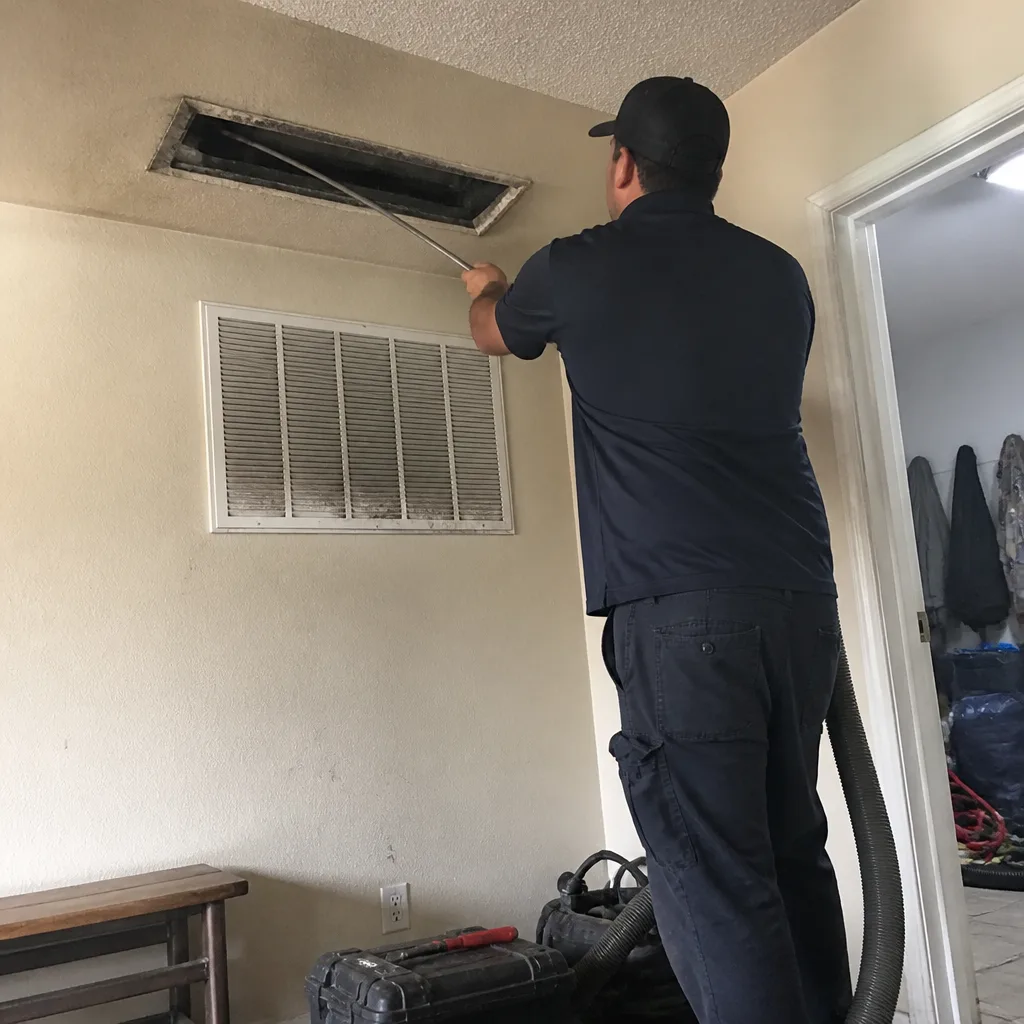
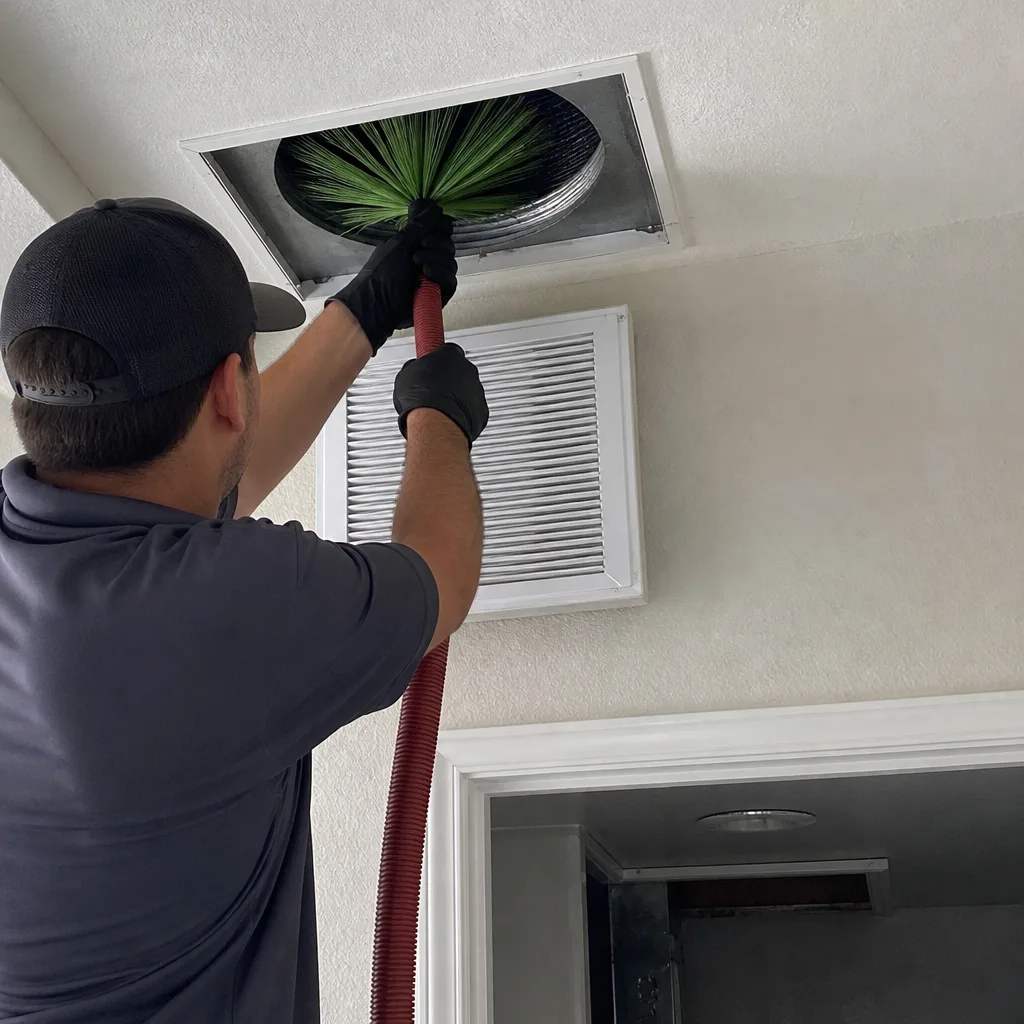
Whole-system duct and dryer vent check with before-and-after photos - you see exactly what came out of your vents
That "$99 whole-house special" is a bait ad - the real number appears once they are in your hallway, or the "clean" is a shop-vac at the register. We photograph the inside of your ducts before and after instead.
Air Duct Cleaning Maintenance Checklist for Cathedral City Homeowners
A homeowner who swaps their filter on a strict 30-day calendar but ignores the return grille packed with desert debris after a Santa Ana event is maintaining a schedule, not a system. Cathedral City dust behaves differently than dust in coastal California or the Pacific Northwest. It’s finer, it’s loaded with silica and decomposed granite, and it moves through a home every time the AC kicks on, which in the Coachella Valley means most of the year. This guide gives you a condition-based checklist tied to what actually happens in Cathedral City: wind events, monsoon humidity spikes, and five-month cooling seasons. You’ll learn what to inspect yourself, what to leave to a camera, and how to know the difference between a dirty system that needs cleaning and a damaged one that needs repair.
Styles & brands we work with
- Whole-home duct cleaning
- Dryer vent cleaning
- Camera inspection
- Sanitizing & deodorizing
Quick Answer
An air duct maintenance checklist for Cathedral City homeowners should be driven by local conditions, not calendar dates, a topic we explore further in our Air Duct Cleaning Permits, Codes & Inspections in CA: What You Need to Know resource. Inspect return grilles after every major windstorm, check for humidity-related dust clumping after the monsoon season, and verify airflow and filter condition before the summer cooling load begins. If you see dust streaks on ceilings near registers, visible debris inside the supply boots, or a filter that loads up in under 30 days, it’s time for a professional assessment. Call (866) 968-5699 for a free estimate.
Table of Contents
- Why Cathedral City Needs Condition-Based Maintenance, Not Calendar Reminders
- The Three Local Triggers Every Cathedral City Homeowner Should Track
- What You Can Inspect Yourself (and What You Can’t)
- Filter Selection for Cathedral City’s Particulate Load
- How to Log Duct Condition Between Professional Visits
- Monitor This vs. Call a Specialist Now: Clear Thresholds
- Common Mistakes to Avoid
- When to Call a Professional
- Frequently Asked Questions
- The Bottom Line
Why Cathedral City Needs Condition-Based Maintenance, Not Calendar Reminders
Calendar-based duct maintenance assumes the world outside your home behaves predictably. In Cathedral City, it doesn’t. A wind event in April can deposit more debris in your duct system in 72 hours than six months of normal operation. A humid August afternoon can cause that accumulated dust to swell and adhere to duct walls, changing the airflow characteristics of your entire system. A filter that lasted 45 days in January might be loaded solid by the third week of June.
We’ve pulled filters out of Cathedral City homes that looked like they’d been dipped in fine brown flour after a single windstorm. The dust that accumulates here in the Coachella Valley carries fine particulates from the San Gorgonio Pass, the open desert to the east, and construction activity throughout the valley. It’s light enough to stay suspended in the air stream and fine enough to work its way through gaps in the filter rack. That’s the material that ends up coating your evaporator coil, packing into your return duct, and blowing back out of your supply registers.
The fix isn’t more frequent cleaning on a fixed schedule. It’s knowing what triggers accumulation in the first place, and inspecting after those triggers fire. A Duct Cleaning Cathedral City home will almost always show condition changes after specific weather events, not arbitrary calendar dates. Learn those triggers and you’ll know when to act without wasting money on unnecessary service.
The Three Local Triggers Every Cathedral City Homeowner Should Track
Cathedral City has three distinct environmental events that accelerate duct contamination. Each one leaves a signature in your system if you know what to look for:
1. Post-Windstorm Inspection (Santa Ana and Desert Wind Events)
Santa Ana events and strong desert winds carry fine sand, dust, and particulate matter across the valley. Cathedral City sits directly in the path of wind that funnels through the San Gorgonio Pass, one of the windiest corridors in Southern California. After any sustained wind event of 20 mph or higher, do this:
- Check every return grille in the house. Run your finger across the grille face. If you feel grit, the system pulled airborne debris into the return path.
- Look at the backside of the filter. A filter that was clean before the wind but shows visible dust accumulation after means the return side of your system is actively catching material.
- Inspect the area around the air handler or furnace cabinet. If the equipment closet has a dust film on the floor or on top of the cabinet, air is being pulled from an unconditioned space and deposits are forming inside.
- Check ceiling areas near supply registers. Light dust streaking around a register suggests the supply air is carrying particulates past the filter and into the room.
After the Santa Anas of October and November, we routinely find Cathedral City return boots packed with material that entered through weep holes, wall cavities, and poorly sealed filter racks. A post-windstorm check catches that before it becomes a summer-long problem.
2. Post-Monsoon Humidity Check
The monsoon season brings July and August thunderstorms, often with 50%+ humidity levels that are rare in Cathedral City’s otherwise arid climate. When moisture moves through the duct system, loose dust becomes damp and sticks to duct walls and internal components. This is when Air Duct Cleaning in Cathedral City becomes most valuable after the fact, but you can spot the early signs yourself:
- Musty smell from supply registers when the AC is running, especially in the first few minutes of operation during the first warm days of September.
- Filter discoloration that looks mottled or streaked, not uniform. That pattern indicates moisture contacted accumulated dust and left mineral tide lines.
- Visible dust at the supply register face that looks clumped or crusty rather than powdery. Dry desert dust behaves differently from dust that has absorbed atmospheric moisture.
- Increased allergy or respiratory symptoms that spike during August and September. The Coachella Valley already has notorious allergy seasons, but moisture-activated dust in your supply air makes it worse indoors.
3. Pre-Summer Cooling Season Verification
Before the first triple-digit stretch (typically by late April or early May in Cathedral City), verify your system is moving air properly with a complete load coming. Once June hits, your AC runs for months. A system that’s already dirty will distribute that dust through the entire house continuously.
Pre-summer verification involves:
- Filter replacement with the right MERV rating for your system. More on that below.
- Visual check of supply boots and return boxes. If you can see dust on the inside of the register face, you don’t need to guess what’s inside the trunk lines.
- Airflow comparison room to room. Walk the house with the AC running and feel the discharge strength at each register. A noticeably weak register usually indicates a branch line restriction or a damper issue, both of which an HVAC generalist often misses but a duct specialist catches immediately.
- Noise check. Whistling or rushing sounds that change with filter condition point to undersized ductwork or excessive static pressure.
What You Can Inspect Yourself (and What You Can’t)
Homeowners in Cathedral City can see about 15 to 20% of their duct system without professional equipment. That 15 to 20% still tells you a lot, and it’s worth doing well. But knowing the limits prevents false confidence and unnecessary risk.
What You Can Physically See
- Supply register faces and interiors. Remove the register cover and look inside the boot. Use your phone’s camera to shoot inside at an angle. If the boot interior looks like it’s been dusted with brown powder or shows visible debris, the rest of the supply side is carrying the same material.
- Return grille and filter. This is the easiest diagnostic point. What you see on the filter face is a partial sample of what’s inside the return duct. Pull the filter and look down the return cavity with a flashlight. Dust accumulation on the cavity walls means it’s been building up for months or longer.
- Air handler or furnace cabinet interior. With the power off at the breaker, you can visually inspect the blower compartment, the evaporator coil face, and the area around the filter rack. A flashlight angled across the coil face reveals dust buildup that dramatically reduces efficiency.
- Accessible duct runs. Homes in Cathedral City with exposed ductwork in garages or attic spaces often have sections you can see and feel. Insulated flex duct that feels unusually heavy or has visible sagging suggests dust loading or collapsed inner liner.
What Requires a Camera or Professional Access
- Main trunk lines beyond the first few feet. You can’t see 30 feet down a rectangular trunk with a flashlight. Camera systems used by specialists show the actual condition in real time.
- Branches and takeoffs. These are the narrow points where material accumulates first. A camera probe is the only way to verify condition.
- Evaporator coil interior surfaces. You can see the face, but the interior of the coil fins requires professional access. A dirty coil costs you money every single cooling hour it runs.
- Duct connections inside walls and ceiling cavities. Leaks and disconnects are invisible from both ends. They require an inspection camera and sometimes a pressure test.
- Sections requiring containment. If there’s any indication of microbial growth, water damage, or significant vermin activity, a HEPA-filtered negative air setup is the appropriate response, not a homeowner with a vacuum. We carry Abatement Technologies equipment for precisely this scenario.
The line between DIY and professional is where visibility ends. If you can’t see it, you can’t assess it. And if you can’t assess it, you don’t know what you’re breathing.
Filter Selection for Cathedral City’s Particulate Load
The generic advice on the filter package doesn’t account for what Cathedral City air contains. The Coachella Valley’s particulate load includes fine desert dust, construction debris from ongoing development, organic material from date palm groves and ornamental landscaping, and the ambient pollution that flows in from the Los Angeles basin. Your filter choice matters more here than it does in a coastal market.
MERV Guidance for This Market
- MERV 8 (basic fiberglass or pleated): Catches larger dust but passes fine particulates through to the coil. Acceptable only if you have no allergy issues, no pets, and you’re willing to accept coil loading as a maintenance item. Most Cathedral City homes should go higher.
- MERV 11 (pleated, medium efficiency): A good balance for most homes in Cathedral City. Catches the majority of the fine dust that characterizes this market while keeping static pressure manageable. Pair this with a condenser coil cleaning schedule and you have a solid line of defense.
- MERV 13 (high efficiency pleated): Appropriate for households with respiratory conditions, allergies, or documented indoor air quality concerns. Be aware: MERV 13 filters add resistance. Your blower motor has to work harder, and an older blower motor paired with a MERV 13 filter can push static pressure into problematic territory. Have a professional verify your system can handle it.
- Higher than MERV 13 for residential: Rarely necessary and often counterproductive. Filter grille pressure drop increases and system efficiency decreases. Unless a medical condition dictates it, stay at MERV 13 or below.
The Aprilaire and Honeywell Option
In Cathedral City homes where a standard 1-inch filter rack is the limiting factor, a media cabinet or electronic air cleaner can significantly improve filtration capacity without increasing system resistance the way a higher-MERV 1-inch filter does. We stock and install Honeywell and Aprilaire product lines for exactly this reason. A 4-inch or 5-inch media filter holds far more material than a 1-inch filter and runs at lower pressure drop for the same MERV rating. For Cathedral City, the combination of a media cabinet and a MERV 11 or MERV 13 media filter is often the best practical upgrade.
How to Log Duct Condition Between Professional Visits
Most homeowners never think to document duct condition. But when a specialist arrives, a simple log transforms the assessment. Instead of looking at a static snapshot, we can see change over time. That’s how you tell the difference between a system that’s accumulating normally and one that’s deteriorating.
A Simple 60-Second Log
- Take a photo of the filter face before you replace it. Do this every time. Save it to a dedicated album on your phone.
- Note the date and the interval. Write it on the filter frame or add it to the photo. If the filter lasted 60 days in October but only 22 days in June, that’s diagnostic information.
- Shoot a quick photo into the return cavity. Just point the camera down the return opening and snap. Over time, you’ll see whether dust is accumulating on the cavity walls and how quickly.
- Photograph the supply boots during your seasonal checks. Remove the register, shoot the boot interior, replace the register. Compare to prior months.
- Note any symptom changes. Dust settling faster on furniture, new musty odor, a register that suddenly blows weaker, visible dust blowing when the system starts. All of it goes in the log.
When you call for Air Duct Repair in Cathedral City or a cleaning assessment, this log gives the technician a timeline to work from. It’s the difference between a guess and a diagnosis.
Monitor This vs. Call a Specialist Now: Clear Thresholds
We don’t want Cathedral City homeowners to panic at normal conditions. Ducts get dusty. It’s the nature of a forced-air system in a desert environment. The question is when dust becomes a problem.
Monitor (normal, expected)
- Light, dry dust on the filter face when you change it. This is the filter doing its job.
- Visible dust inside supply boots that wipes away easily with a damp cloth. Some dust passes every filter. Small amounts on the boot interior are not automatically a problem.
- Filter replacement every 30 to 60 days. In Cathedral City, this range is normal depending on season, pets, and whether windows are left open.
- Occasional dust streaks on ceilings near registers that appear over weeks or months. This suggests minor bypass around the filter edge. Worth noting in your log, not worth an emergency call.
Call a Specialist (action threshold)
- Filter loads up entirely in under 30 days during normal operation. When the filter becomes the bottleneck that fast, the system is pulling in far more particulate than the return path was designed for. There may be a return leak, an open chase, or a disconnected run pulling attic or wall-cavity air.
- Visible dust blowing from supply registers when the system starts. This is not filter bypass. This is accumulated dust inside the supply side being pushed into your living space. The supply ductwork needs to be addressed.
- Musty or dirty-sock odor that appears consistently with AC operation. Moisture has contacted accumulated organic material inside the system. This won’t resolve on its own and gets progressively worse.
- Uneven airflow where one or more rooms are noticeably weaker than others. This often indicates a crushed flex run, a disconnected branch, or a damper that has shifted. A duct specialist can identify and often repair this in one visit.
- Any visible mold, water staining, or standing water inside the return cavity or supply boots. This is a call-now situation. We bring Abatement Technologies containment equipment on jobs like this to prevent cross-contamination during cleaning.
- Evidence of rodents or vermin in the duct system. Droppings in the return cavity, scratching sounds from inside ducts, or nesting material at register faces. This is a health issue and needs professional attention.
When the threshold is crossed, the right response is an inspection and assessment, not another 30 days of monitoring. Structure and containment matter. Contractor-grade equipment like Nikro and Rotobrush matters. Watching a problem accumulate in your log doesn’t fix it.
Common Mistakes to Avoid
- Changing the filter but never inspecting the return cavity. The filter sees air moving toward the system. The cavity behind it sees the same air and accumulates dust on its walls. A clean filter in a dirty return cavity is false security.
- Using a higher MERV filter as a duct-cleaning substitute. A MERV 13 filter catches more at the return, but it doesn’t remove the material already inside the supply side. Filtering incoming air and cleaning accumulated dust are separate jobs.
- Relying on dry-season inspections only. Cathedral City’s monsoon season changes the behavior of accumulated dust. A system that looked fine in April can develop problems by September that a January inspection won’t catch.
- Running the AC with a clogged filter because the replacement already loaded up. This increases static pressure, reduces airflow, and forces the blower motor to work harder. In the Coachella Valley, a struggling blower motor is the last thing you want in July.
- Vacuuming out register boots and calling it done. What you can reach with a shop vac is a few inches of boot. The 30 feet of branch line behind it is untouched. This is cosmetic cleaning that gives the illusion of system improvement.
- Ignoring dryer vent buildup because the dryer still dries clothes. The dryer vent is part of the home’s exhaust system, and Cathedral City’s lint load is amplified by the same dust that affects your HVAC. A partially blocked Dryer Vent Cleaning in Cathedral City check belongs on the same condition-based maintenance list as the AC ducts.
- Waiting until a musty odor develops before calling anyone. By the time you can smell it, the moisture issue is well established and the material feeding the odor has been accumulating for months. Early intervention is far less costly in confined spaces than aftergrowth remediation.
When to Call a Professional
Call a professional when you cross the action threshold: visible dust blowing from registers, a filter that loads in under 30 days, musty odor with AC operation, dramatic airflow imbalance between rooms, or any evidence of moisture, mold, or vermin inside the system. These are not conditions that clean themselves up. They require camera inspection, source identification, and the right equipment to address, as covered in our Air Duct Cleaning Troubleshooting: Common Problems and How to Fix Them guide. Duct Cleaning Cathedral City offers free estimates in Cathedral City – call (866) 968-5699. We bring contractor-grade Rotobrush and Nikro systems, repair capability on the same visit, and the experience to tell you what’s normal desert accumulation versus what needs structural attention.
Frequently Asked Questions
Air ducts in Cathedral City should be inspected conditionally and Air Duct Cleaning services performed when inspection shows material accumulation, typically every 3 to 5 years for most homes, though homes near active construction or with high wind exposure may need more frequent service. The trigger is condition, not calendar. If a post-windstorm check shows heavy debris at the return or visible dust in supply boots, don’t wait for a schedule. Call (866) 968-5699 and we’ll assess what’s actually in your system.
Air duct cleaning in Cathedral City typically costs $450 to $900 for a full residential system depending on square footage, number of registers, and system accessibility, with additional cost if duct repair or containment work is required. We provide one flat price per system agreed before work starts. Call (866) 968-5699 for a free estimate.
Cheaper air duct cleaning quotes usually reflect smaller equipment, fewer access points, and shorter service time, which means more of your duct interior goes untouched and the results are cosmetic rather than functional. A shop vac attached to a register cannot clean 40 feet of trunk line. Contractor-grade systems like Rotobrush and Nikro do the job the way commercial and remediation jobs are done. When you compare quotes, ask what equipment they use and how many access points they’ll cut.
You should receive before-and-after photos of your duct interior, taken with an inspection camera during the service, showing the same sections of trunk line, branch, and boot before and after cleaning. If a company won’t show you the inside of your own ducts before and after, that’s a red flag. We document every job with camera images and invite you to see the condition before we start.
Air duct cleaning can significantly reduce indoor particulate exposure for allergy sufferers in Cathedral City by removing accumulated dust, pollen, and debris from the supply side where it continuously re-enters living spaces. The Coachella Valley’s high ambient particulate load means indoor air quality is strongly affected by what’s already inside the ducts. Pairing a cleaning with a media filter upgrade from Honeywell or Aprilaire often gives the most noticeable improvement.
Duct cleaning removes accumulated debris from inside the duct interior, while duct repair addresses structural problems like disconnected runs, crushed flex duct, leaking connections, and failed seals that allow outside air and particulate in. Many Cathedral City homes need both: the debris removed and the pathway sealed. We clean it, and if we find damage, we fix it in the same visit. Call (866) 968-5699 to schedule an assessment.
The Bottom Line
In Cathedral City, duct maintenance should respond to the environment, not the calendar. Windstorms load your return path with desert particulate. Monsoon humidity changes the behavior of accumulated dust. The pre-summer cooling season is your annual gate for system verification. The right approach is simple: inspect after triggers, log what you see, replace filters matched to the local particulate load, and set clear action thresholds for when monitoring stops and calling a specialist begins. You’ll catch problems earlier, breathe cleaner air, and avoid paying for summer-long inefficiency in a climate where your AC runs for months straight.
Written by the team at Duct Cleaning Cathedral City, serving Cathedral City since 2012.
See the difference
 Before
 After
 Before
 After
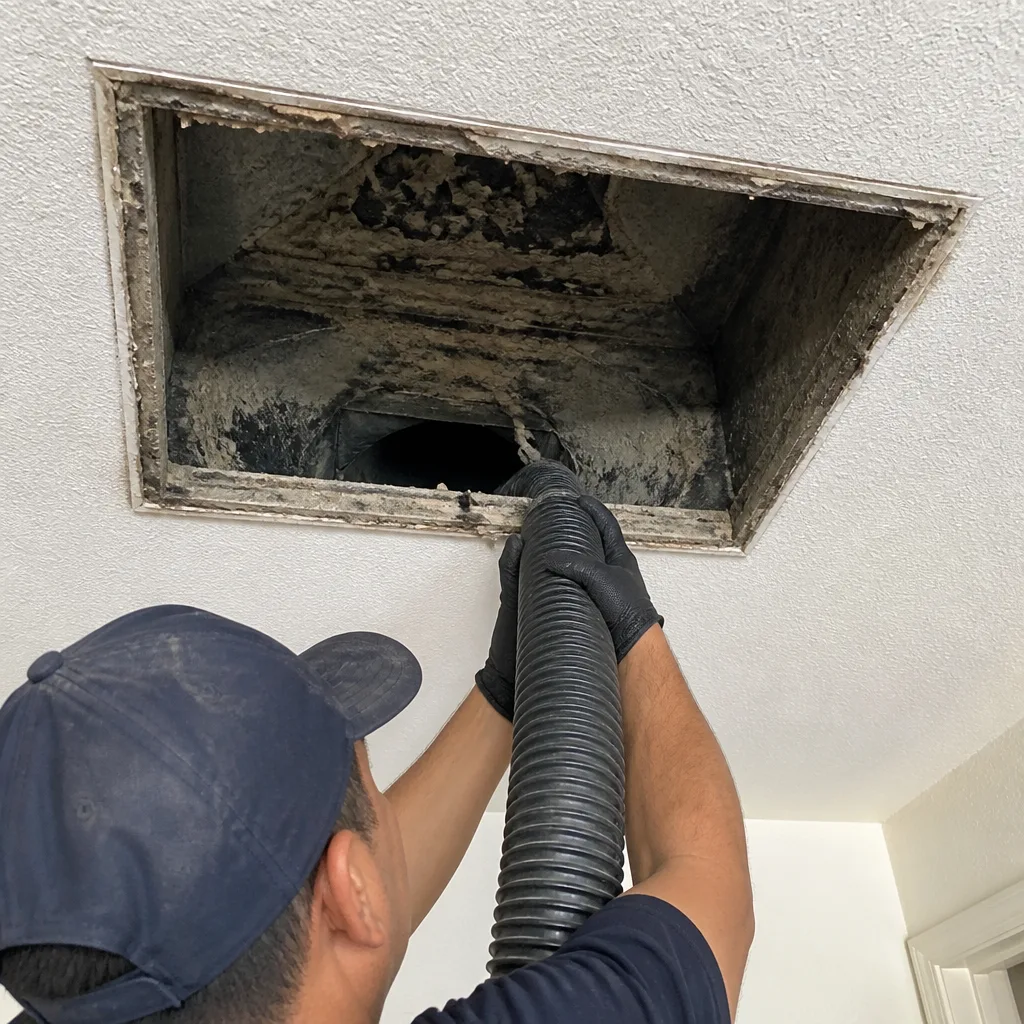 Before
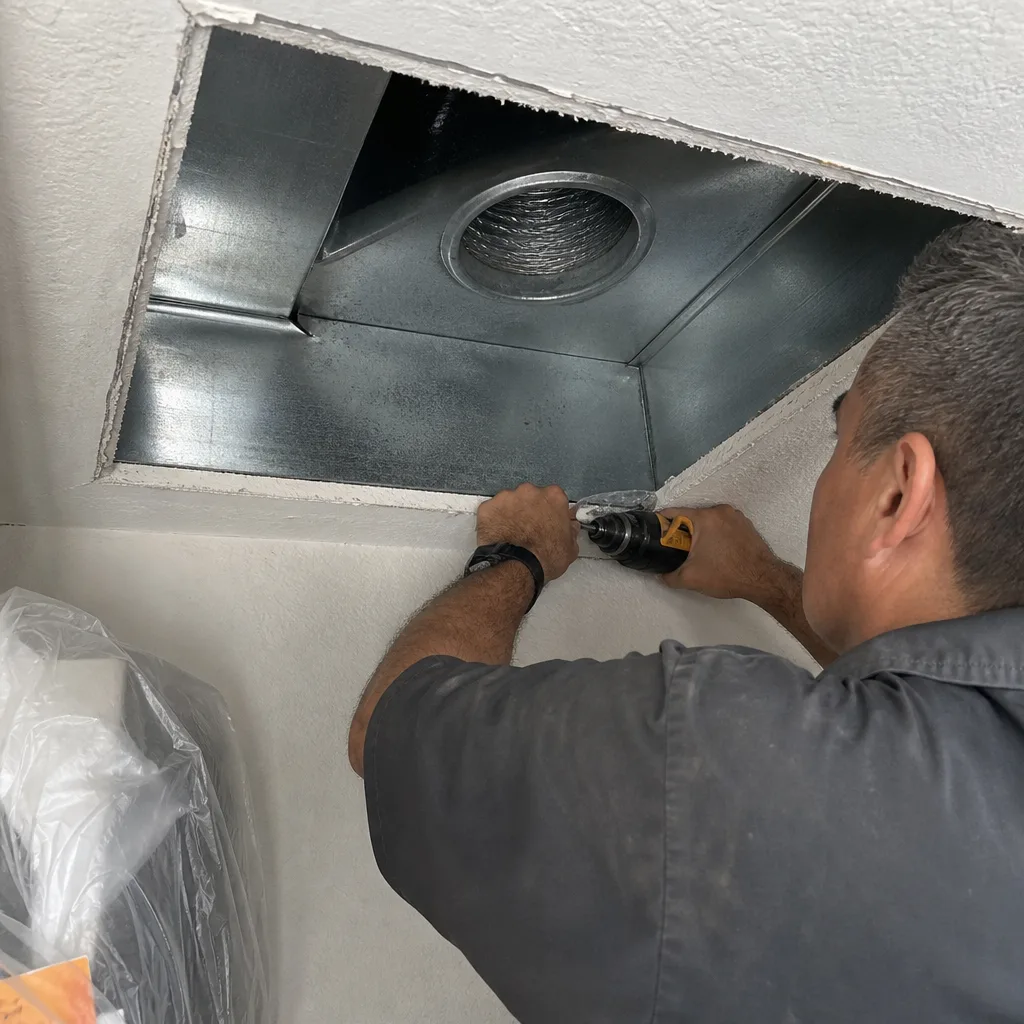 After